FT Nexavvy LogoCONTACT US
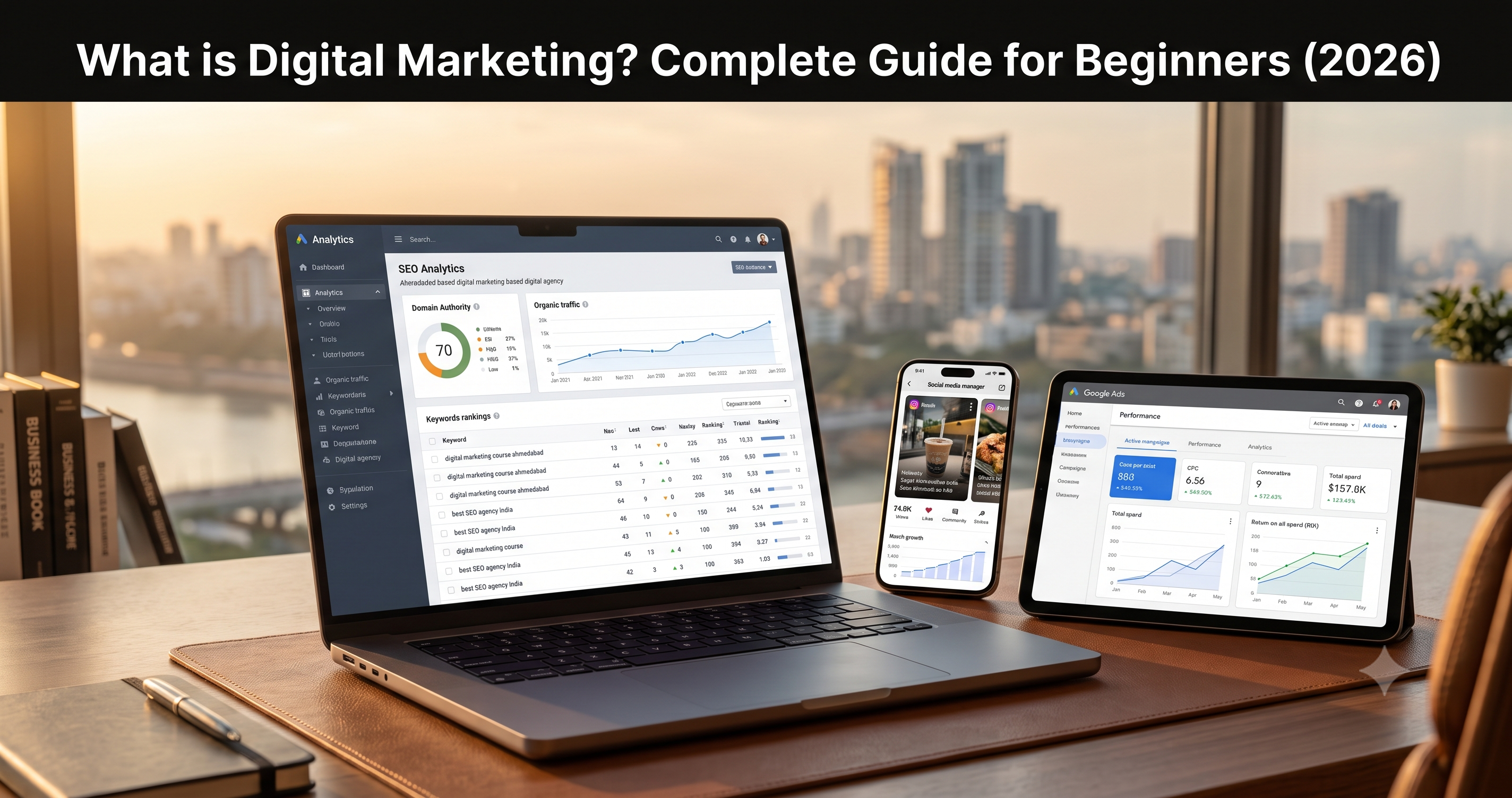
Digital marketing dashboard showing SEO analytics, Google Ads performance, and social media marketing tools for beginners by FT Nexavvy.

What is Digital Marketing? Complete Guide for Beginners (2026)

Comprehensive guide and insights about Content Marketing: What is Digital Marketing? Complete Guide for Beginners (2026)

Recent20 MIN Read    BYFT Nexavvy
Almost every business today wants more customers, more leads, and better online visibility. Whether you run a local shop in Ahmedabad, an eCommerce store, a healthcare clinic, a real estate company, or a manufacturing business, your customers are already spending hours online every day. The real challenge is reaching the right people at the right time with the right message.
This is where digital marketing plays a vital role.
Unlike traditional marketing, digital marketing allows businesses to promote products and services through online channels such as search engines, websites, social media platforms, email, mobile apps, and paid advertising. It enables businesses to measure results, optimize campaigns, and improve return on investment using real-time data.
Over the last decade, digital marketing has evolved far beyond simply posting on social media or running online advertisements. It now combines search engine optimization (SEO), performance marketing, content marketing, analytics, artificial intelligence (AI), automation, conversion rate optimisation (CRO), and customer experience into one integrated business growth strategy.
Whether you are a business owner looking to generate more enquiries, a student exploring career opportunities, or a marketing manager planning your next campaign, understanding the fundamentals of digital marketing is essential in 2026.
In this comprehensive guide, you'll learn what digital marketing means, how it works, why it matters, its key channels, practical examples, common misconceptions, and how businesses can build a sustainable online growth strategy.

Strategy #1: What is Digital Marketing?

Quick Answer (Featured Snippet & AI Overview Optimised):
Digital marketing is the practice of promoting products, services, or brands using digital channels such as search engines, websites, social media, email, mobile apps, and online advertising. Its primary goal is to attract the right audience, generate leads, increase sales, and build long-term customer relationships through measurable online strategies.
Unlike traditional marketing, digital marketing provides real-time performance tracking, audience targeting, automation, and continuous optimisation. It includes SEO, Google Ads, content marketing, social media marketing, email marketing, video marketing, influencer marketing, and analytics, making it one of the most effective ways for businesses to grow in today's digital economy.

"After working with businesses across industries—from local service providers and healthcare clinics to eCommerce brands and B2B companies—one pattern consistently stands out: the businesses that achieve sustainable growth don't rely on a single tactic like SEO or paid ads alone. Instead, they build an integrated digital marketing system where content, search visibility, advertising, user experience, analytics, and customer engagement work together. This holistic approach creates stronger brand authority, higher-quality leads, and better long-term returns than isolated campaigns."

FT Nexavvy

Strategy #2: Why Digital Marketing Matters More Than Ever

Consumer behaviour has changed dramatically over the last few years. Today, most buying journeys begin online. Before making a purchase, customers often:
  • Search on Google
  • Read reviews
  • Compare competitors
  • Visit websites
  • Watch YouTube videos
  • Check Instagram or Facebook
  • Read blogs
  • Explore Google Business Profiles
  • Ask AI tools like ChatGPT or Gemini for recommendations
If your business is not visible during these moments, you risk losing potential customers to competitors who have a stronger digital presence.
Consider a simple example. Imagine someone in Ahmedabad searches:
  • Best digital marketing agency near me
  • SEO company in Ahmedabad
  • Website development services
  • Google Ads expert
  • Social media marketing agency
The businesses appearing in Google Search, Maps, AI Overviews, and organic results are more likely to receive enquiries than those with little or no online visibility. This illustrates why digital marketing has become a necessity rather than an optional marketing activity.
Digital Marketing Helps Businesses:
  • Increase online visibility
  • Reach highly targeted audiences
  • Generate qualified leads
  • Improve customer engagement
  • Build trust and credibility
  • Measure marketing performance
  • Optimise campaigns using real-time data
  • Reduce customer acquisition costs
  • Improve conversion rates
  • Scale business growth efficiently
For businesses in competitive markets like Ahmedabad, a well-planned digital marketing strategy can create a significant advantage by connecting with local customers exactly when they are searching for relevant products or services.

Strategy #3: What is Digital Marketing? (Complete Explanation)

Digital Marketing Definition

Digital marketing is the strategic process of promoting products, services, or brands through digital platforms to attract, engage, convert, and retain customers using measurable online marketing techniques. Rather than relying solely on newspapers, television, radio, or billboards, digital marketing focuses on platforms where modern consumers spend their time online.
These platforms include: search engines, business websites, social media, email, mobile applications, online marketplaces, video platforms, messaging apps, and AI-powered search experiences.
Every digital marketing activity aims to move potential customers through different stages of their buying journey—from awareness to consideration, purchase, and long-term loyalty.

Digital Marketing in Simple Words

If you explain it to someone with no marketing background, digital marketing simply means: Using the internet and digital platforms to reach people, promote a business, and encourage them to take action, such as visiting a website, making a purchase, booking a service, or contacting a company.
Think about your own daily routine. You might:
  • Search Google for information
  • Watch videos on YouTube
  • Browse Instagram or Facebook
  • Read blogs
  • Open promotional emails
  • Click on online advertisements
  • Use Google Maps to find nearby businesses
Each of these interactions involves digital marketing in some form.

How Digital Marketing Works

Many beginners assume digital marketing is simply posting on social media or running advertisements. In reality, it is a structured process built around understanding customer behaviour and guiding users toward meaningful actions. A typical digital marketing workflow looks like this:
  1. Identify your target audience.
  2. Research customer needs and search intent.
  3. Build a fast, user-friendly website or landing page.
  4. Create valuable, relevant content.
  5. Improve visibility through SEO.
  6. Drive targeted traffic using paid advertising.
  7. Engage users on social media.
  8. Capture leads through forms, calls, or chat.
  9. Nurture prospects with email or automation.
  10. Analyze performance and continuously optimize campaigns.
Each step supports the next, creating a sustainable marketing system rather than a one-time campaign.

The Core Goal of Digital Marketing

At its heart, digital marketing is not about generating traffic alone. Its purpose is to help businesses achieve measurable outcomes. Common objectives include:
  • Increasing brand awareness
  • Driving qualified website traffic
  • Generating enquiries
  • Growing online sales
  • Building customer trust
  • Improving customer retention
  • Increasing repeat purchases
  • Enhancing customer lifetime value
  • Strengthening brand authority
  • Supporting long-term business growth
Successful digital marketing aligns these objectives with business goals and continuously measures progress through data.
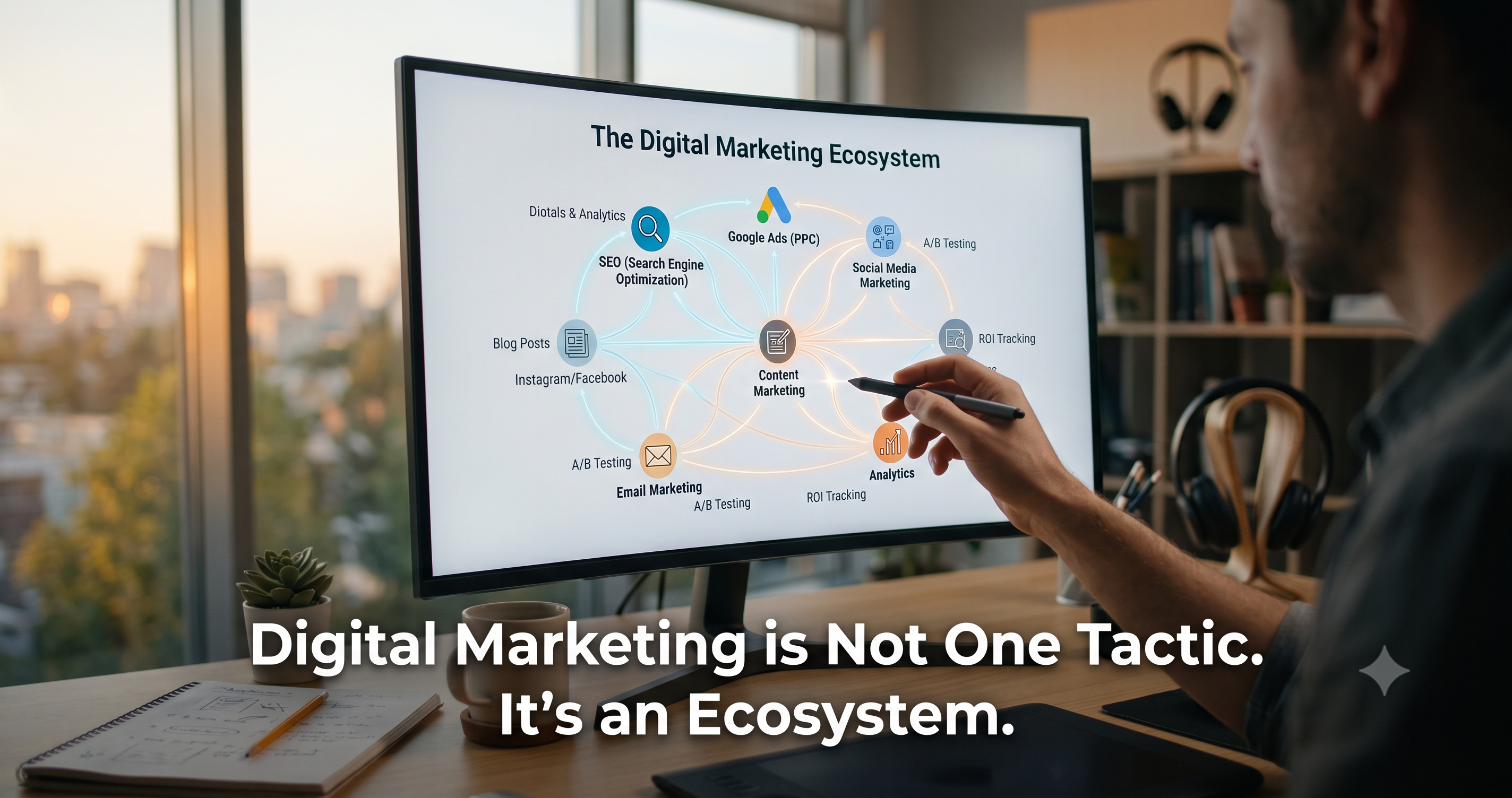
Digital marketing ecosystem illustrating SEO, Google Ads, social media marketing, content marketing, email marketing, analytics, and business growth strategies by FT Nexavvy Private Limited.

The Digital Marketing Ecosystem

Digital marketing is made up of interconnected channels rather than isolated tactics. Each channel contributes to different stages of the customer journey. The strongest digital marketing strategies combine these channels rather than relying on just one.
ChannelPrimary PurposeTypical Business Goal
Search Engine Optimisation (SEO)Improve organic visibilityLong-term traffic and authority
Google Ads (PPC)Drive immediate targeted trafficLead generation and sales
Social Media MarketingBuild engagement and awarenessCommunity growth and branding
Content MarketingEducate and attract audiencesTrust and organic traffic
Email MarketingNurture and retain customersRepeat business and loyalty
Video MarketingExplain, educate, and engageBrand awareness and conversions
Local SEOImprove visibility in local searchesStore visits and local enquiries
Conversion Rate Optimisation (CRO)Increase conversionsBetter ROI from existing traffic
Marketing AutomationStreamline communicationEfficiency and customer nurturing
AnalyticsMeasure and improve performanceData-driven decision-making

Digital Marketing vs Traditional Marketing

Understanding the difference between digital and traditional marketing helps businesses allocate their marketing budgets more effectively.
FeatureDigital MarketingTraditional Marketing
Audience TargetingHighly specificBroad
CostFlexibleOften expensive
Performance TrackingReal-timeLimited
Customer InteractionTwo-wayMostly one-way
OptimisationContinuousDifficult after launch
PersonalisationHighly personalisedGeneric
SpeedInstant campaign changesSlower revisions
ROI MeasurementAccurateOften estimated
While traditional marketing still has its place in certain industries, digital marketing offers greater flexibility, measurable results, and stronger audience targeting.

Why Businesses Are Investing More in Digital Marketing

The modern customer expects businesses to have a strong online presence. They research before purchasing, compare options, read reviews, and seek trustworthy information across multiple platforms.
Businesses that invest in digital marketing can:
  • Reach customers at every stage of the buying journey
  • Respond quickly to changing market trends
  • Measure campaign performance accurately
  • Optimise budgets based on real data
  • Build long-term relationships through valuable content
  • Adapt strategies using insights from analytics and customer behaviour
This ability to combine visibility, engagement, measurement, and continuous improvement makes digital marketing one of the most effective growth drivers for organisations of all sizes.

Expert Insight

After working with businesses across industries—from local service providers and healthcare clinics to eCommerce brands and B2B companies—one pattern consistently stands out: the businesses that achieve sustainable growth don't rely on a single tactic like SEO or paid ads alone.
Instead, they build an integrated digital marketing system where content, search visibility, advertising, user experience, analytics, and customer engagement work together. This holistic approach creates stronger brand authority, higher-quality leads, and better long-term returns than isolated campaigns.

Strategy #4: Types of Digital Marketing

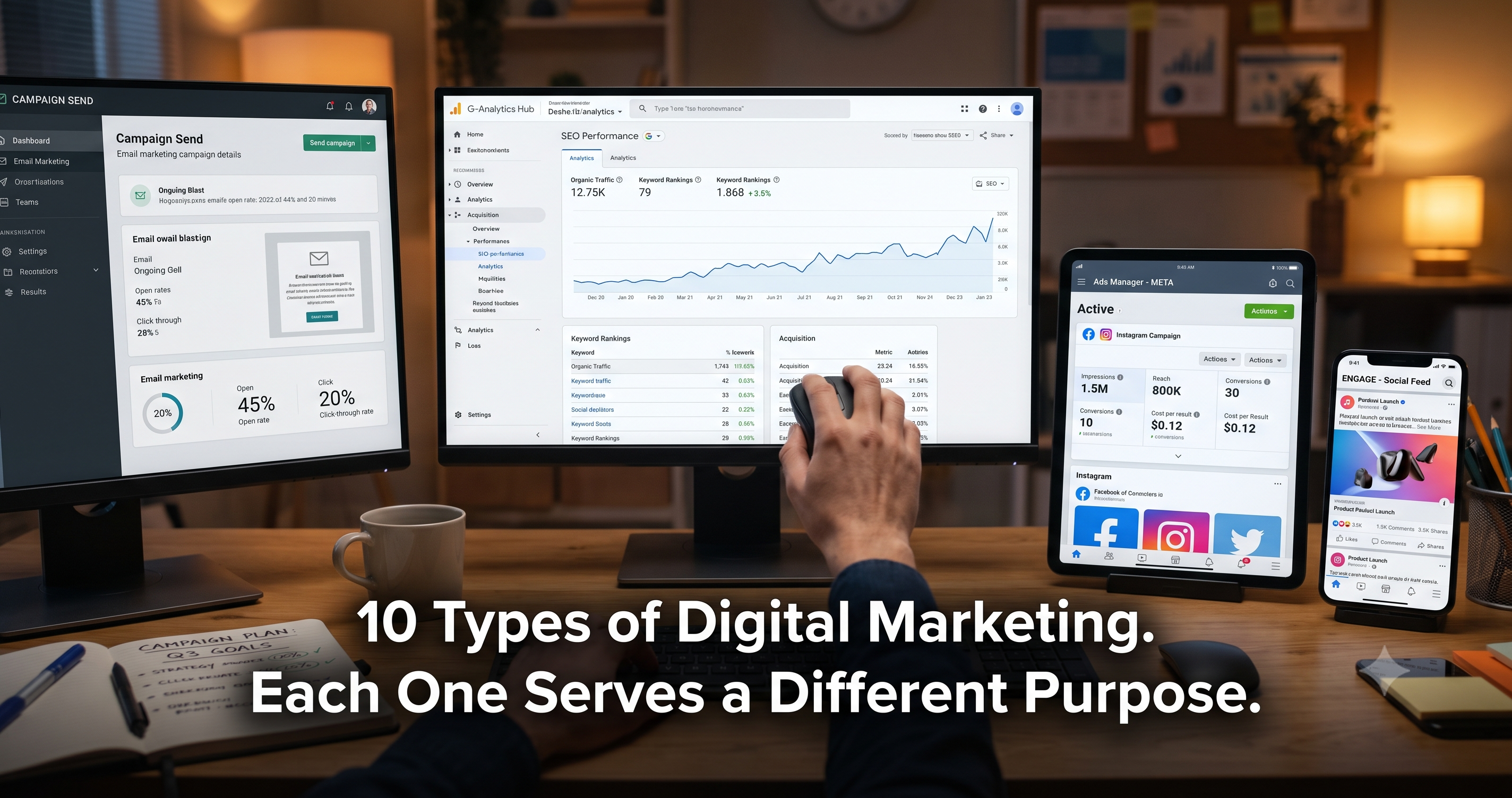
Illustration of the 10 types of digital marketing, including SEO, social media marketing, Google Ads, email marketing, content marketing, analytics, and performance marketing by FT Nexavvy Private Limited.
Digital marketing is not a single technique. It is a combination of multiple channels that work together to attract visitors, generate leads, nurture prospects, and convert them into loyal customers.
Each type of digital marketing serves a different purpose in the customer journey. Some channels help people discover your business, while others encourage purchases or build long-term relationships. The most successful businesses do not rely on just one channel. Instead, they create an integrated strategy where each marketing activity supports the others.

1. Search Engine Optimization (SEO)

Search Engine Optimization (SEO) is the process of improving your website so it appears higher in organic search results on search engines like Google. Unlike paid advertisements, SEO focuses on earning visibility naturally by creating helpful content, improving website performance, and building authority.
SEO Includes:
  • Keyword Research
  • Technical SEO
  • On-Page SEO
  • Off-Page SEO
  • Local SEO
  • Content Optimization
  • Internal Linking
  • Schema Markup
  • Core Web Vitals Optimization
Example: A user searches "Best Digital Marketing Agency in Ahmedabad". If your website ranks on the first page, you receive highly targeted visitors without paying for every click.
Best For:
  • Long-term business growth
  • Brand authority
  • Lead generation
  • Sustainable website traffic

2. Search Engine Marketing (SEM) / Google Ads

Search Engine Marketing refers to paid advertisements that appear on search engine results pages. Google Ads allows businesses to display ads for high-intent searches. For example, a person searches "SEO Company Near Me" and businesses running Google Ads appear above the organic search results.
Popular Google Ads Campaigns:
  • Search Ads
  • Display Ads
  • Shopping Ads
  • Video Ads
  • Performance Max
  • App Campaigns
Advantages:
  • Immediate visibility
  • Highly targeted traffic
  • Budget control
  • Fast lead generation

3. Social Media Marketing (SMM)

Social media marketing uses platforms such as Facebook, Instagram, LinkedIn, X (Twitter), Pinterest, and YouTube to build brand awareness, engage audiences, and generate leads.
Social media is not only about posting images. It involves:
  • Content planning
  • Community management
  • Paid campaigns
  • Customer engagement
  • Influencer collaboration
  • Brand storytelling
Example: A real estate company shares property walkthrough videos on Instagram Reels while simultaneously running lead generation ads.

4. Content Marketing

Content marketing focuses on creating valuable information that educates, solves problems, and builds trust. Instead of directly selling, content marketing helps customers make informed decisions.
Popular content formats include:
  • Blogs
  • Case studies
  • Videos
  • Infographics
  • Podcasts
  • Guides
  • Whitepapers
  • Checklists
  • Templates
High-quality content also strengthens SEO because search engines reward websites that provide useful, relevant information.

5. Email Marketing

Email remains one of the highest ROI digital marketing channels. Businesses use email to welcome new customers, share newsletters, promote offers, recover abandoned carts, nurture leads, and increase repeat purchases. Unlike social media, your email list is an owned marketing asset, giving you direct access to your audience.

6. Pay-Per-Click (PPC) Advertising

PPC advertising allows businesses to pay only when someone clicks their advertisement. Popular PPC platforms include Google Ads, Microsoft Ads, Meta Ads, LinkedIn Ads, and Amazon Ads. PPC works best when combined with high-converting landing pages, conversion tracking, strong ad copy, audience targeting, and continuous optimization.

7. Affiliate Marketing

Affiliate marketing allows individuals or businesses to promote products in exchange for a commission. The business benefits from additional sales, while affiliates earn income for successful referrals. Examples include bloggers, review websites, YouTubers, and coupon websites.

8. Influencer Marketing

Influencer marketing involves partnering with trusted content creators to promote products or services. Influencers often have highly engaged audiences that trust their recommendations. Businesses use influencer marketing for product launches, brand awareness, social proof, and user-generated content.

9. Video Marketing

Video has become one of the fastest-growing digital marketing channels. Businesses use videos to explain products, demonstrate services, build trust, share customer stories, and educate audiences. Popular platforms include YouTube, Instagram Reels, Facebook Videos, and LinkedIn Video.

10. Mobile Marketing

Most internet users now browse on smartphones. Mobile marketing focuses on mobile-friendly websites, SMS marketing, push notifications, app marketing, mobile advertising, and location-based promotions. Google also uses mobile-first indexing, making mobile optimization essential for SEO.

11. Local SEO

Local SEO helps businesses appear in location-based searches, such as "Dentist near me", "Restaurant in Ahmedabad", or "Digital Marketing Agency in Ahmedabad".
Local SEO includes:
  • Google Business Profile optimization
  • Local citations
  • Customer reviews
  • Location pages
  • NAP consistency
  • Local keyword optimization
For businesses serving specific cities, local SEO can significantly improve visibility and lead generation.

Strategy #5: Major Digital Marketing Channels

Digital marketing channels are the platforms where businesses connect with customers online. Each channel contributes differently to the customer journey. Choosing the right mix depends on your audience, goals, and resources.
ChannelPurposeBest For
Google SearchOrganic trafficSEO
Google AdsPaid trafficLead generation
FacebookCommunity buildingB2C
InstagramVisual marketingBranding
LinkedInProfessional networkingB2B
YouTubeVideo educationBrand awareness
EmailCustomer retentionRepeat sales
WhatsAppDirect communicationCustomer support
WebsiteBusiness hubConversions
Google MapsLocal visibilityLocal businesses

Strategy #6: Benefits of Digital Marketing

Digital marketing offers measurable, scalable, and cost-effective ways to grow a business.

1. Reach the Right Audience

Advanced targeting allows businesses to reach customers based on:
  • Location
  • Age
  • Interests
  • Search behaviour
  • Purchase intent
  • Device
  • Demographics
This reduces wasted advertising spend and improves campaign effectiveness.

2. Cost-Effective Marketing

Unlike many traditional advertising methods, digital marketing allows businesses to start with modest budgets and scale campaigns based on performance. This flexibility makes it accessible for startups, SMEs, and established enterprises alike.

3. Measurable Results

One of digital marketing's biggest advantages is transparency. Businesses can track metrics such as:
  • Website traffic
  • Click-through rate (CTR)
  • Conversion rate
  • Cost per lead (CPL)
  • Cost per acquisition (CPA)
  • Return on Ad Spend (ROAS)
  • Customer Lifetime Value (CLV)
These insights help marketers make informed decisions rather than relying on assumptions.

4. Improved Brand Awareness

Consistent visibility across search engines, social media, email, and content platforms helps businesses become more recognizable and trustworthy over time.

5. Better Customer Engagement

Digital marketing enables two-way communication through:
  • Comments
  • Reviews
  • Live chat
  • Social media messages
  • Email replies
  • Interactive content
This fosters stronger customer relationships and loyalty.

6. Higher Conversion Potential

By combining targeted traffic with optimized landing pages, compelling content, and clear calls to action, businesses can improve the likelihood of turning visitors into customers.

7. Data-Driven Decision Making

Unlike traditional marketing, digital campaigns provide actionable data. Businesses can test different headlines, creatives, audiences, and offers, then refine strategies based on real performance.

Strategy #7: How Digital Marketing Works

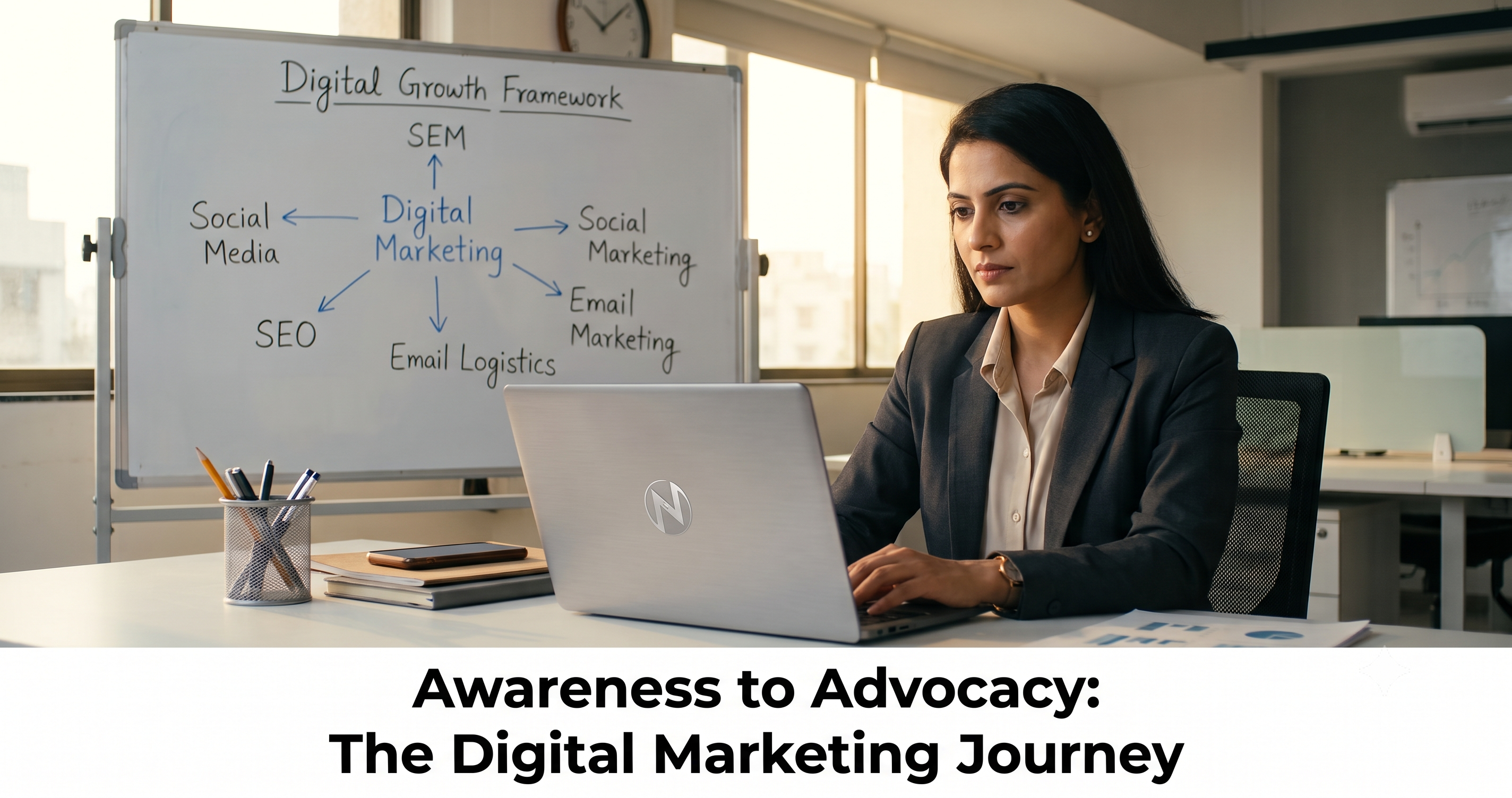
Digital marketing customer journey illustrating the awareness to advocacy funnel with SEO, SEM, social media marketing, email marketing, and digital growth strategies by FT Nexavvy Private Limited.
Digital marketing follows a structured journey that guides potential customers from awareness to conversion and beyond.

Step 1: Understand Your Audience

Start by identifying customer needs, pain points, goals, online behaviour, and preferred platforms. Creating buyer personas helps tailor messaging and campaigns effectively.

Step 2: Set Clear Objectives

Define measurable goals, such as:
  • Increase website traffic
  • Generate qualified leads
  • Boost online sales
  • Improve brand awareness
  • Grow email subscribers
Clear objectives provide direction and benchmarks for success.

Step 3: Build a Strong Digital Presence

Your website serves as the foundation of your digital marketing efforts. Ensure it is:
  • Fast
  • Mobile-friendly
  • Secure (HTTPS)
  • Easy to navigate
  • Optimized for search engines
A poor user experience can undermine even the best marketing campaigns.

Step 4: Create Valuable Content

Develop content that addresses your audience's questions and challenges. This can include:
  • Blog articles
  • Videos
  • FAQs
  • Case studies
  • Infographics
  • Guides
High-quality content attracts visitors and establishes authority.

Step 5: Drive Targeted Traffic

Use a combination of SEO, Google Ads, social media, email campaigns, and referral partnerships to bring relevant users to your website.

Step 6: Convert Visitors into Leads

Encourage visitors to take meaningful actions, such as:
  • Filling out contact forms
  • Requesting quotes
  • Booking consultations
  • Downloading resources
  • Making purchases
Clear calls to action and optimized landing pages improve conversion rates.

Step 7: Measure and Optimize

Analyze campaign performance using tools like Google Analytics, Google Search Console, Google Ads Reports, and Meta Ads Manager. Review key metrics regularly and refine your strategy to improve results over time.

Strategy #8: Real-World Digital Marketing Examples

Understanding digital marketing becomes easier with practical examples.
  • Example 1: Local Healthcare Clinic
    A clinic publishes informative blog posts about common health concerns, optimizes its Google Business Profile, and encourages satisfied patients to leave reviews.
    Result: Improved local search visibility and increased appointment bookings.
  • Example 2: E-commerce Store
    An online retailer combines SEO, Google Shopping Ads, abandoned cart emails, and Instagram promotions.
    Result: Higher website traffic, increased sales, and improved customer retention.
  • Example 3: Real Estate Company
    A real estate business shares property videos on YouTube, targets buyers with Meta Ads, and publishes location-specific landing pages.
    Result: More qualified enquiries and better visibility for local property searches.
  • Example 4: Educational Institute
    An institute offers downloadable career guides, runs search ads for admission-related keywords, and nurtures leads through email campaigns.
    Result: Increased admissions and stronger brand recognition.
  • Example 5: Local Service Business in Ahmedabad
    A plumbing service optimizes for local keywords, maintains an active Google Business Profile, publishes helpful maintenance tips, and responds promptly to customer reviews.
    Result: More phone calls and higher visibility in Google Maps.

Strategy #9: What is a Digital Marketing Strategy?

A digital marketing strategy is a structured plan that outlines how a business will use digital channels to achieve specific marketing objectives. Rather than focusing on isolated tactics, it aligns audience insights, content, advertising, technology, and measurement into one cohesive roadmap. A strong strategy answers questions like: Who is the target audience? What problems are we solving? Which channels will we use? What content will we create? How will success be measured?

The FT Nexavvy Digital Growth Framework

One practical way to approach digital marketing is through a simple six-step framework:
  1. Research – Understand your audience, competitors, and market.
  2. Plan – Set SMART goals and choose the right channels.
  3. Create – Develop valuable content and compelling campaigns.
  4. Promote – Drive traffic through SEO, paid ads, social media, and email.
  5. Convert – Optimize landing pages and user experience to generate leads or sales.
  6. Optimize – Measure performance, test improvements, and refine your strategy continuously.
This framework encourages businesses to view digital marketing as an ongoing process rather than a one-time campaign.

Strategy #10: How to Get Started with Digital Marketing: A Step-by-Step Process

Digital marketing is most effective when approached as a structured system rather than a collection of isolated tactics. Many businesses fail because they jump straight into running ads or posting on social media without first understanding their audience, goals, or website performance. The following 10-step framework provides a practical roadmap for beginners, startups, SMEs, and established businesses.

Step 1: Define Your Business Goals

Every successful digital marketing campaign starts with clear objectives. Ask yourself:
  • Do you want more website visitors?
  • Do you need qualified leads?
  • Are you looking to increase online sales?
  • Do you want better brand awareness?
  • Is customer retention your priority?
SMART Goal Example:
Instead of saying: ❌ "I want more traffic."
Set a measurable goal: ✅ "Increase organic website traffic by 30% within six months."
Clear goals help you choose the right channels and measure success effectively.

Step 2: Understand Your Target Audience

One of the biggest mistakes businesses make is trying to market to everyone. Instead, identify your ideal customer by considering:
  • Age
  • Location
  • Profession
  • Income
  • Interests
  • Online behaviour
  • Buying challenges
  • Preferred digital platforms
Example: A manufacturing company in Ahmedabad will require a different marketing strategy than an eCommerce fashion brand or a healthcare clinic. Understanding your audience ensures that your message reaches the right people.

Step 3: Build a Professional Website

Your website is the foundation of your digital marketing efforts. A well-designed website should:
  • Load quickly
  • Be mobile-friendly
  • Use HTTPS security
  • Have intuitive navigation
  • Include clear calls to action
  • Be optimized for search engines
Remember, digital marketing campaigns drive traffic, but your website is where conversions happen.

Step 4: Conduct Keyword Research

Keyword research helps you understand what your audience is searching for online. Focus on:
  • Informational keywords
  • Commercial keywords
  • Transactional keywords
  • Local search terms
  • Long-tail keywords
Example: Instead of targeting only "Digital Marketing", also consider:
This approach captures users at different stages of the buying journey.

Step 5: Create Valuable Content

Content is the bridge between your business and potential customers. Develop content that answers real questions and solves problems. Content formats include:
  • Blog posts
  • Videos
  • Case studies
  • FAQs
  • Infographics
  • Checklists
  • E-books
  • Webinars
Prioritize quality over quantity. A well-researched article often delivers better long-term results than multiple thin pages.

Step 6: Choose the Right Marketing Channels

Avoid trying to be everywhere. Select channels based on your audience and goals.
Business GoalRecommended Channels
Brand AwarenessSEO, Content Marketing, YouTube, Social Media
Lead GenerationGoogle Ads, SEO, Landing Pages
Local CustomersGoogle Business Profile, Local SEO
B2B GrowthLinkedIn, SEO, Email Marketing
E-commerce SalesGoogle Shopping, Meta Ads, Email Marketing

Step 7: Launch Targeted Campaigns

Once your content and website are ready, begin promoting them through Search Engine Optimization, Google Ads, Meta Ads, LinkedIn Campaigns, Email Marketing, or Social Media Marketing. Track performance from day one to understand what works and what needs improvement.

Step 8: Measure Performance

Use analytics tools to evaluate campaign effectiveness. Key metrics include:
  • Website traffic
  • Click-Through Rate (CTR)
  • Conversion Rate
  • Bounce Rate
  • Cost Per Lead (CPL)
  • Cost Per Acquisition (CPA)
  • Return on Ad Spend (ROAS)
  • Customer Lifetime Value (CLV)
Data-driven decisions lead to better outcomes than assumptions.

Step 9: Optimize Continuously

Digital marketing is an ongoing process. Regularly update content, improve website speed, test landing pages, refine audience targeting, optimize ad creatives, and monitor keyword rankings. Small improvements can compound into significant long-term gains.

Step 10: Scale What Works

Once you identify successful campaigns, increase budgets gradually, expand keyword coverage, repurpose high-performing content, explore additional channels, and automate repetitive tasks. Scaling proven strategies is more effective than constantly starting from scratch.

Strategy #11: Digital Marketing Frameworks

Frameworks simplify decision-making and help businesses build consistent marketing systems.

Framework 1: The Digital Growth Funnel

The digital growth funnel consists of: Awareness → Interest → Consideration → Conversion → Retention → Advocacy.
StageObjectiveExample Channels
AwarenessIntroduce your brandSEO, Blogs, Social Media, YouTube
InterestEducate prospectsGuides, Videos, Webinars
ConsiderationBuild trustReviews, Case Studies, Email
ConversionGenerate leads or salesLanding Pages, Google Ads
RetentionKeep customers engagedEmail Marketing, Loyalty Programs
AdvocacyEncourage referralsReviews, Referral Programs

Framework 2: The RACE Framework

The RACE Framework provides a practical way to manage digital marketing activities.
StagePurpose
ReachIncrease visibility
ActEncourage engagement
ConvertGenerate sales or leads
EngageBuild long-term relationships
Businesses that consistently move customers through these stages are more likely to achieve sustainable growth.

Framework 3: The See–Think–Do–Care Model

This model aligns marketing efforts with customer intent.
StageCustomer MindsetMarketing Focus
SeeDiscovering optionsEducational content
ThinkComparing solutionsCase studies, guides
DoReady to purchaseLanding pages, offers
CareExisting customerEmail, support, loyalty

Strategy #12: Digital Marketing Comparison Tables

SEO vs Google Ads

FeatureSEOGoogle Ads
CostNo payment per clickPay for each click
SpeedLong-termImmediate
SustainabilityHighStops when budget ends
TrustHigherModerate
Best ForLong-term growthQuick lead generation
Expert Recommendation: Use both together.

Organic Marketing vs Paid Marketing

Organic MarketingPaid Marketing
Long-term investmentImmediate results
Builds authorityDrives quick traffic
Lower ongoing costsContinuous budget required
SustainableCampaign-dependent
Trust-focusedPromotion-focused
A balanced strategy often produces the best results.

Traditional Marketing vs Digital Marketing

TraditionalDigital
Limited targetingPrecise targeting
Difficult to measureReal-time analytics
One-way communicationInteractive engagement
Higher costsFlexible budgets
Slow optimizationContinuous improvement

Strategy #13: Common Digital Marketing Mistakes

Even experienced businesses make avoidable mistakes. Recognizing them early can save time, money, and missed opportunities.

1. Ignoring Customer Intent

Many businesses focus only on selling. Instead, answer customer questions first. Helpful content builds trust before asking for a sale.

2. Neglecting SEO

A beautiful website is ineffective if people cannot find it. SEO should be integrated from the beginning, not treated as an afterthought.

3. Running Ads Without Landing Pages

Sending paid traffic to a generic homepage often reduces conversions. Create dedicated landing pages that match user intent and campaign messaging.

4. Chasing Every New Platform

Not every business needs to be active on every social network. Focus on the platforms where your audience spends time.

5. Publishing Content Without a Strategy

Random blog posts rarely build authority. Develop topic clusters around your core services and link them to pillar pages.

6. Ignoring Mobile Users

A slow or poorly designed mobile website can lead to high bounce rates and lost opportunities. Ensure every page performs well on smartphones.

7. Not Tracking Performance

Without analytics, it's impossible to know which campaigns are generating results. Monitor key metrics and adjust strategies accordingly.

Strategy #14: Expert Tips from Practical Experience

Over years of working with businesses across industries, certain practices consistently deliver better outcomes.
Focus on Solving Problems: Create content that answers real customer questions instead of simply promoting services.
Build Topic Clusters: Rather than publishing unrelated articles, organize content around central themes. For example: Pillar Topic: Digital Marketing Agency in Ahmedabad. Supporting Articles: What is Digital Marketing?, Types of Digital Marketing, SEO vs Google Ads, Content Marketing Guide, Local SEO Guide, Meta Ads Explained. This structure strengthens topical authority and improves internal linking.
Combine Organic and Paid Marketing: SEO provides sustainable traffic, while paid advertising generates immediate visibility. Using both together creates a balanced growth strategy.
Optimize for AI Search: As AI-powered search becomes more common, structure content for easy extraction. Include clear definitions, bullet summaries, tables, FAQs, step-by-step guides, and concise answers. These formats improve visibility in AI-generated search results.
Update Content Regularly: Search trends, algorithms, and customer expectations change over time. Review and refresh important pages periodically to keep them accurate and relevant.

Strategy #15: Ahmedabad Perspective

Ahmedabad has become one of India's fastest-growing business hubs, with strong activity across manufacturing, healthcare, education, IT services, retail, real estate, and startups. This growth has increased competition in digital channels.
Businesses can no longer rely solely on word-of-mouth or traditional advertising. Customers now search online before making purchasing decisions. Common local searches include:
  • Best restaurant near me
  • SEO company in Ahmedabad
  • Real estate projects in Ahmedabad
  • Digital marketing agency in Ahmedabad
  • Website development company
To remain competitive, local businesses should:
  • Optimize their Google Business Profile
  • Publish location-specific content
  • Encourage authentic customer reviews
  • Build local citations
  • Target Ahmedabad-focused keywords
  • Create helpful content for local audiences
Businesses that consistently invest in local SEO, valuable content, and user experience are more likely to earn trust and visibility in competitive local search results.

Strategy #16: Digital Marketing Action Checklist

Use this checklist to assess whether your business has the essential building blocks in place.
Business Foundation:
  • Define clear marketing goals
  • Identify your target audience
  • Build a professional website
  • Ensure mobile responsiveness
  • Secure your website with HTTPS
SEO:
  • Conduct keyword research
  • Optimize title tags and meta descriptions
  • Improve page speed
  • Create high-quality content
  • Implement internal linking
  • Add schema markup
Content Marketing:
  • Publish helpful blog posts
  • Create educational videos
  • Develop FAQs
  • Share case studies
  • Update existing content
Paid Advertising:
  • Set campaign objectives
  • Build dedicated landing pages
  • Track conversions
  • Test ad creatives
  • Monitor ROI regularly
Analytics:
  • Install Google Analytics
  • Configure Google Search Console
  • Set up conversion tracking
  • Monitor key performance indicators
  • Review reports monthly
Customer Experience:
  • Respond to reviews promptly
  • Improve website navigation
  • Simplify contact forms
  • Offer multiple communication channels
  • Build trust with testimonials and transparent information

Strategy #17: Frequently Asked Questions (FAQs)

Digital marketing is the process of promoting products, services, or brands using online channels such as search engines, websites, social media, email, mobile apps, and paid advertising. It helps businesses attract customers, generate leads, increase sales, and measure results through real-time analytics.

In simple words, digital marketing means using the internet to promote a business. It includes activities like improving Google rankings, running online advertisements, posting on social media, sending emails, and creating helpful content to reach potential customers.

Digital marketing helps businesses reach their target audience where they spend most of their time—online. It increases visibility, generates qualified leads, improves customer engagement, and allows businesses to measure campaign performance accurately.

SEO is one component of digital marketing. It focuses on improving a website's visibility in organic search results, while digital marketing includes SEO along with paid advertising, social media, content marketing, email marketing, analytics, and other online strategies.

Digital marketing works by attracting potential customers through online channels, engaging them with valuable content, and encouraging them to take actions such as contacting a business, requesting a quote, or making a purchase. Performance is tracked using analytics, allowing campaigns to be continuously improved.

Yes. As more businesses invest in online growth, demand for digital marketing professionals continues to increase. Roles are available across agencies, startups, large enterprises, and freelance consulting.

A digital marketing strategy is a structured plan that outlines how a business will use digital channels to achieve specific objectives. It includes audience research, content planning, channel selection, campaign execution, performance measurement, and continuous optimization.

Local digital marketing focuses on attracting customers within a specific geographic area. It combines Local SEO, Google Business Profile optimization, location-specific content, online reviews, and targeted advertising to improve visibility in local search results.

Absolutely. Digital marketing enables small businesses to compete with larger organizations by targeting the right audience, managing flexible budgets, and measuring performance. Even modest investments can produce meaningful results when supported by a clear strategy.

Artificial Intelligence helps marketers analyze data, automate repetitive tasks, personalize customer experiences, optimize advertising, and generate insights. However, human expertise remains essential for strategic planning, creativity, and understanding customer needs.

One common mistake is focusing on tactics instead of strategy. Running ads or posting on social media without understanding the target audience, business goals, or website performance often leads to disappointing results.

Digital marketing continues to evolve with advances in AI, automation, voice search, conversational search, personalization, privacy-focused marketing, and data-driven decision-making. Businesses that adapt to these trends while prioritizing user experience and helpful content will be better positioned for long-term success.

Strategy #18: Conclusion

Digital marketing is no longer an optional activity reserved for large organizations. It has become an essential part of how businesses connect with customers, build trust, and grow in an increasingly digital marketplace.
Whether you are launching a startup, managing an established company, or promoting a local service, digital marketing provides the tools to reach the right audience, communicate effectively, and measure the impact of your efforts. Unlike traditional marketing, it allows businesses to adapt quickly, optimize campaigns using real data, and improve results over time.
The most successful businesses treat digital marketing as an ongoing process rather than a one-time campaign. They combine search visibility, valuable content, paid advertising, social media engagement, website optimization, analytics, and customer experience into a cohesive growth strategy.
As digital technologies continue to evolve, businesses that prioritize helpful content, user experience, ethical marketing practices, and continuous learning will be better positioned to compete. By building a strong foundation today and refining your approach over time, digital marketing can become a sustainable driver of long-term business growth.

Ready to Grow Your Business with Digital Marketing?

Understanding digital marketing is the first step. Implementing it effectively is what drives measurable business outcomes.
Whether you're a startup, SME, or established enterprise, the right digital marketing approach can help you reach the right audience, strengthen your online presence, and support sustainable business growth.
Ready to scale your business online? Work with FT Nexavvy, a top-rated Digital Marketing Agency in Ahmedabad. Whether you need result-oriented SEO services in Ahmedabad, ROI-driven Performance Marketing in Ahmedabad, or a modern high-converting website built by a trusted website development company, we are here to support your growth. Get in touch with us today to schedule a strategy call.

Read Related Articles:

Branding

Types of Digital Marketing: 15 Powerful Digital Marketing Channels Every Business Should Know (2026 Guide)

Branding

Benefits of Digital Marketing: 15 Powerful Advantages for Business Growth (2026)

Author

FT Nexavvy

FT Nexavvy

Digital Marketing Expert at FT Nexavvy.

InstagramFacebookTwitterLinkedIn

ON THIS PAGE

Related Articles

Have a Project?
Let’s talk!

green tick

NDA? Absolutely just ask.

green tick

We’ll respond in 24 hours fast & focused.

green tick

Work with senior UX experts, not juniors.

Schedule a call:

Mr Panchal

Founder & CEO

How can we help you?

Send Message

Prefer email?

hello@ftnexavvy.com

UI/UX DESIGN
WEBSITE DESIGN
BRANDING
GOOGLE ADS
SEO
SOCIAL MEDIA MARKETING
UI/UX DESIGN
WEBSITE DESIGN
BRANDING
GOOGLE ADS
SEO
SOCIAL MEDIA MARKETING
UI/UX DESIGN
WEBSITE DESIGN
BRANDING
GOOGLE ADS
SEO
SOCIAL MEDIA MARKETING
FT Nexavvy Logo

DIGITAL MARKETING AGENCY IN AHMEDABAD

ISO Certification Badge

Working Hours

Monday – Saturday 9:00 am – 6:00 pm ( Sunday > Closed )

Use Cases

Travel

Health & Fitness

Educations

News App

Food Order & Delivery App

Work inquiries

Interested in working with us?
hello@ftnexavvy.com

Call : +91 90303 48383

Ahmedabad Office:
A-531, Money Plant High Street,
Gota, Ahmedabad - 382470

Career

Looking for a job opportunity?
See open positions

Sign up for the newsletter

flag-1flag-2flag-3flag-4flag-5flag-6flag-7flag-8flag-9flag-10

Disclaimer

FT NEXAVVY PRIVATE LIMITED (CIN:U62011GJ2025PTC168186) is a registered company under the Companies Act, 2013.
We operate with GST (GSTIN:24AAGCF6405M1ZJ), PAN ( AAGCF6405M), TAN (BRDF01128B), DPIIT Registration (DIPP225956), and MSME / UDYAM Registration (Udyam No:UDYAM-GJ-01-0555205).

Our brand name FT NEXAVVY is currently under Trademark Application (Application No:7297017) with the relevant authorities in India.

We are committed to providing transparent, ethical, and result-driven digital solutions. While our strategies are based on proven industry standards, actual results may vary depending on market conditions, competition, and platform algorithm updates.

As a responsible agency, we do not guarantee fixed sales, instant leads, or overnight rankings. Digital success requires consistent effort, collaboration, and long-term commitment. All services are executed only as per the mutually agreed scope of work in our service agreements.Any additional tasks or requirements may involve revised terms.

For your safety, please note that FT Nexxavy Private Limited has not authorized any third party or individual to make commitments, promise guaranteed results, or operate accounts on your behalf. Always communicate with us only through our official channels for authentic updates and support.

If you find any unauthorized use of our brand name, please report it immediately at legal@ftnexavvy.com

© 2025-2026 Nexavvy. All rights reserved.

Nexavvy