8 Digital Marketing Strategies for Retail Businesses
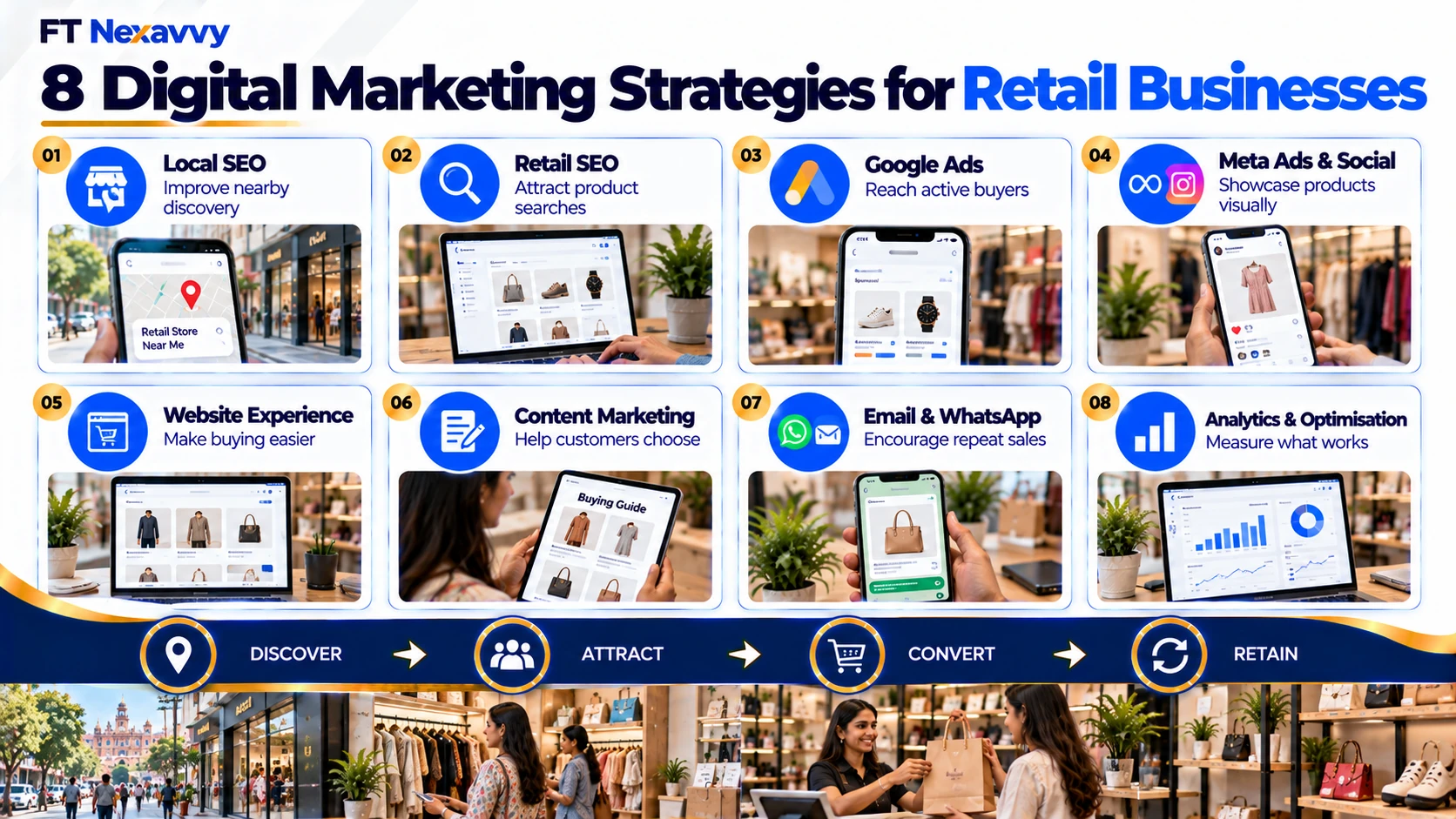 8 Digital Marketing Strategies for Retail Businesses
1. Improve Local SEO and Google Business Profile
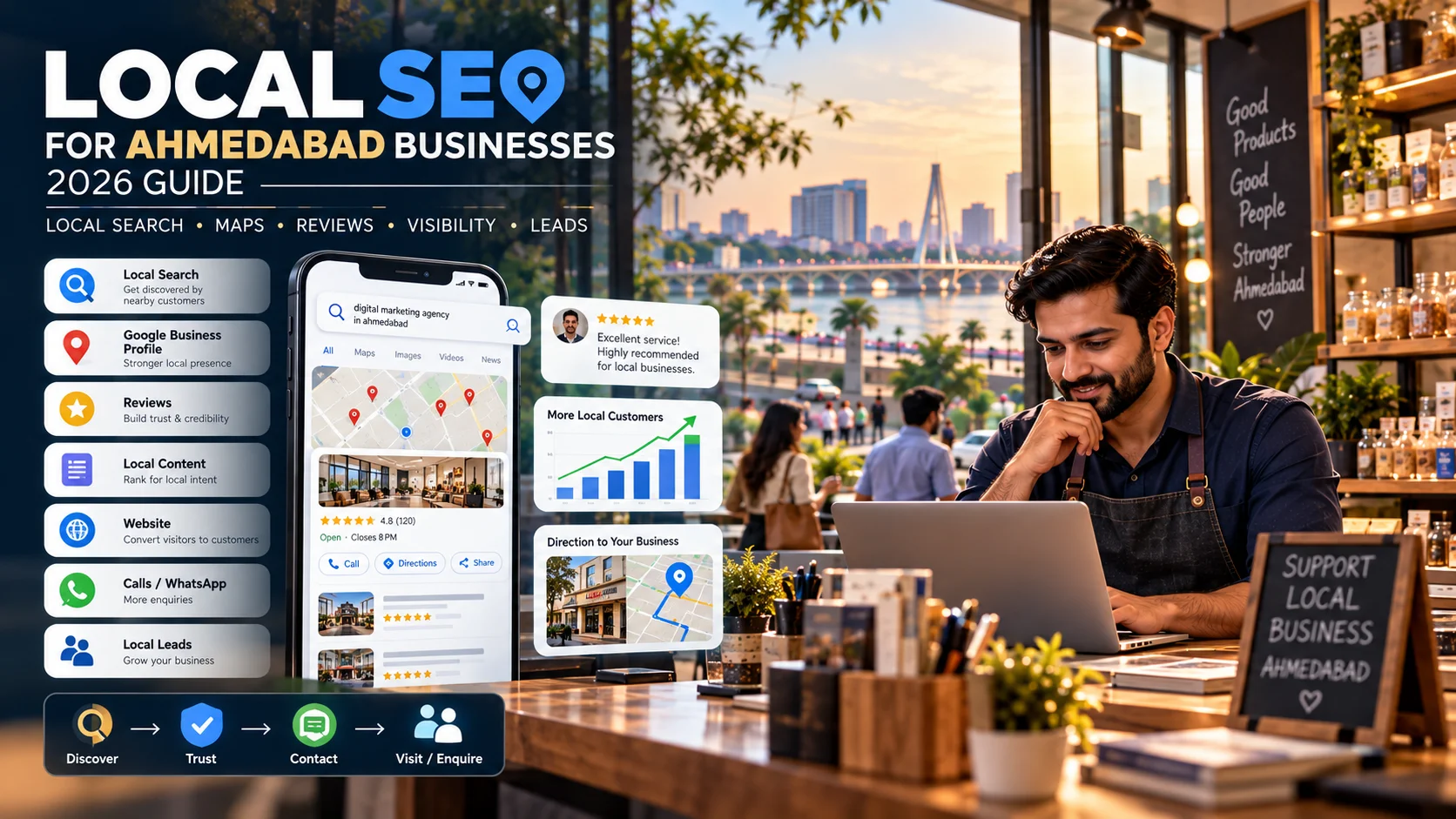
Local SEO helps retail stores appear when people search for relevant products or businesses in a specific area. Google Business Profile is particularly useful for physical stores because customers can discover business information through Google Search and Maps.
For example, a customer might search for a clothing store in Satellite, an electronics shop near SG Highway, or a jewellery showroom in Ahmedabad.
For retailers serving specific neighbourhoods, local visibility should be part of a wider customer acquisition plan.
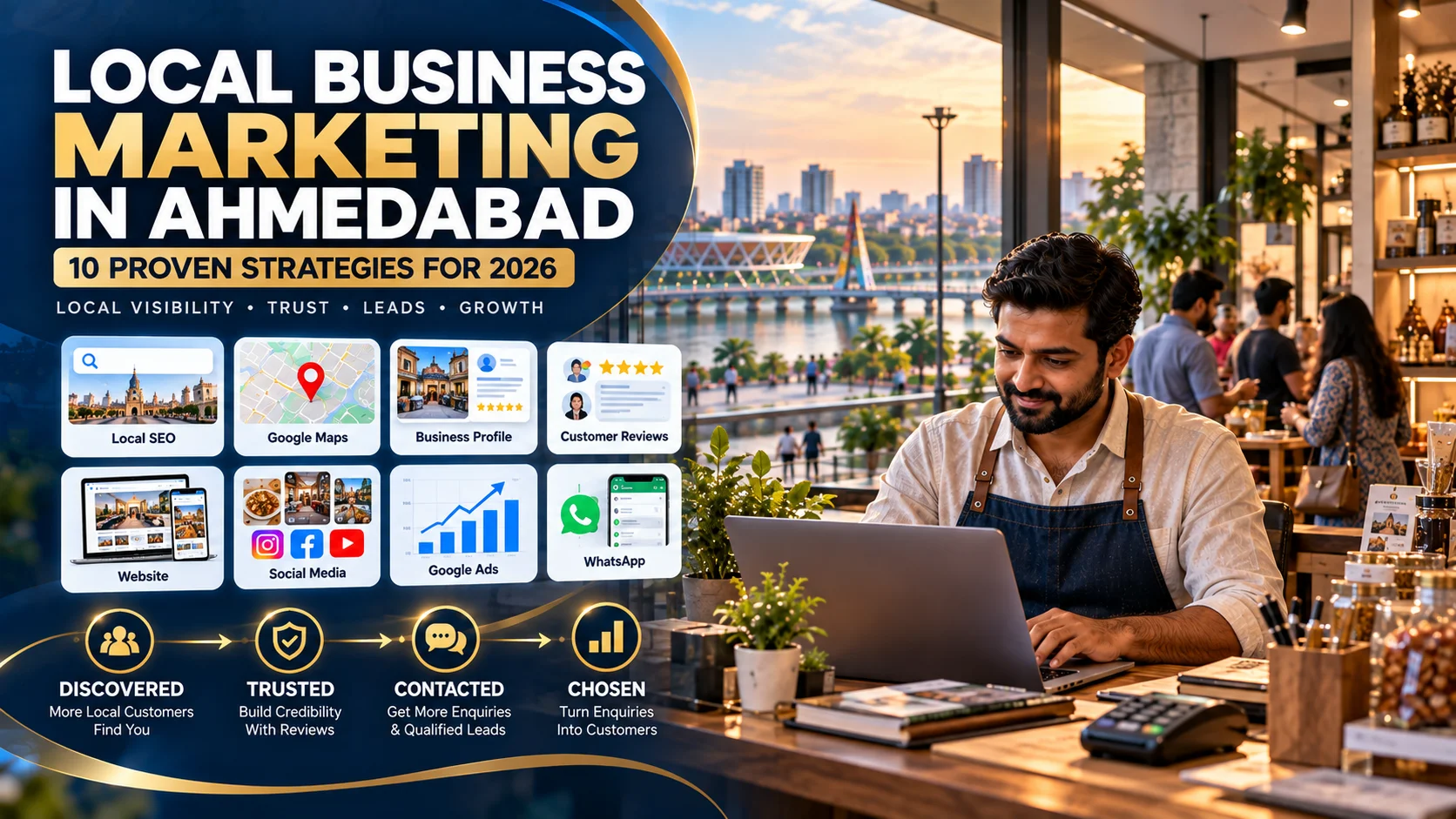
Keep your store information accurate, publish genuinely useful local content, encourage authentic customer reviews and make it easy for shoppers to find directions or contact your store. For a more detailed framework, read this guide to
local business marketing in Ahmedabad.
To improve your local presence:
- Use your real business name and select the most relevant primary and additional categories.
- Keep your address, phone number, opening hours, and website accurate.
- Add genuine photographs of your storefront, products, interiors, and team.
- Maintain updated information about available services and products where supported.
- Encourage genuine customers to leave honest reviews.
- Respond professionally to positive and negative feedback.
- Ensure your website displays consistent business contact details.
- Create useful location pages for genuine store locations when necessary. Each page should provide unique information, including the address, directions, store-specific details, and relevant products.
- Avoid creating multiple near-identical location pages simply to target different neighbourhood keywords.
Practical tip: Track calls, website visits, and direction requests alongside actual store enquiries. These actions indicate interest, but they do not automatically prove a purchase occurred.
2. Use Retail SEO to Attract Product Searches
Search engine optimization helps potential customers discover your website when they search for products, categories, brands, or buying advice.
A retailer should optimize both product-related pages and important category pages. Each page needs clear information that helps customers understand what is available and whether it suits their needs.
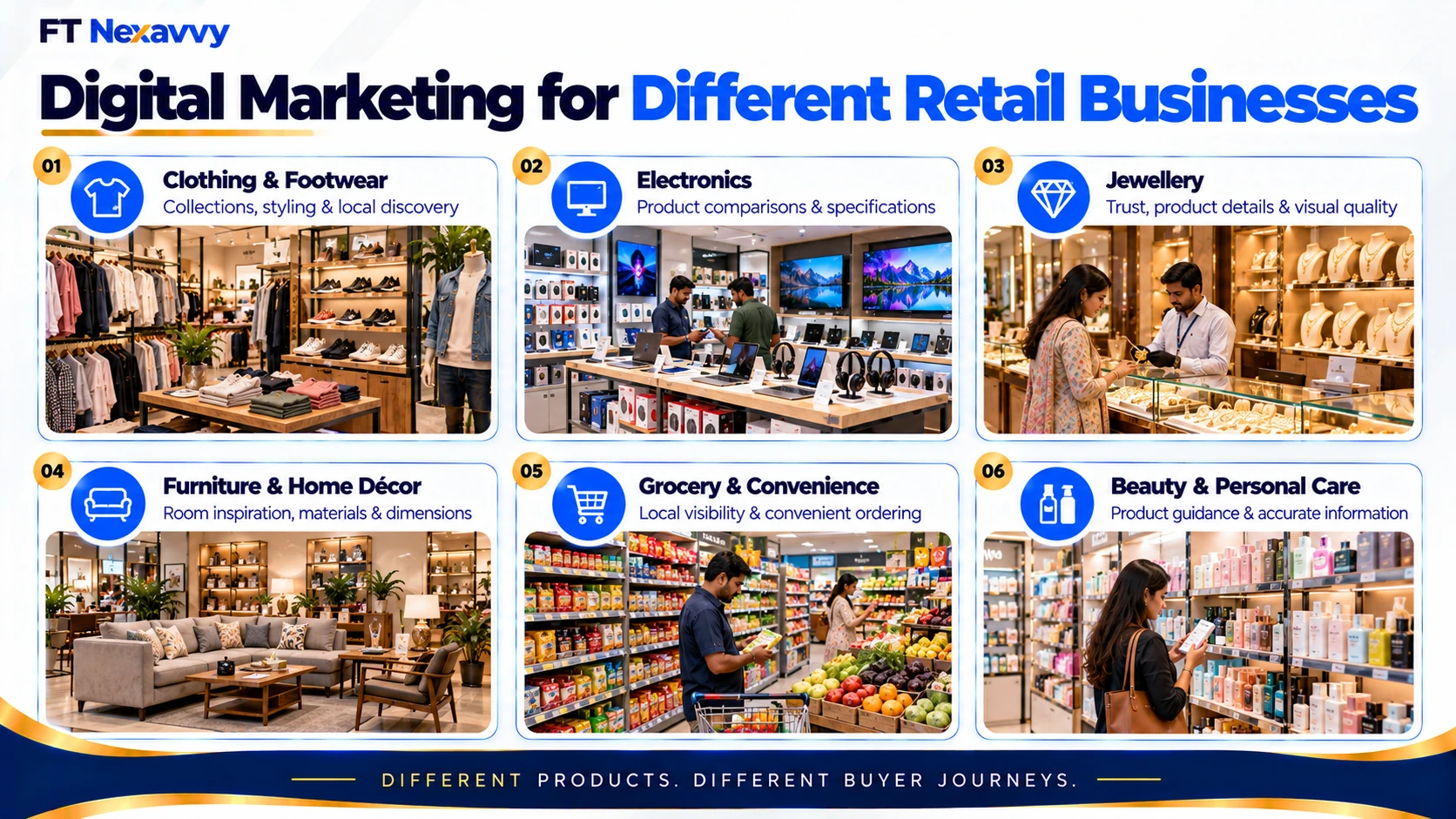
For example, a furniture retailer might create useful category pages for sofas, dining tables, office chairs, and bedroom furniture. A clothing retailer might organise products by clothing type, occasion, size, and relevant collections.
Focus on these SEO activities:
- Research keywords based on product type and customer intent.
- Write useful, original product descriptions.
- Add clear product names, specifications, sizes, materials, and pricing where appropriate.
- Optimise product images and descriptive alternative text.
- Improve mobile usability and website loading speed.
- Use relevant internal links between categories, products, and buying guides.
- Implement appropriate structured data where eligible.
- Review indexing problems and broken links regularly.
Retail SEO works best when keyword research, technical health, useful landing pages and internal links support the same business objective.
A clothing store, electronics shop and furniture retailer may each need different keyword targets based on their products, customer intent and service area.
Businesses that need help building this foundation can explore
SEO services in Ahmedabad to understand how organic search optimization can support long-term visibility.
Do not copy manufacturers' descriptions across every product page without adding useful details. Original information, accurate specifications, availability, and clear buying guidance can make your pages more helpful.
For retailers with online stores, ecommerce SEO can support product discovery beyond local searches. Physical stores can also benefit from a website that answers common questions before customers visit.
3. Run Google Ads for High-Intent Customers
Google Ads can help retailers reach people who are actively searching for products or nearby stores. It can be useful when a business wants to promote a specific product category, seasonal offer, new collection, or store opening.
Before increasing your advertising budget, organise campaigns around product categories, location, search intent and measurable purchase actions.
Send each ad to the most relevant product or category page, and track calls, enquiries, purchases or other meaningful conversions instead of judging performance only by clicks.
The campaign type should match the business model:
| Campaign type | Suitable use |
|---|
| Google Search Ads | Reach people searching for relevant products or retail stores |
| Google Shopping Ads | Showcase eligible products from an online store using a product feed |
| Performance Max | Reach eligible Google advertising placements with suitable assets and conversion data |
| Local-intent search campaigns | Promote relevant store information and offers to potential nearby customers |
For example, an electronics retailer could test searches related to a specific product category, while a clothing store could promote a new seasonal collection.
To improve campaign quality:
- Separate campaigns or ad groups by product category and objective.
- Use relevant keywords and location targeting.
- Send visitors to the matching product, category, or offer page.
- Make pricing, availability, terms, and offer conditions clear.
- Configure conversion tracking before evaluating results.
- Review search terms and exclude irrelevant traffic where appropriate.
- Measure sales or qualified enquiries instead of relying only on clicks.
Google Shopping and Performance Max require appropriate setup and should not be treated as automatic sales generators. Product feed quality, campaign settings, budget, competition, and conversion data all influence performance.
4. Use Instagram, Facebook, and Meta Ads
Retail purchases are often influenced by visual presentation. Instagram and Facebook can help businesses introduce products, demonstrate their features, announce new arrivals, and reach relevant audiences.
These channels can be especially useful for clothing, footwear, jewellery, beauty products, home décor, and lifestyle retail.
Retail social media should do more than generate likes. Use product demonstrations, styling ideas, new-arrival videos, customer questions and seasonal promotions to help shoppers understand what makes your products relevant.
Paid campaigns can then reach suitable audiences, while retargeting can reconnect with people who have already shown interest.
A practical social media strategy should include:
- Product photographs and short demonstration videos.
- New-arrival announcements.
- Styling suggestions and product comparisons.
- Frequently asked questions about sizes, materials, and availability.
- Genuine customer feedback shared with permission.
- Store walkthroughs and behind-the-scenes content.
- Seasonal campaigns and clearly explained offers.
Meta Ads can extend this activity beyond existing followers. Retailers can test different creatives, audiences, placements, and objectives to understand what generates meaningful results.
For an online store, product catalogue advertising may help showcase relevant products. For a physical store, campaign messaging can focus on a local offer, product availability, or a reason to visit.
Do not judge social media performance only by likes and followers. Track qualified enquiries, website visits, purchases, and other actions that matter to your business.
5. Improve Your Website and Buying Experience
Marketing can attract visitors, but the website must help them take the next step. A confusing website can waste advertising spend and reduce the value of organic traffic.
Your website should make essential information easy to find.
For a physical retail store, display:
- Store address and opening hours.
- Product categories and available services.
- Clear contact information and directions.
- Current offers with accurate terms.
- Useful photographs and genuine customer feedback.
For ecommerce retailers, also provide clear product prices, delivery information, return policies, payment options, product availability, and a simple checkout process.
Check your website on mobile devices because many customers research products using smartphones. Pay attention to page speed, navigation, product images, broken links, form usability, and checkout errors. Review actual customer behaviour before making major changes.
A retail website should make it easy for visitors to understand the products, compare relevant options and take the next step. Clear navigation, mobile usability, useful product information, visible contact details and a simple purchase journey can reduce unnecessary friction.
6. Use Content Marketing to Help Customers Choose
Useful content can answer questions that customers ask before buying. It can also help retailers build topical relevance around their products and categories.
- Product comparison guides.
- Buying guides for different budgets.
- Product care and maintenance instructions.
- Explanations of materials, features, and specifications.
- Seasonal shopping guides.
- Answers to frequently asked customer questions.
A furniture store could publish a guide to choosing furniture for a small apartment. An electronics retailer might explain the differences between popular product specifications. A jewellery business could create educational content about jewellery care.
Content should support real customer decisions rather than exist only to include keywords. Link relevant articles to the appropriate category or product pages. Include clear next steps, such as checking availability, visiting the showroom, or contacting the store.
7. Use WhatsApp, Email, and Loyalty Marketing
Acquiring a new customer can require considerable effort. Retailers can improve long-term value by helping existing customers discover relevant products and return when they need them.
WhatsApp and email can support customer communication when used with appropriate consent and in line with applicable privacy requirements.
Possible campaigns include:
- New-arrival updates.
- Back-in-stock notifications.
- Order updates and service information.
- Relevant seasonal offers.
- Loyalty rewards and member benefits.
- Product care reminders.
- Requests for genuine customer feedback.
Segment customers where practical. A customer interested in electronics may not want frequent clothing promotions, and a one-time buyer may need different communication from a regular customer.
Customer retention becomes more effective when it is connected to the rest of the marketing journey. A retailer can use helpful content to build awareness, local search to attract nearby shoppers, advertising to promote relevant offers and follow-up communication to encourage repeat purchases.
Keep messages relevant, respect opt-outs, and avoid sending excessive promotional messages. Measure repeat purchases, redemption rates, and revenue where tracking is available. A larger contact list does not necessarily mean stronger customer relationships.
8. Track Results and Improve Campaigns
Retail marketing becomes more useful when businesses can connect activity with commercial outcomes.
Use tools such as Google Analytics 4, Google Search Console, advertising reports, and your point-of-sale or ecommerce system where appropriate.
Monitor metrics that match your business objectives:
- Organic clicks and relevant search visibility.
- Website visits and product-page engagement.
- Calls, direction requests, and qualified enquiries.
- Online purchases and conversion rate.
- Customer acquisition cost.
- Advertising returns on ad spend (ROAS).
- Average order value and repeat purchases.
- Store sales during campaign periods.
For example, suppose a campaign spends ₹10,000 and generates ₹40,000 in attributed sales. The revenue-to-ad-spend ratio is 4:1. However, this does not mean the campaign earned ₹30,000 in profit. Product costs, discounts, delivery, taxes, operating expenses, and attribution accuracy also matter.
Retail marketing performance should be measured against business outcomes, not just impressions or website visits. Compare campaign spend with qualified enquiries, completed purchases, revenue and customer acquisition cost, and use the results to decide where to improve or invest next.
For physical stores, connecting advertising to actual purchases may require point-of-sale records, campaign codes, customer surveys, or other suitable measurement methods. Direction requests and calls are useful signals, but they should not be counted as confirmed sales.

 Digital Marketing for Ecommerce Businesses in Ahmedabad: Grow Sales




 Local Business Marketing in Ahmedabad: 10 Proven Strategies for 2026
 How Local SEO Helps Ahmedabad Businesses Grow: 10 Proven Benefits
 Digital Marketing Strategy for Ahmedabad Businesses: 10 Proven Strategies
 Digital Marketing for Small Businesses in Ahmedabad: 2026 Guide