
 Digital Marketing for Textile Businesses in Ahmedabad: Grow Sales
Digital MarketingOctober 15, 2026

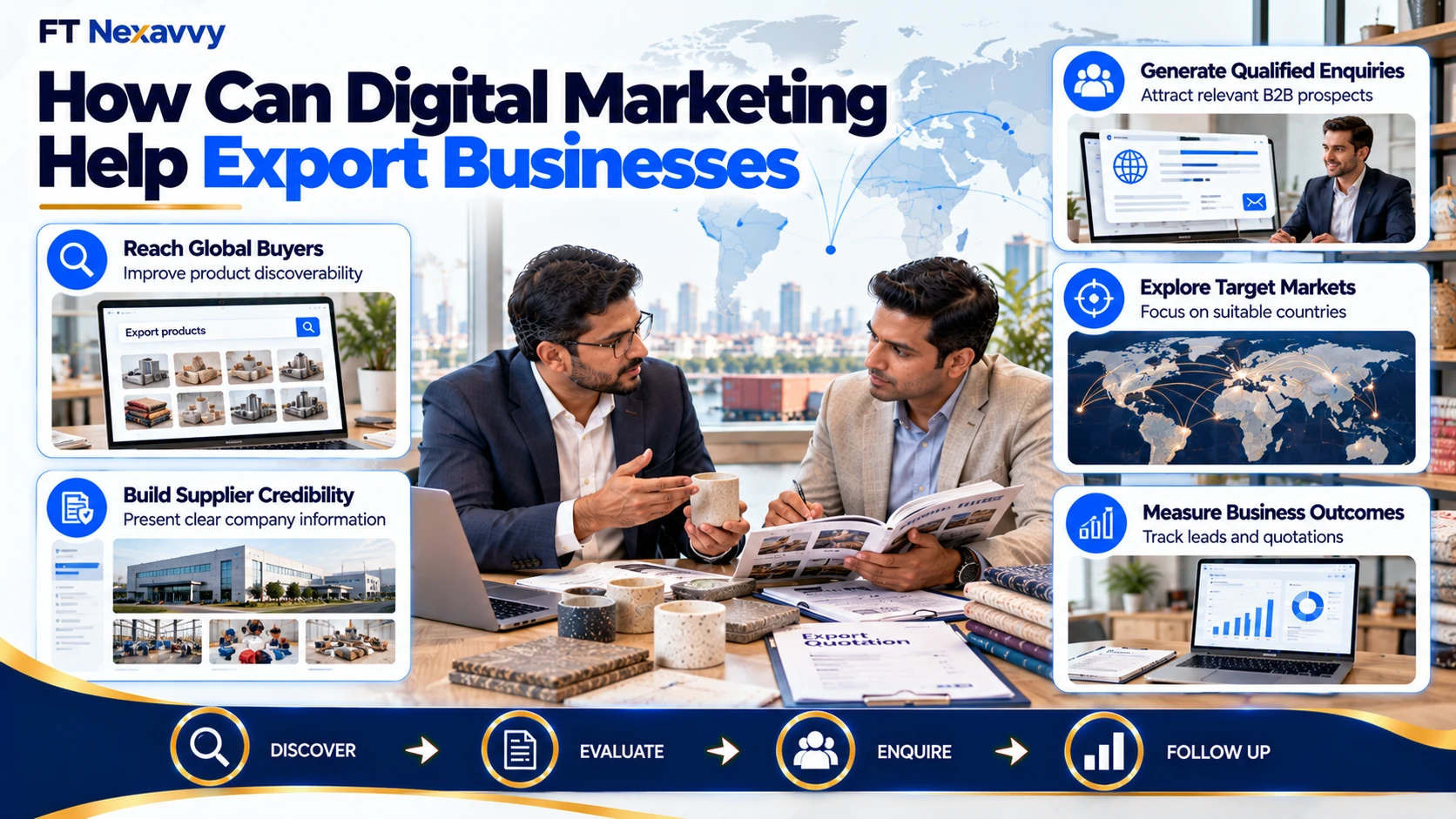
"For exporters and manufacturers in Ahmedabad, digital marketing is not simply about attracting overseas website traffic. It is about reaching qualified buyers in target international markets, presenting product specifications and manufacturing capabilities with credibility, and building a structured system to turn global inquiries into profitable export orders."
– FT Nexavvy
| Keyword group | Example search intent | Suitable page |
|---|---|---|
| Product searches | Buyers looking for a specific product | Product page |
| Supplier searches | Buyers comparing manufacturers or exporters | Supplier landing page |
| Application searches | Businesses looking for products for a particular use | Application page |
| Specification searches | Buyers researching technical requirements | Detailed product page |
| Country-specific searches | Buyers seeking suppliers from a particular origin | Relevant market page |
| Brand searches | Buyers evaluating your company | Company and product pages |

| Channel | Main benefit | Best suited for | Main limitation |
|---|---|---|---|
| International SEO | Organic visibility in target markets | Exporters with defined product categories | Requires time and ongoing optimisation |
| Google Ads | Reaches active search demand | Products with clear commercial search intent | Paid traffic can be costly or irrelevant |
| B2B prospecting and relationship building | Industrial suppliers and business exporters | Requires focused outreach | |
| Content marketing | Builds product understanding and trust | Technical or considered purchases | Needs useful information and distribution |
| Email marketing | Supports follow-up and buyer relationships | Permission-based contacts and existing prospects | Requires relevant communication |
| YouTube | Demonstrates products and capabilities | Products that benefit from visual explanation | Production and distribution take effort |
| Local SEO | Helps buyers verify local business information | Businesses with an eligible local presence | Does not replace international targeting |
| Period | Key activities | Intended outcome |
|---|---|---|
| Days 1–30 | Define ideal buyers, select target markets, audit the website, research keywords, improve priority product pages | Clear market and website foundations |
| Days 31–60 | Publish useful product content, improve technical SEO, configure tracking, test selected campaigns or outreach | Initial visibility and enquiry data |
| Days 61–90 | Review lead quality, refine targeting, improve landing pages, organise sales follow-ups | Better-informed marketing decisions |

It is the use of online channels such as SEO, paid advertising, websites, professional networks, and content marketing to reach international buyers and generate business enquiries.
Exporters can use international SEO, Google Ads, LinkedIn prospecting, relevant B2B platforms, industry content, and professional outreach. The best approach depends on the product, target market, and buyer type.
Yes. SEO can help exporters appear for relevant product and supplier searches in selected markets. Results depend on competition, website quality, search demand, and the usefulness of the content.
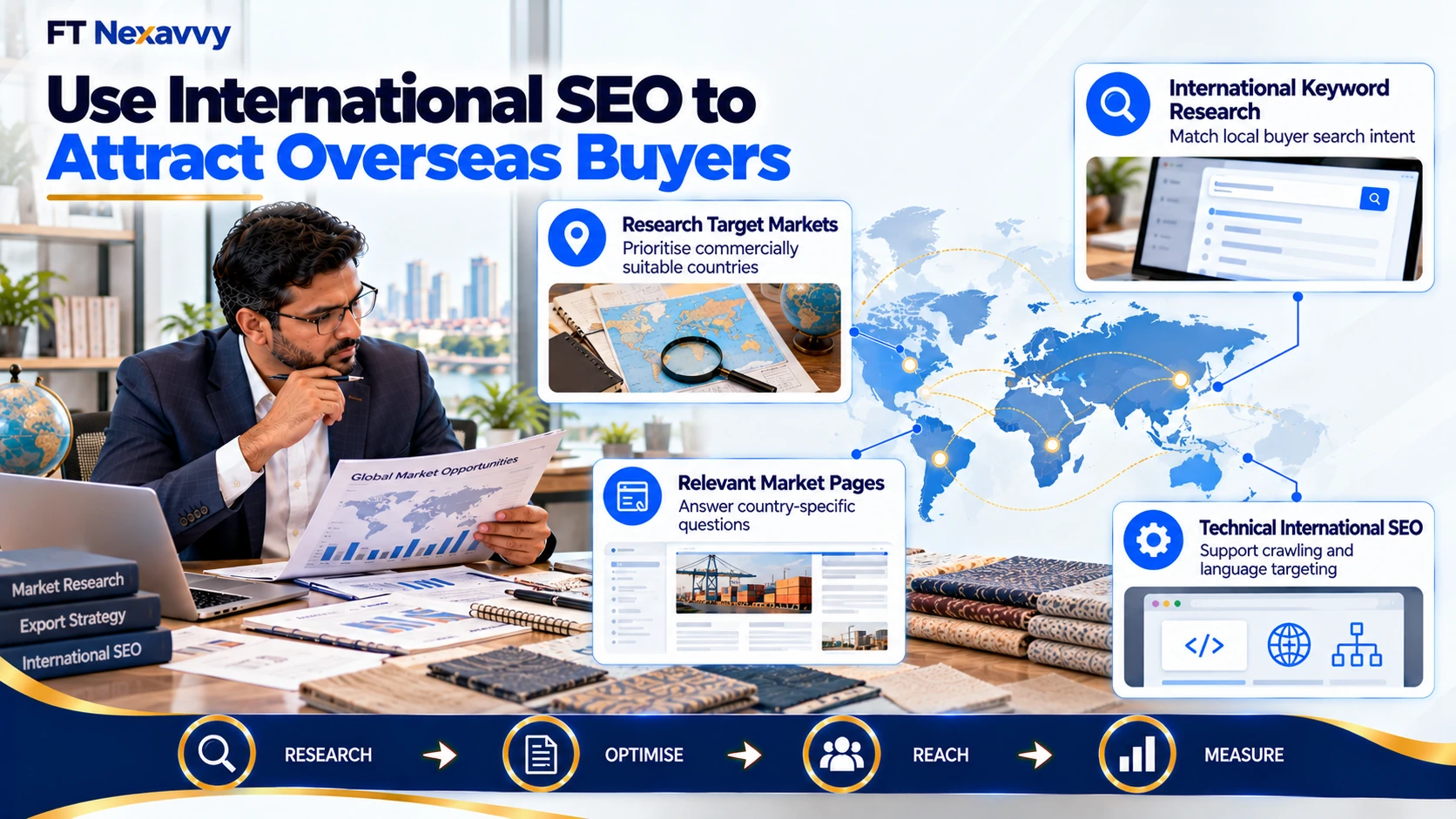
International SEO helps websites target audiences in different countries or languages. It may involve country-specific keyword research, useful market pages, appropriate URL structures, and technical signals for international targeting.
Google Ads can reach buyers searching for relevant products or suppliers. Results depend on keyword intent, market competition, landing-page quality, budget, and lead qualification.
Define the ideal buyer, create relevant product pages, target suitable markets, and provide a clear enquiry process. Qualify enquiries based on product fit, company details, quantity, and purchasing requirements.
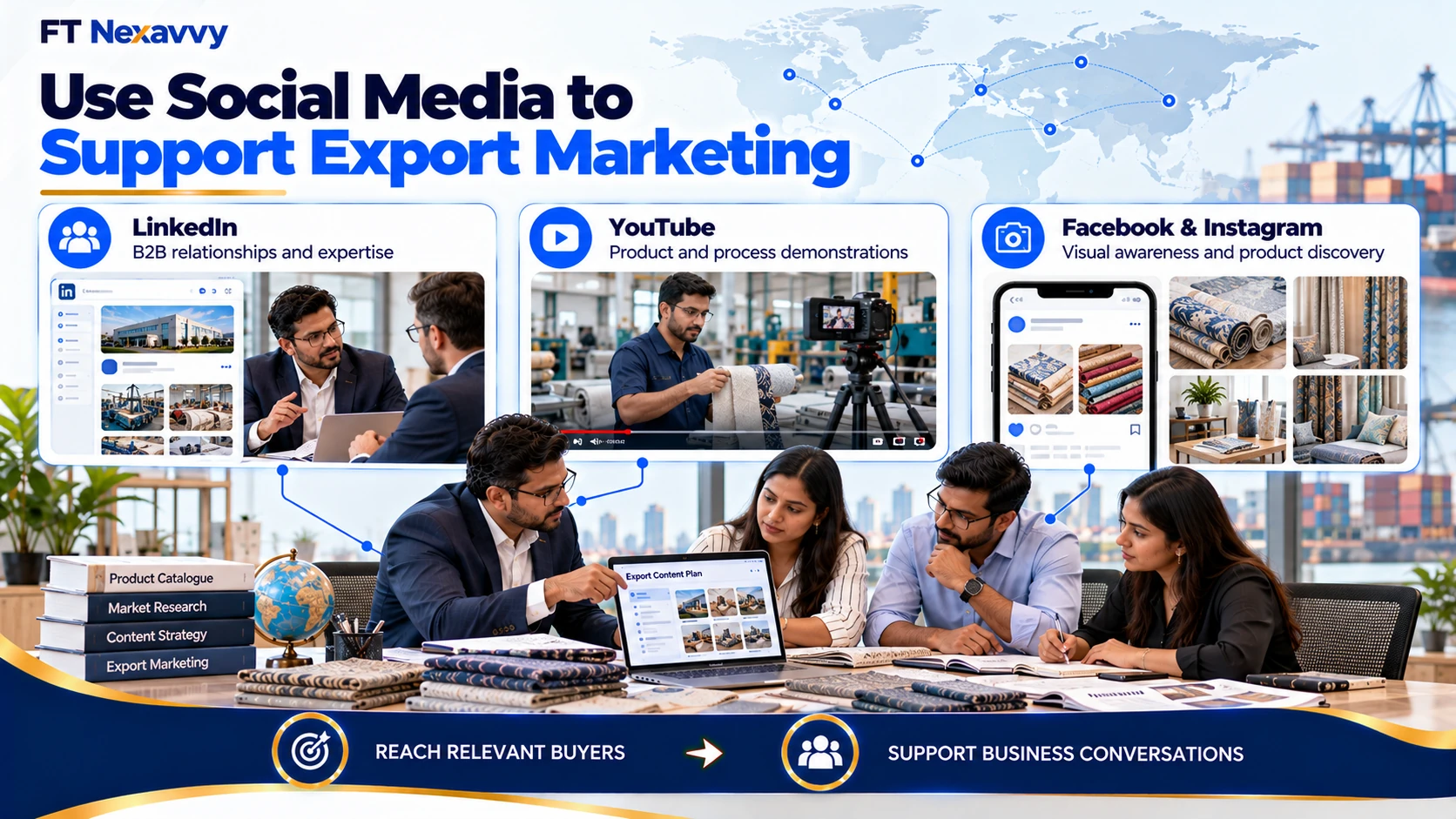
LinkedIn can help exporters identify relevant companies and professionals, share product expertise, and build B2B relationships. Focused research and personalised communication are more useful than indiscriminate outreach.
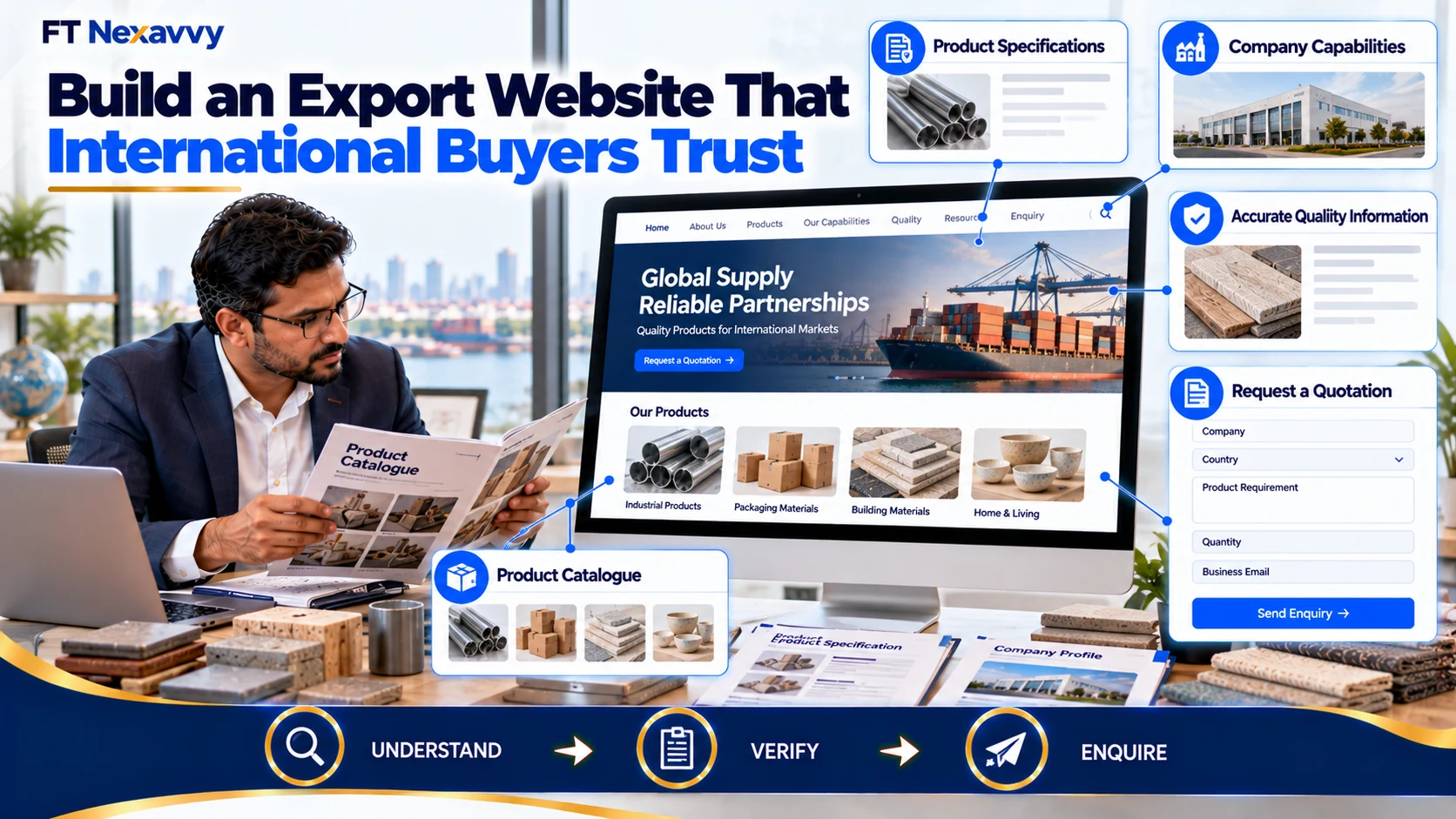
It should provide product specifications, company information, manufacturing capabilities, accurate certifications, relevant catalogues, contact details, and an easy way to request a quotation.
The budget depends on target countries, product margins, competition, campaign costs, and sales capacity. Start with a manageable test budget and increase spending when qualified leads and commercial results justify it.
Timelines vary with competition, website condition, content quality, and existing search visibility. Exporters should monitor technical improvements, relevant impressions, qualified traffic, and enquiries without assuming a fixed deadline.
Create separate pages when target markets have genuinely different requirements, search language, product availability, or commercial information. Avoid near-identical pages that only replace country names.
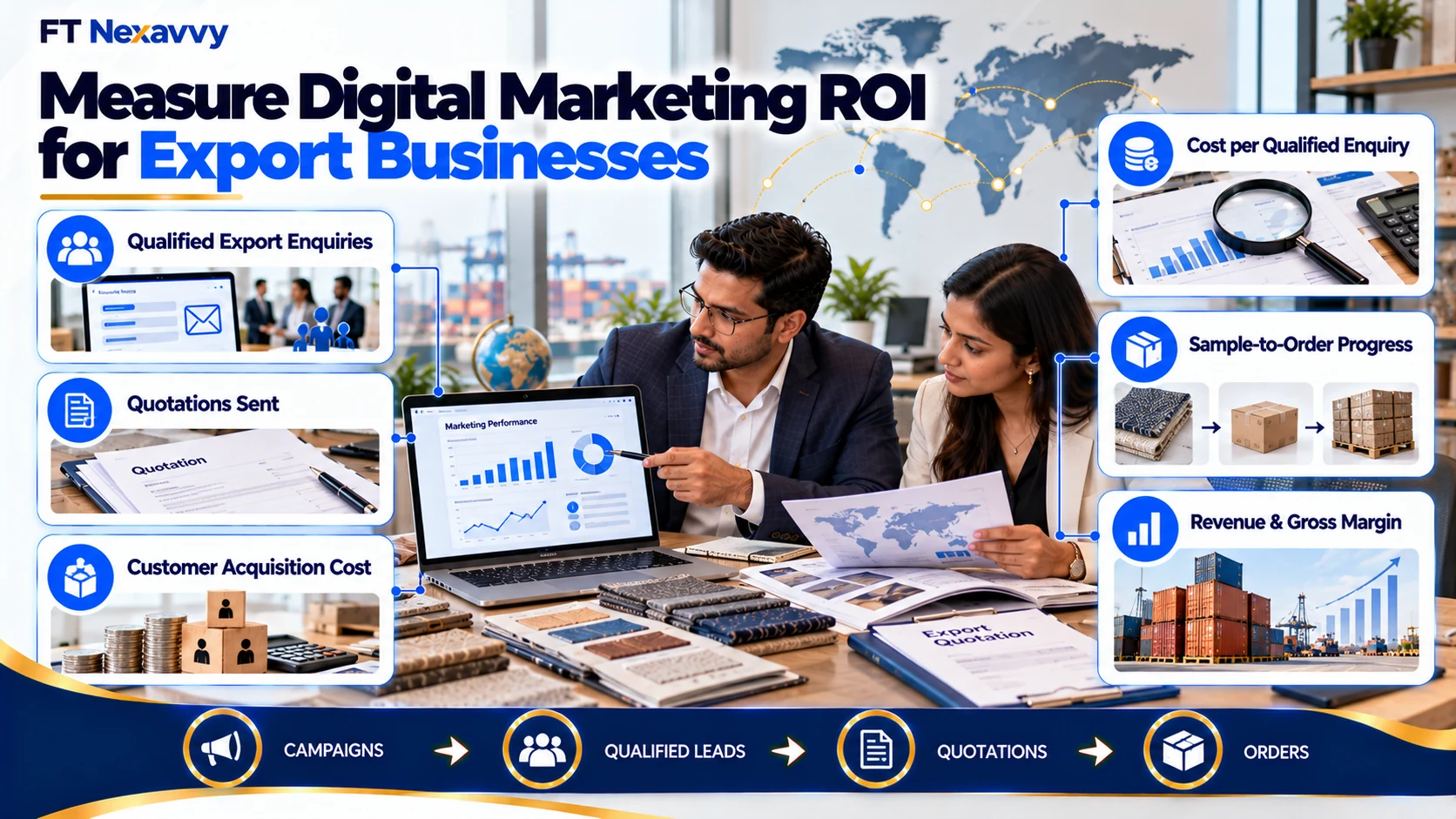
Track qualified enquiries, advertising costs, quotations, orders, customer acquisition costs, revenue, and gross margin. Connect marketing reports with sales records to understand which activities contribute to actual business outcomes.
It can support brand awareness, product education, professional networking, and relationship building. The best platform depends on your industry and the people involved in purchasing decisions.
Smaller exporters can focus on specific product categories, applications, or buyer segments. Detailed product information, reliable communication, and focused market targeting can help them compete for relevant opportunities.
Export marketing must consider international buyer expectations, market-specific search behaviour, language, delivery capability, and relevant commercial or compliance requirements. The website and campaigns should reflect the markets being targeted.
Not every exporter needs one. A translated website can help when buyers in priority markets prefer another language, but translations should be accurate, professionally reviewed, and supported by a clear content and maintenance plan.
Provide clear product specifications, relevant trust information, accessible contact details, simple forms, and appropriate calls to action. Review visitor behaviour and enquiry quality to identify improvements.
An agency may help with international SEO, paid advertising, website development, content, and tracking. Choose a partner that understands your business objectives, explains its process, and reports on qualified leads rather than vanity metrics alone.
Looking for Digital Marketing Support for Your Export Business?
Read Related Articles:
Author

FT Nexavvy
FT Nexavvy editorial team.


ON THIS PAGE
Digital Marketing for Textile Businesses in Ahmedabad: Grow Sales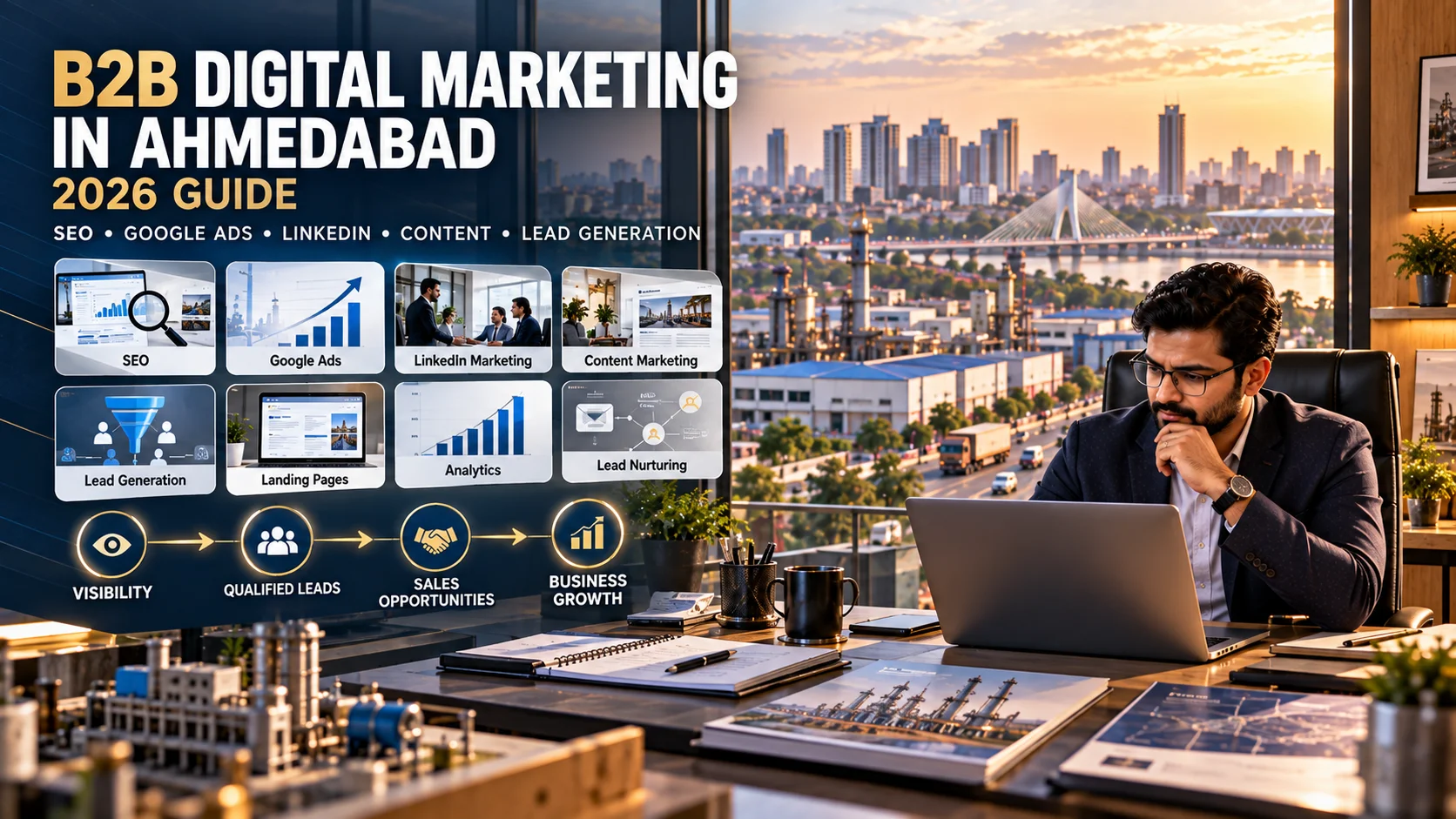 B2B Digital Marketing Ahmedabad: 10 Proven Strategies for 2026
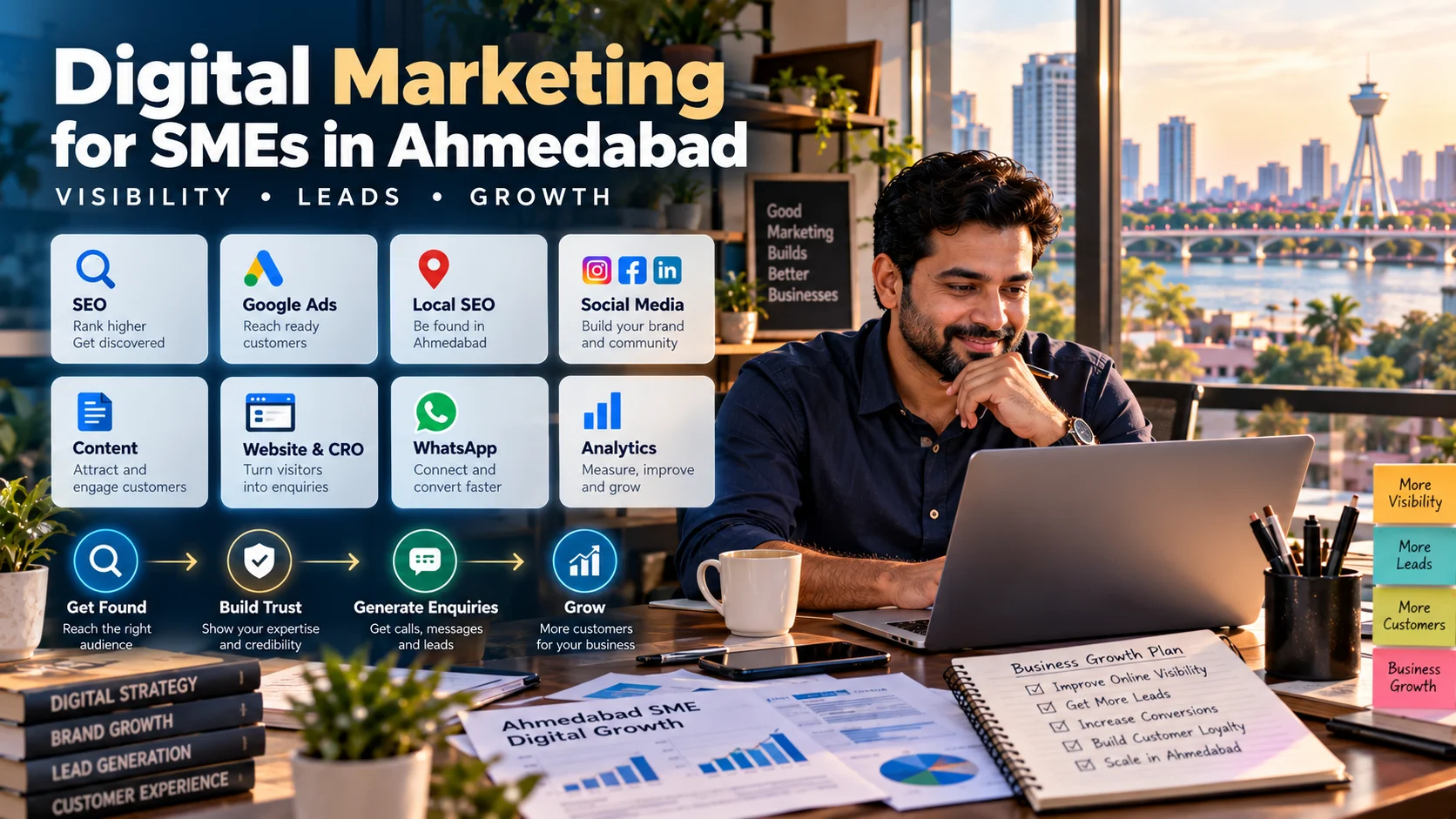 Digital Marketing for SMEs in Ahmedabad: 10 Proven Growth Strategies
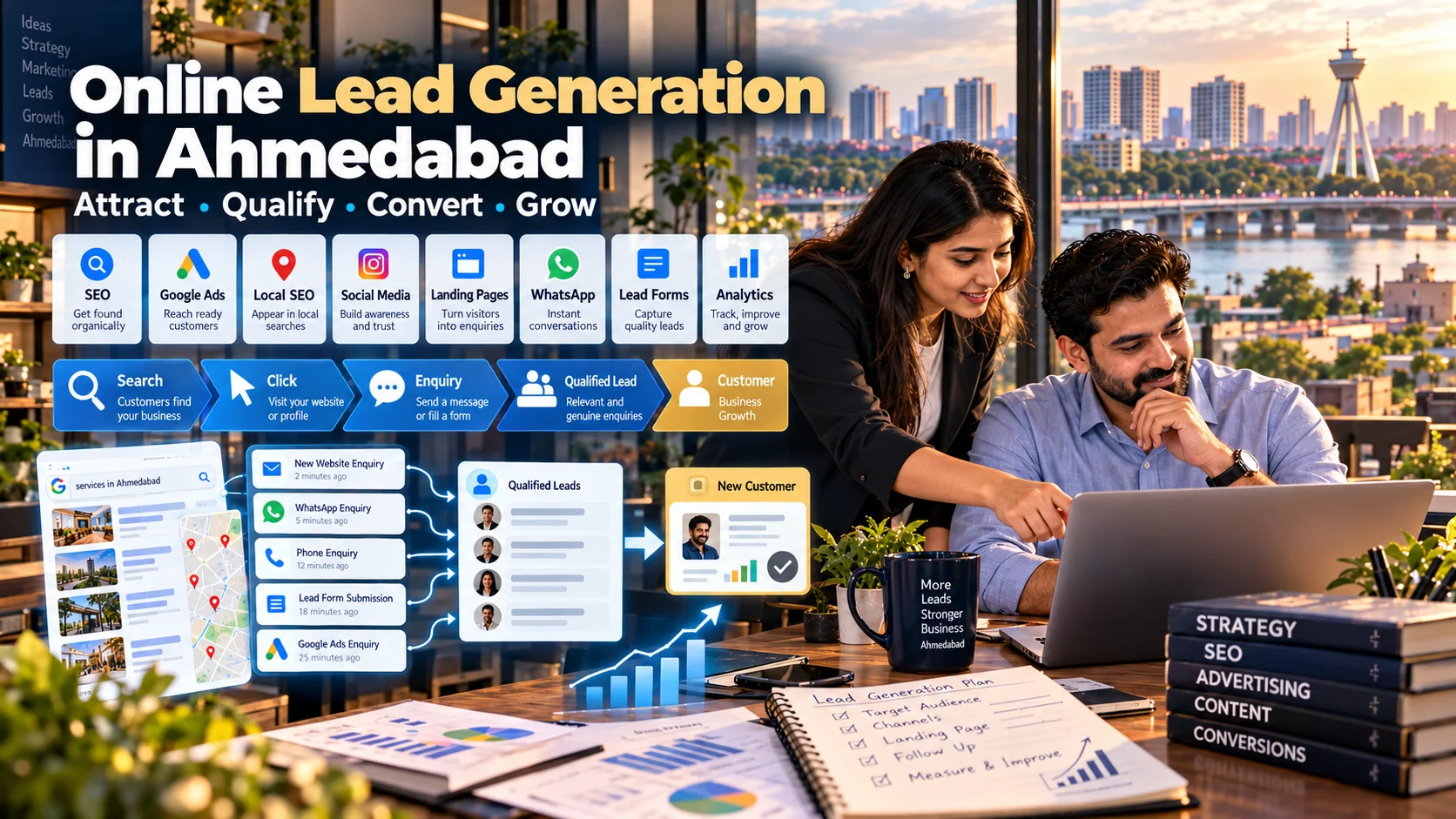 Online Lead Generation for Ahmedabad Businesses: 10 Proven Strategies
 Local Business Marketing in Ahmedabad: 10 Proven Strategies for 2026
Discuss Your
Digital Marketing Goals

NDA? Absolutely just ask.
We’ll respond in 24 hours fast & focused.
Work with senior UX experts, not juniors.
Schedule a call:
Mr Panchal
Founder & CEO
How can we help you?
Prefer email?
hello@ftnexavvy.com

DIGITAL MARKETING AGENCY IN AHMEDABAD

Working Hours
Monday – Saturday 9:00 am – 6:00 pm ( Sunday > Closed )
Services
Use Cases
Travel
Health & Fitness
Educations
News App
Food Order & Delivery App
Work inquiries
Interested in working with us?
hello@ftnexavvy.com
Call : +91 90303 48383
Ahmedabad Office:
A-531, Money Plant High Street,
Gota, Ahmedabad - 382470
Looking for a job opportunity?
See open positions
Sign up for the newsletter










Disclaimer
© 2025-2026 Nexavvy. All rights reserved.
