
 How Local SEO Helps Ahmedabad Businesses Grow: 10 Proven Benefits
Local SEOSeptember 28, 2026
"Successful digital marketing for restaurants is not about posting food photographs every day or spending money on advertisements without a plan. It requires a combination of local SEO, social media, paid advertising, an effective website and customer retention to drive real orders, table reservations, and repeat visits."
– FT Nexavvy
| Campaign type | Suitable objective | What to measure |
|---|---|---|
| Search ads | Reach people searching for relevant dining options | Calls, reservations and orders |
| Location-focused campaigns | Increase relevant local discovery | Directions, visits where measurable, and enquiries |
| Promotion-focused campaigns | Promote a specific offer or event | Redemptions and profitable transactions |
| Social media ads | Create awareness and promote visual offers | Qualified actions and attributed sales |
| Metric | What it tells you |
|---|---|
| Google Search and Maps visibility | Whether customers can discover the restaurant |
| Website visits | Whether online channels attract relevant traffic |
| Calls and booking enquiries | Whether customers are considering a visit |
| Completed orders | Whether the campaign generates transactions |
| Average order value | How much customers spend per order |
| Cost per acquired customer | How much marketing costs to acquire a customer |
| Repeat purchase rate | Whether customers return |
| Campaign return | Whether attributed revenue justifies the marketing investment |
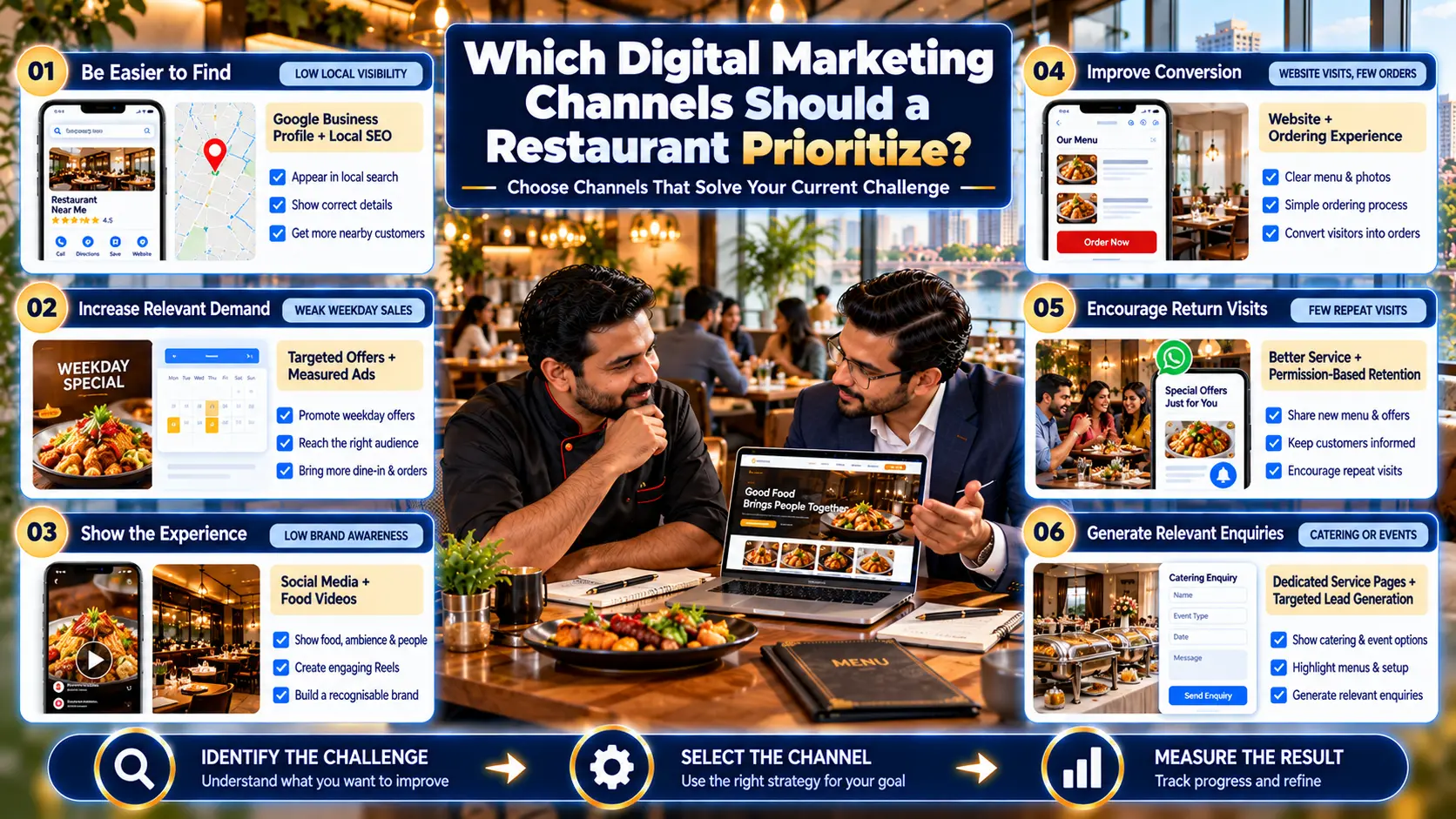
| Restaurant situation | Recommended starting point |
|---|---|
| Few people find the restaurant locally | Google Business Profile and local SEO |
| Strong weekend business but weak weekdays | Targeted offers and carefully measured ads |
| Good food but low brand awareness | Social media and food-focused video content |
| Many website visits but few orders | Website and ordering experience improvements |
| Many first-time customers but few repeat visits | Service improvements and permission-based retention campaigns |
| Catering or event revenue is a priority | Dedicated service pages and targeted lead generation |
Goal: Remove basic barriers that prevent customers from discovering or choosing your restaurant.
Goal: Identify which channels and messages attract relevant customers.
Goal: Build a repeatable process for attracting and retaining profitable customers.
Start with Google Business Profile, local SEO, a useful mobile-friendly website and consistent social media content. Add paid advertising once your menu, ordering journey and conversion tracking are ready.
Improve local discovery, promote popular dishes, make ordering simple and use relevant campaigns. Track completed orders and profitability to understand which activities are effective.
Yes. SEO can help customers discover restaurants searching for relevant cuisines, dining experiences and nearby options. Results depend on competition, website quality and ongoing optimization.
Local SEO improves the accuracy and relevance of a restaurant's online presence. It can support discovery through Google Search, Maps and other relevant local listings.
Google Business Profile is generally available without a profile management fee. Restaurants may still incur costs for professional management, photography or other marketing activities.
Google Ads can be useful when customers are actively searching for relevant dining options. Campaigns should use suitable targeting, clear landing pages and reliable conversion tracking.
It can be effective for showing food, ambience, events and customer experiences. Success depends on content quality, audience relevance and whether social activity leads to meaningful actions.
A manageable starting point is three or four quality posts or Reels per week. Adjust frequency based on content resources, audience response and business results.
A website can provide a reliable place for menus, location details, opening hours, reservations and direct ordering options. Its value depends on how well it serves customer needs.
Provide a good customer experience and invite all customers to share honest feedback without pressure. Never buy reviews or offer rewards specifically for positive ratings.
Combine an accurate Google Business Profile, local social media content, relevant local outreach and a clearly defined opening promotion. Track visits, enquiries and sales rather than awareness alone.
Yes. With appropriate consent, restaurants can use WhatsApp for customer enquiries, updates and relevant promotions. Messaging should respect privacy and opt-out requests.
Compare the cost of marketing with the additional revenue and contribution it generates. Include advertising spend, management fees, commissions, discounts and other relevant costs.
SEO aims to build organic search visibility over time. Paid advertising buys placement or reach through advertising platforms and can provide faster exposure while campaigns are active.
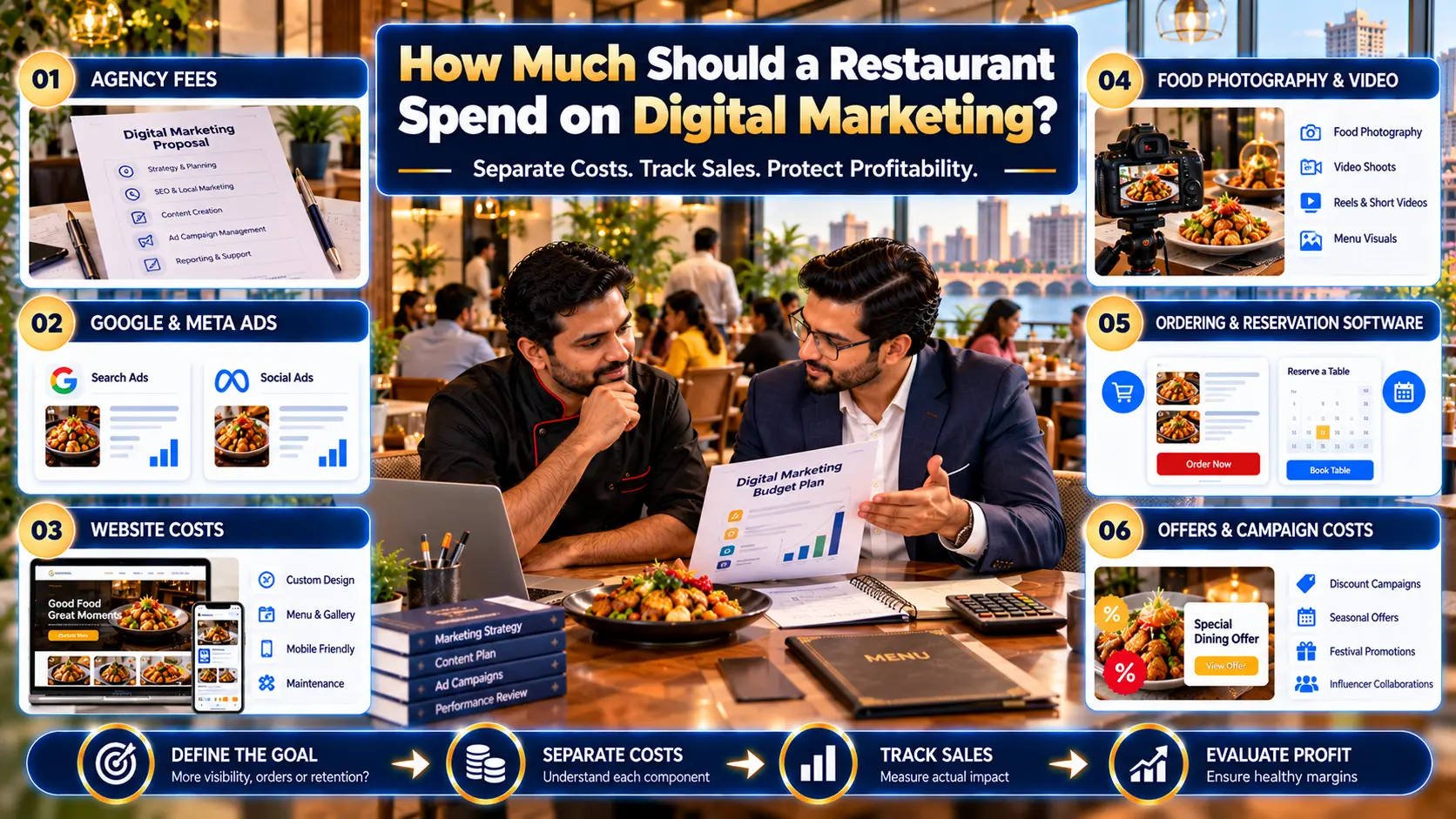
Costs vary by services, competition, content requirements and advertising budget. Request a scope-based estimate that separates management fees, media spending and production costs.
Author

FT Nexavvy
FT Nexavvy editorial team.


ON THIS PAGE
How Local SEO Helps Ahmedabad Businesses Grow: 10 Proven Benefits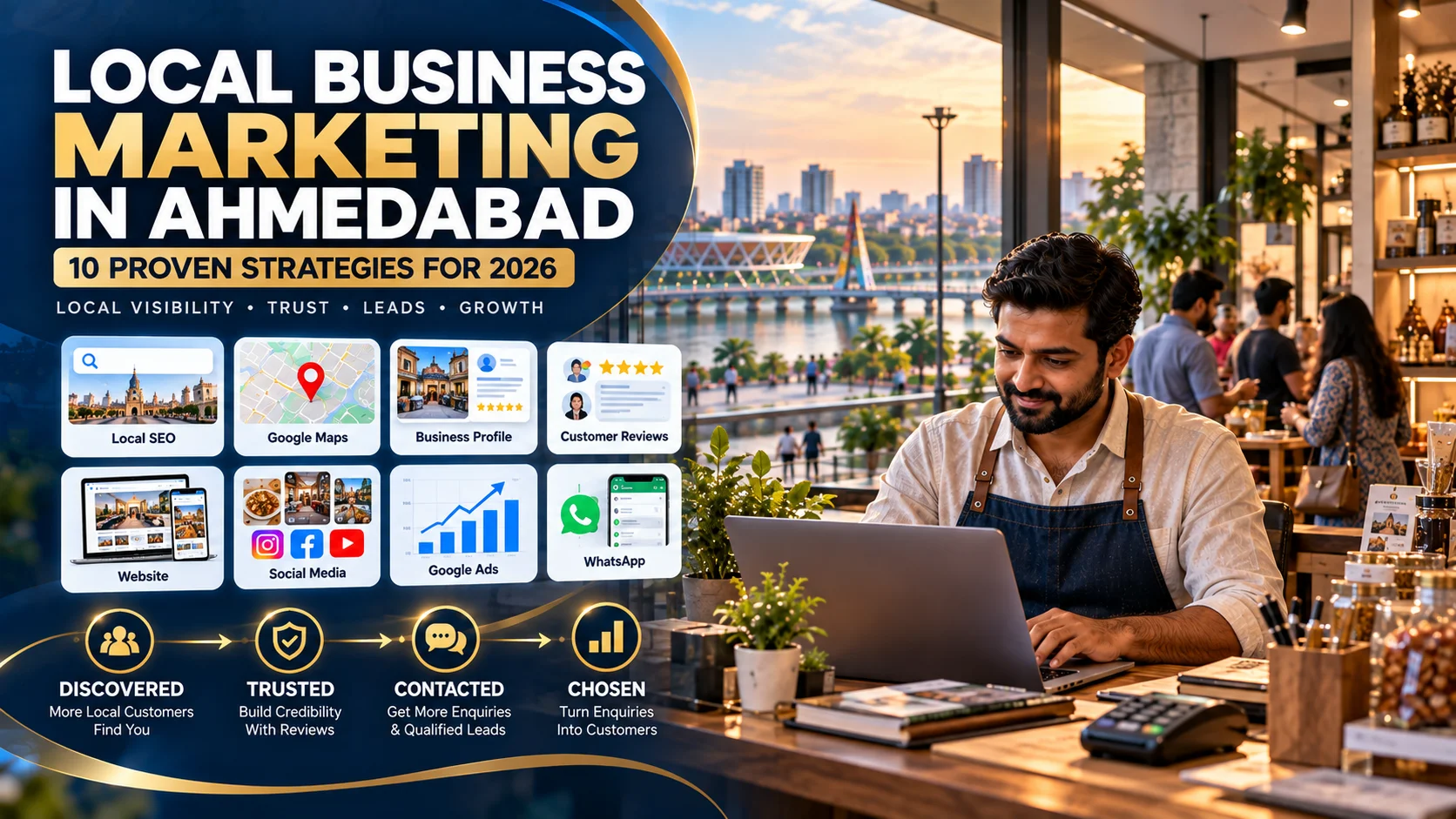 Local Business Marketing in Ahmedabad: 10 Proven Strategies for 2026
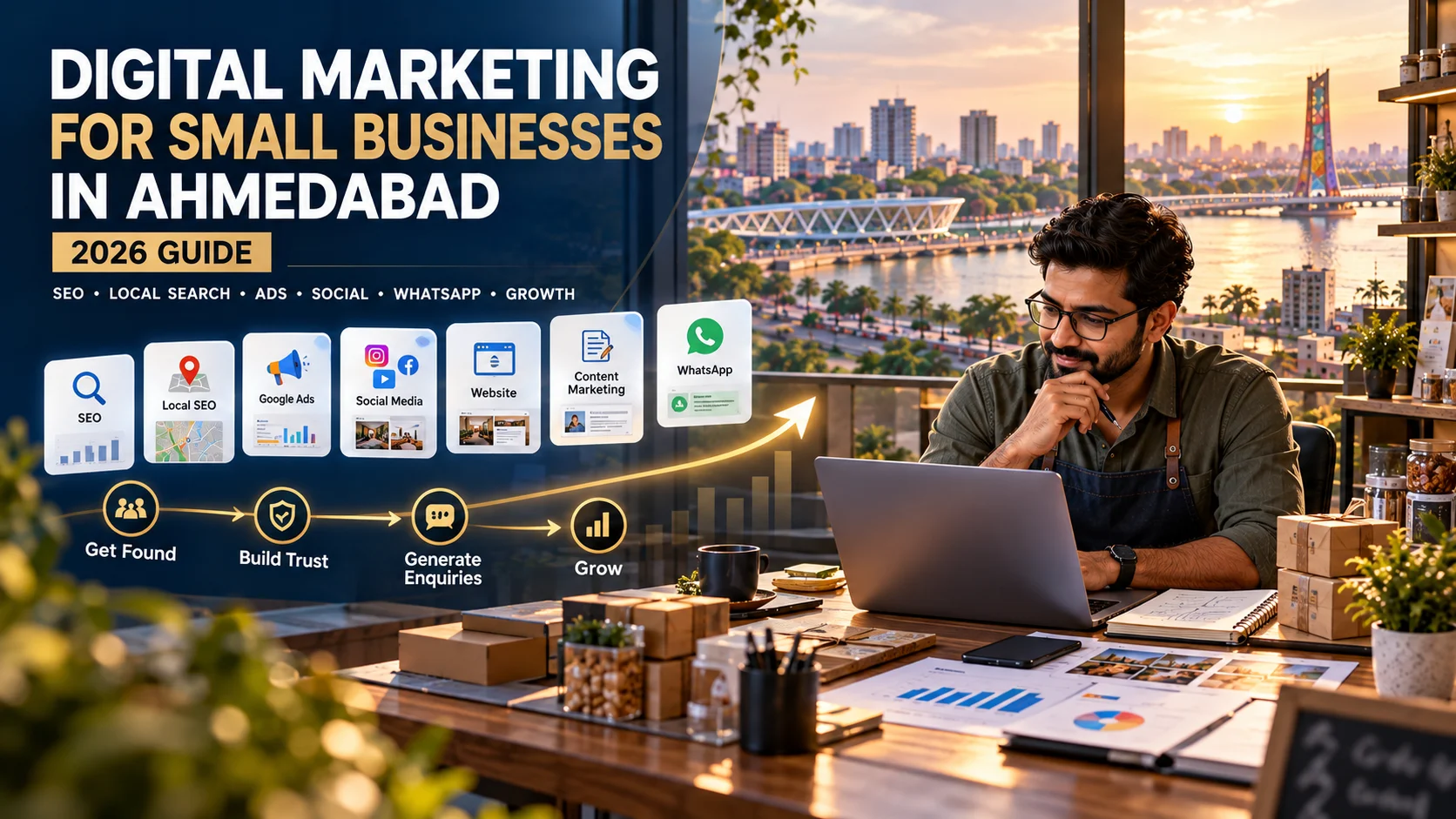 Digital Marketing for Small Businesses in Ahmedabad: 2026 Guide
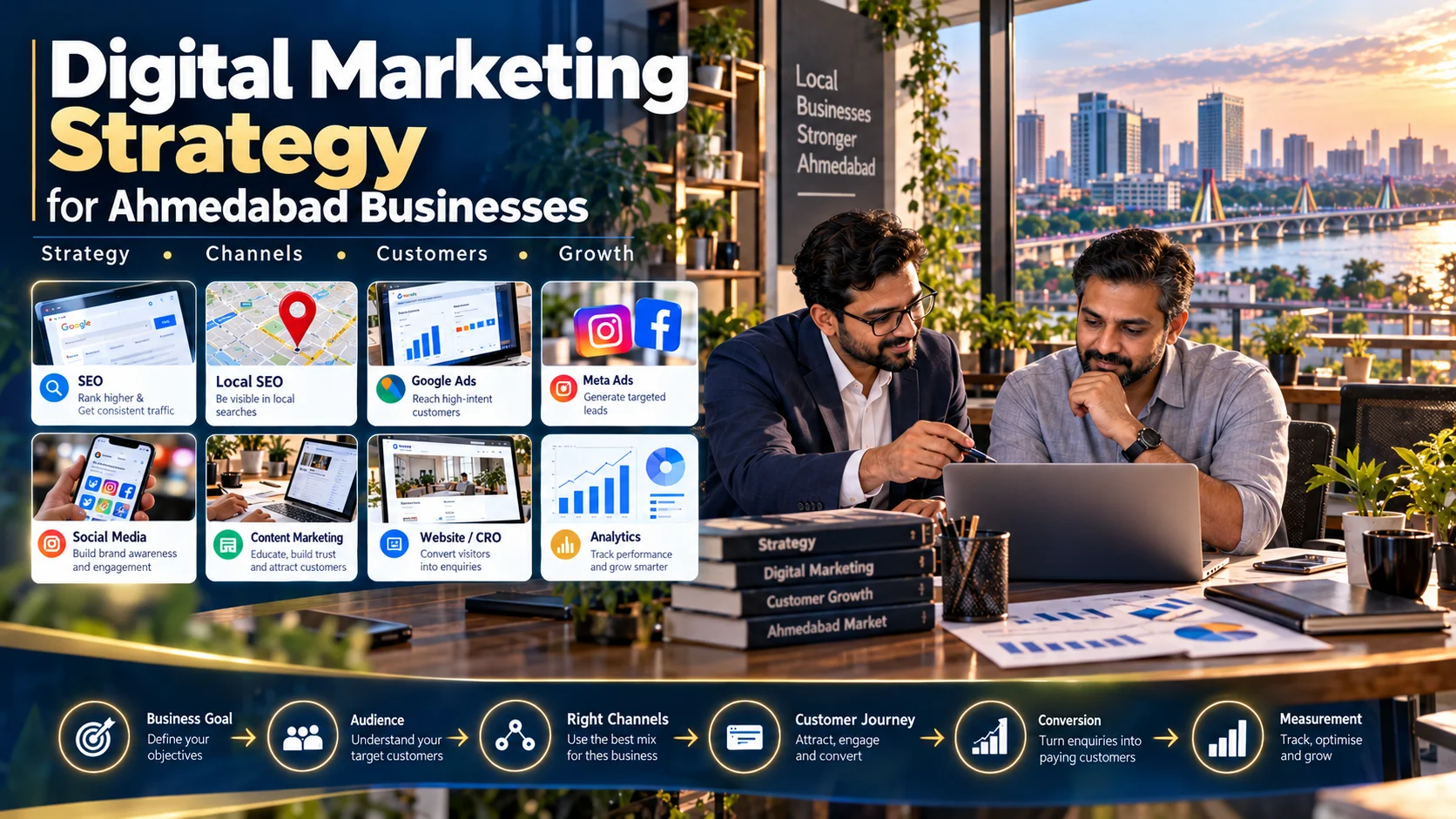 Digital Marketing Strategy for Ahmedabad Businesses: 10 Proven Strategies
Discuss Your
Digital Marketing Goals

NDA? Absolutely just ask.
We’ll respond in 24 hours fast & focused.
Work with senior UX experts, not juniors.
Schedule a call:
Mr Panchal
Founder & CEO
How can we help you?
Prefer email?
hello@ftnexavvy.com

DIGITAL MARKETING AGENCY IN AHMEDABAD

Working Hours
Monday – Saturday 9:00 am – 6:00 pm ( Sunday > Closed )
Services
Use Cases
Travel
Health & Fitness
Educations
News App
Food Order & Delivery App
Work inquiries
Interested in working with us?
hello@ftnexavvy.com
Call : +91 90303 48383
Ahmedabad Office:
A-531, Money Plant High Street,
Gota, Ahmedabad - 382470
Looking for a job opportunity?
See open positions
Sign up for the newsletter










Disclaimer
© 2025-2026 Nexavvy. All rights reserved.
