
 B2B Digital Marketing Ahmedabad: 10 Proven Strategies for 2026
Digital MarketingSeptember 26, 2026
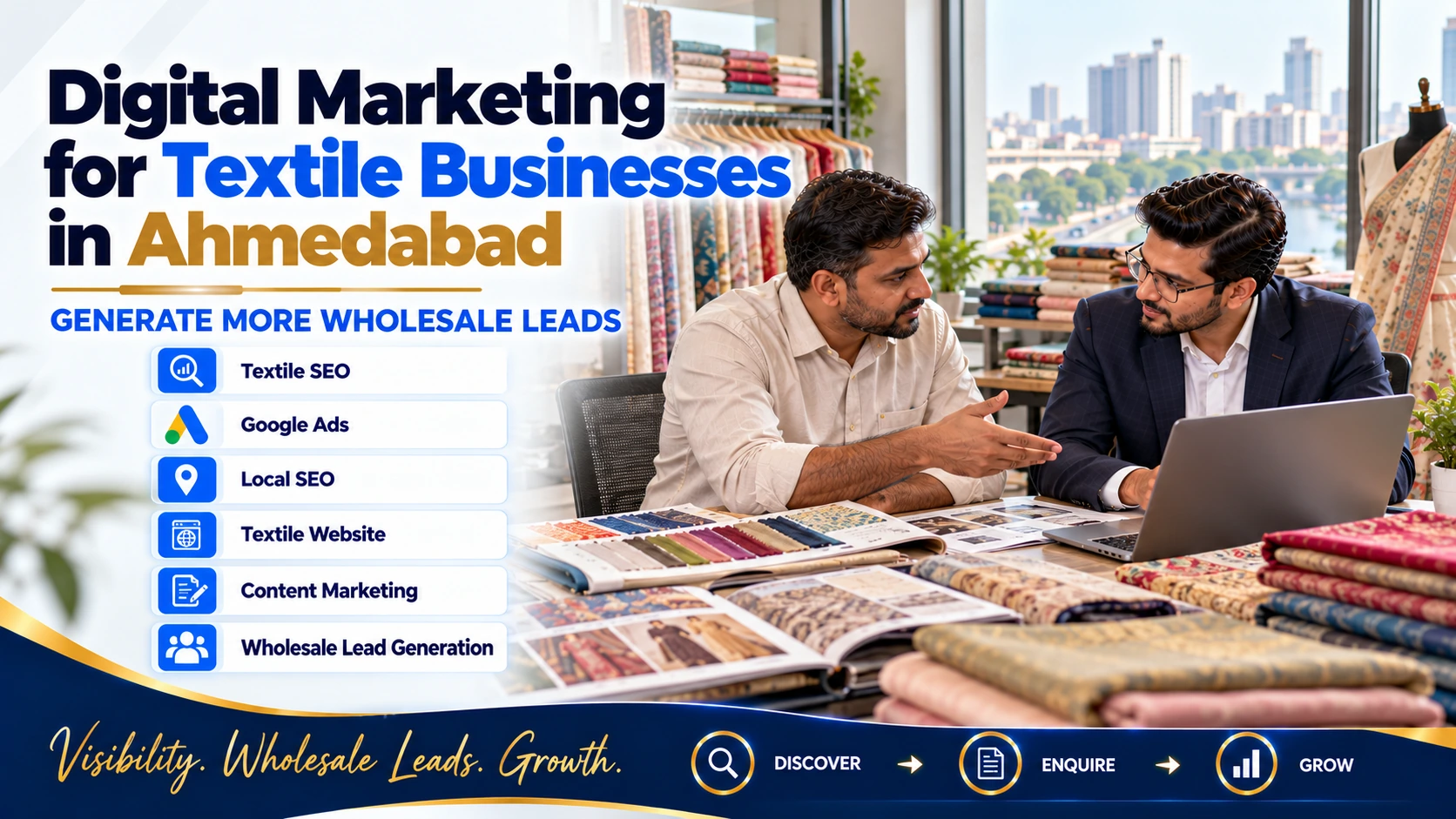
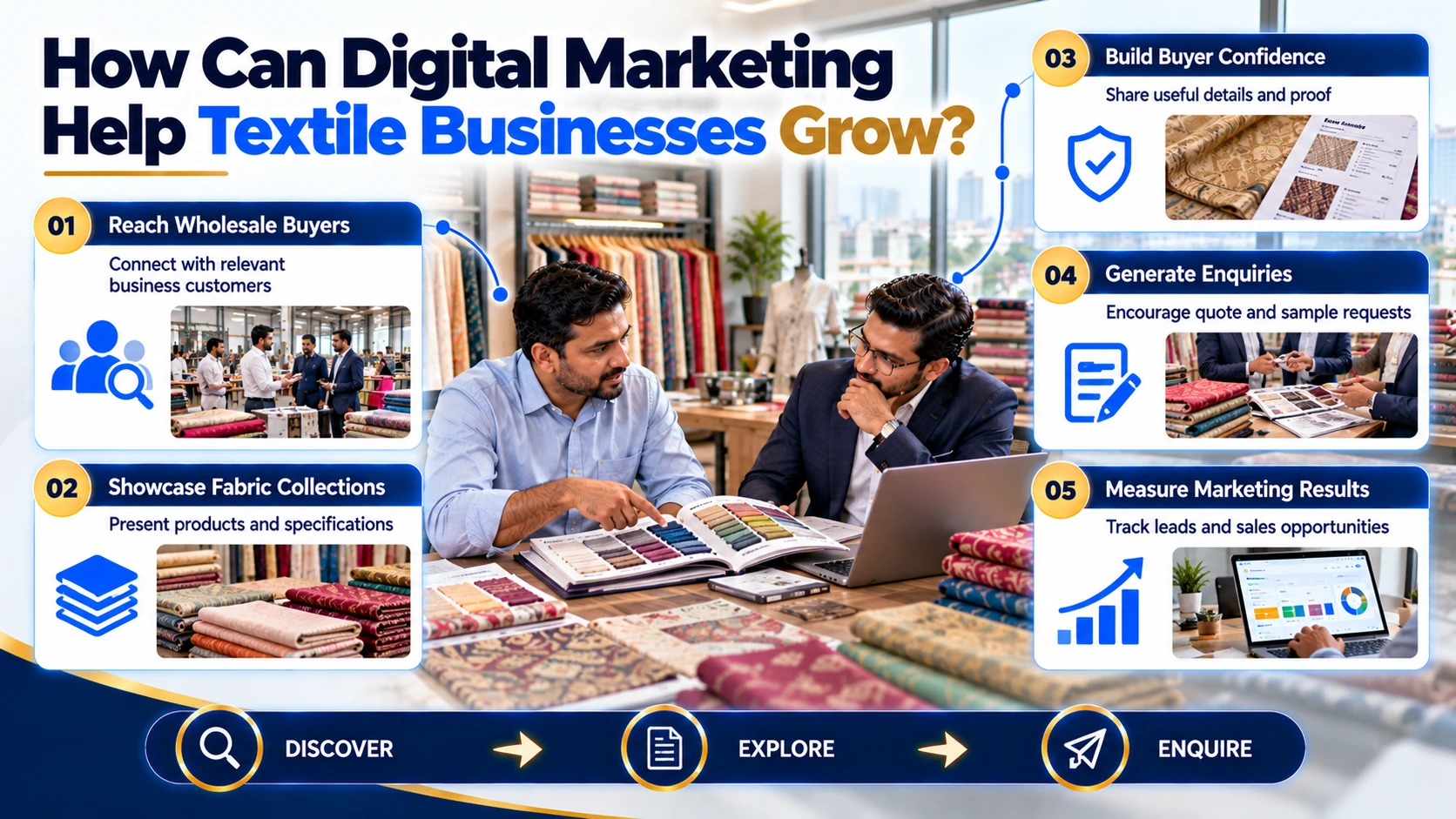
"For textile manufacturers, wholesalers, and exporters in Ahmedabad, digital marketing is not simply about website visits. It is about presenting fabric collections, technical specifications, and production capabilities clearly to wholesale buyers, fashion brands, and garment manufacturers to generate qualified bulk inquiries and long-term contracts."
– FT Nexavvy
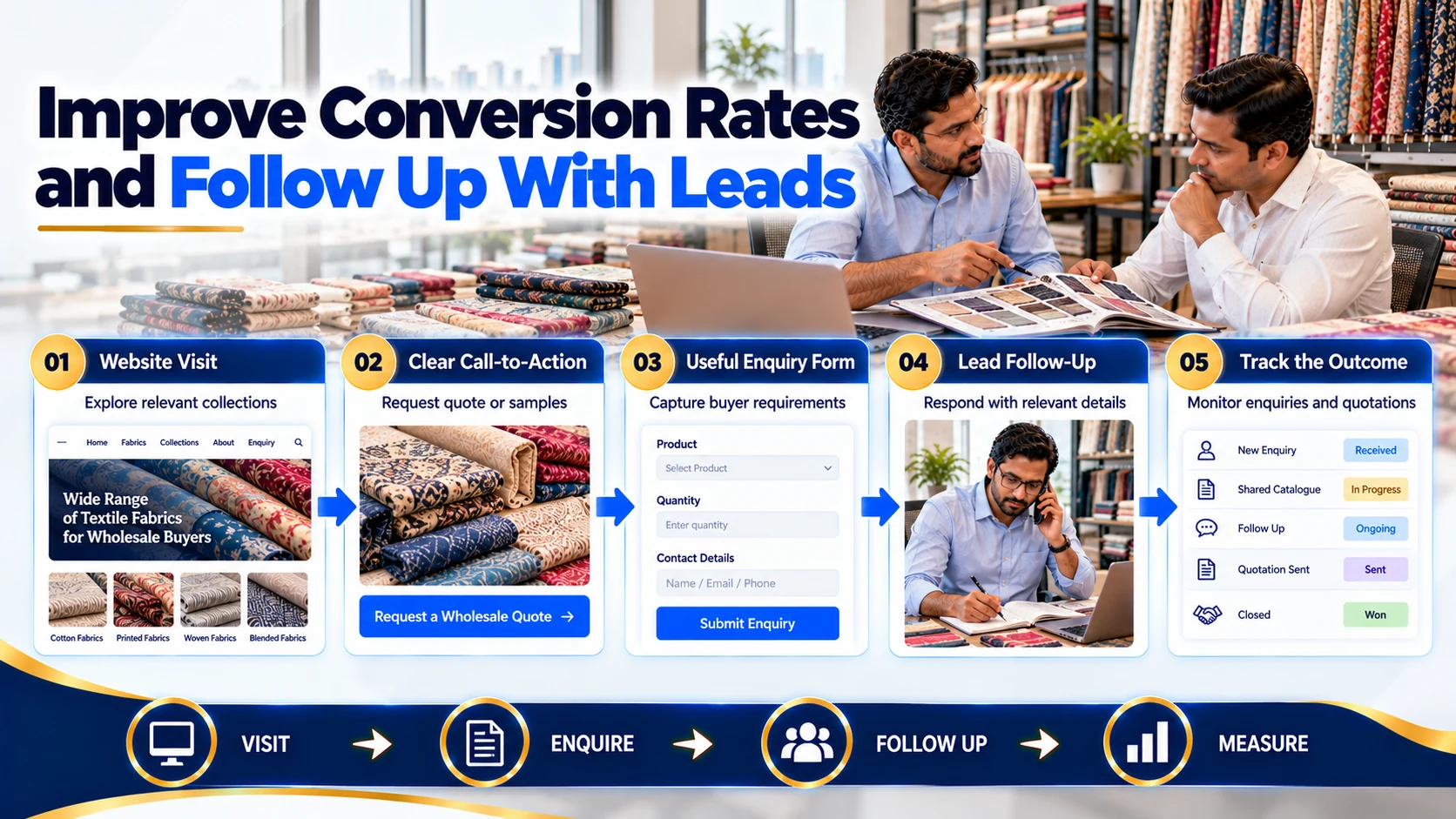
Practical tip: Track catalogue downloads, quotation form submissions, qualified WhatsApp enquiries, and genuine phone enquiries separately. A catalogue download may indicate interest, but it does not necessarily represent a sales-ready buyer.
| Keyword category | Example searches | Recommended page |
|---|---|---|
| Product-focused | Cotton fabric manufacturer, printed fabric supplier | Product or category page |
| Wholesale-focused | Cotton fabric wholesale supplier, bulk fabric supplier | Wholesale landing page |
| Manufacturing-focused | Textile manufacturer, custom fabric manufacturer | Manufacturing services page |
| Location-focused | Textile manufacturer in Ahmedabad | Relevant local landing page |
| Export-focused | Cotton fabric exporter from India | Export services page |
| Application-focused | Fabric for uniforms, upholstery fabric supplier | Application-specific page |
| Channel | Main purpose | Best suited for | Important limitation |
|---|---|---|---|
| SEO | Build organic search visibility | Manufacturers, wholesalers, exporters | Requires time and ongoing work |
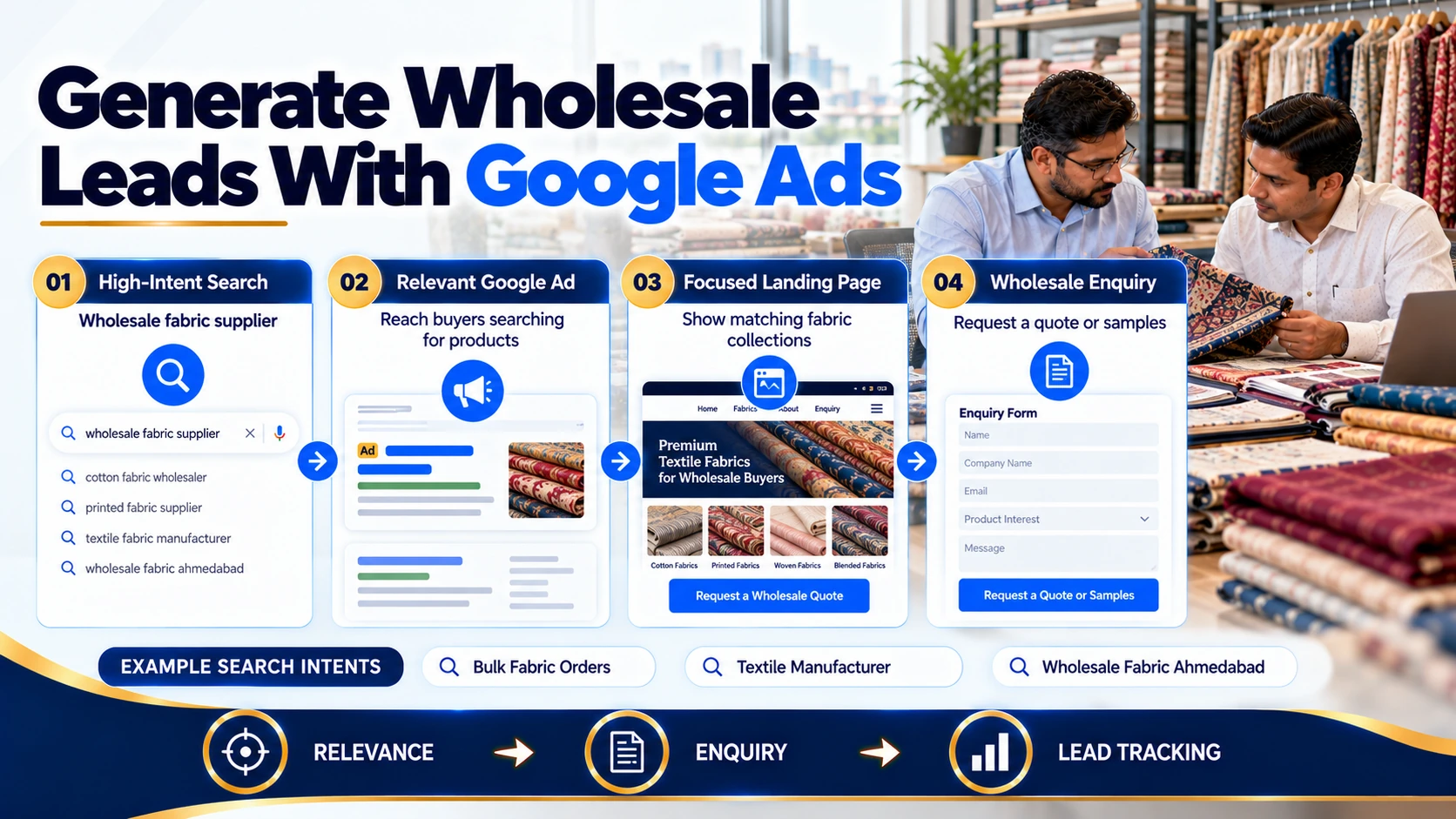
| Google Ads | Capture active search demand | Suppliers with clear product offerings | Costs depend on competition and campaign quality |
| Instagram and Facebook | Visual discovery and brand awareness | Textile brands, retailers, collection launches | Engagement may not translate into B2B orders |
| Reach relevant business audiences | Manufacturers, exporters, B2B suppliers | Requires relevant targeting and relationship building | |
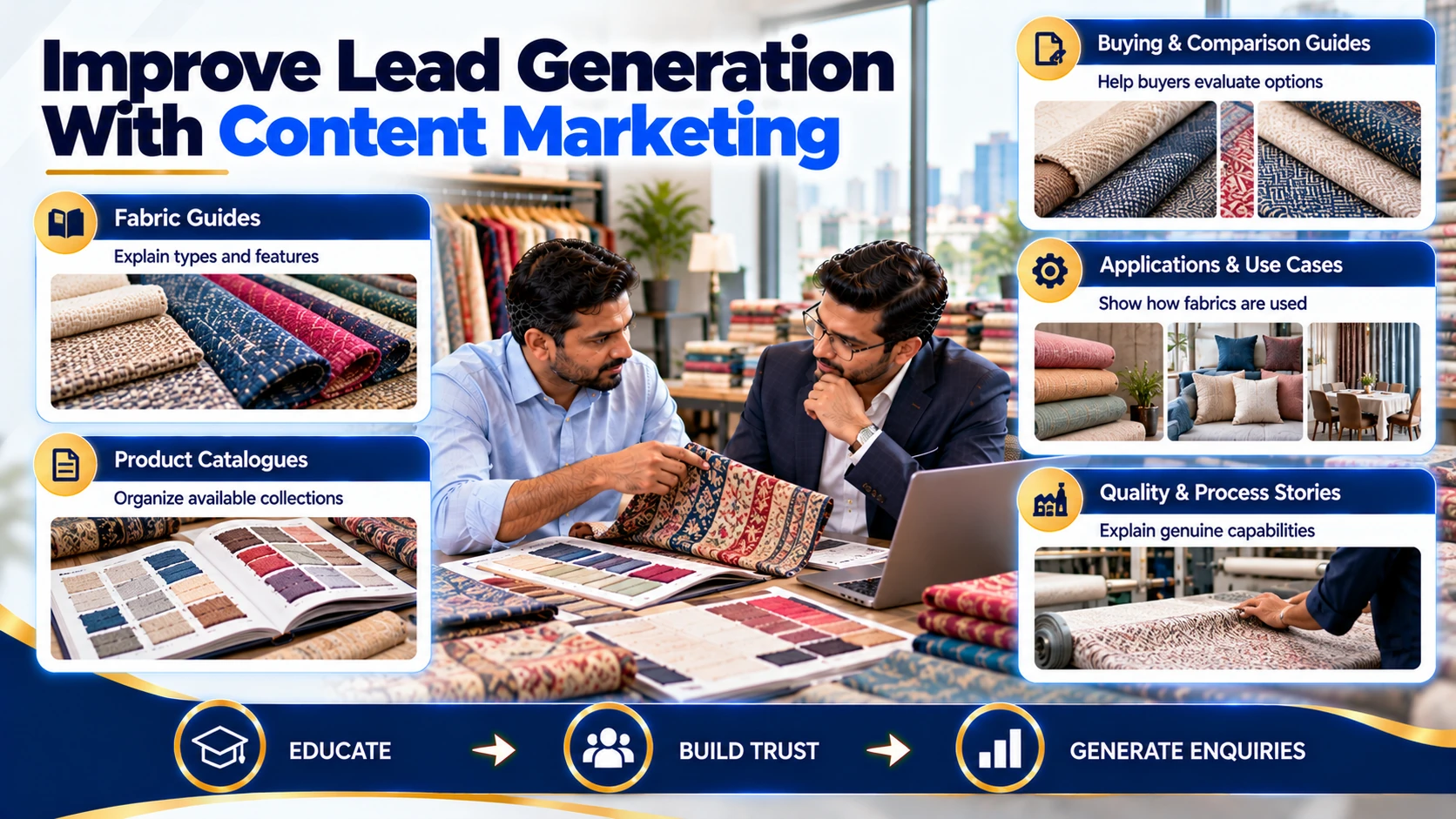
| Content marketing | Answer buyer questions and build trust | Technical products and considered purchases | Results depend on content usefulness and distribution |
| Email marketing | Support follow-ups and repeat business | Existing customers and permission-based prospects | Requires relevant lists and appropriate communication |
| Local SEO | Improve relevant local discovery | Eligible local suppliers and manufacturers | Does not replace broader market targeting |
| Period | Priority activities | Expected output |
|---|---|---|
| Days 1–30 | Audit website, research keywords, define target buyers, improve priority product pages, configure analytics | Clear strategy and stronger enquiry foundations |
| Days 31–60 | Publish product-focused content, improve local SEO, launch selected campaigns, develop social media assets | Better visibility and initial performance data |
| Days 61–90 | Review lead quality, refine advertising, improve landing pages, build follow-up processes | More informed optimisation decisions |
It is the use of online channels such as search engines, websites, paid advertising, social media, and email to promote textile products and attract potential customers. The strategy may focus on wholesale enquiries, manufacturing contracts, retail sales, or exports.
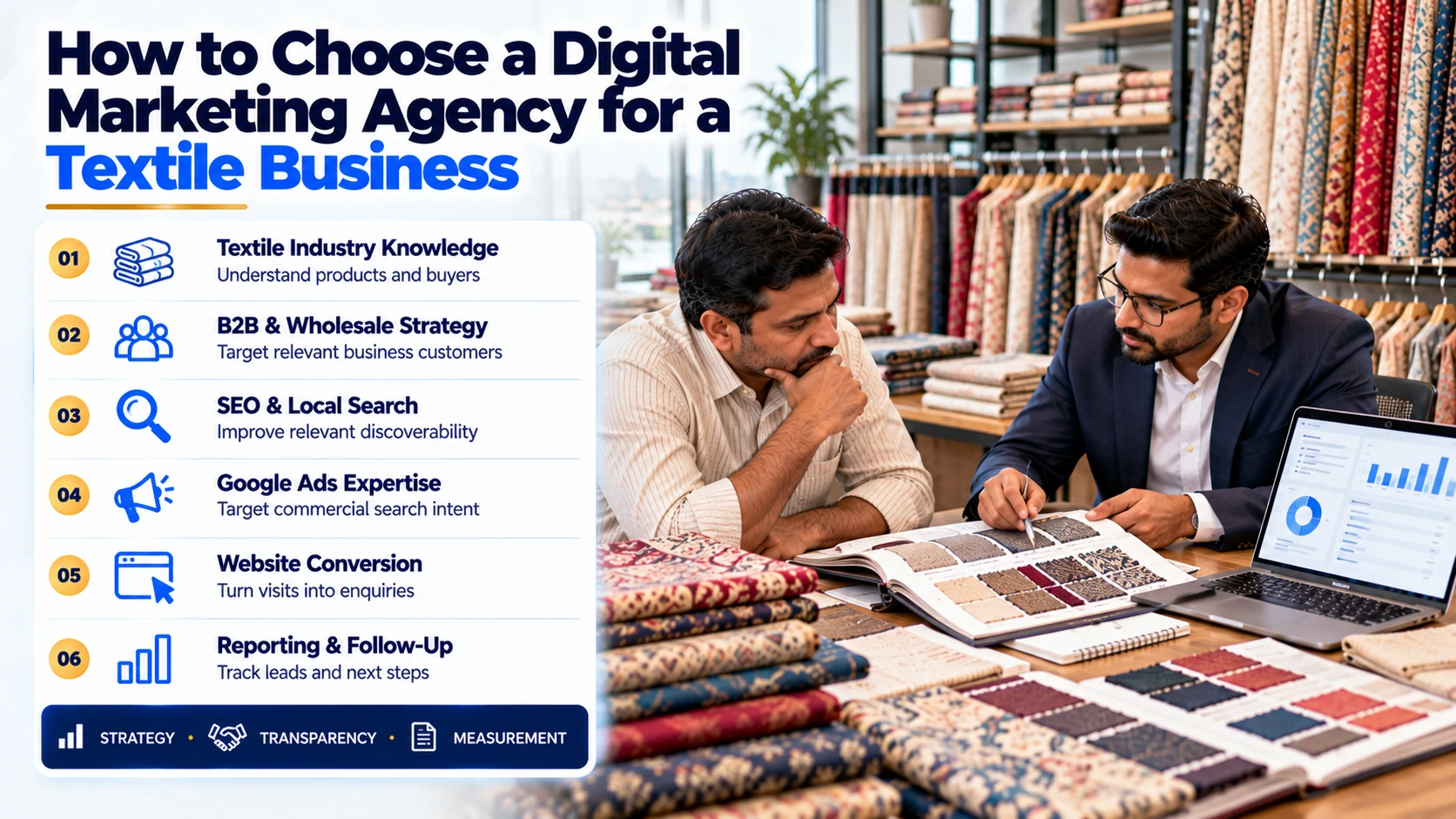
It helps manufacturers showcase product capabilities, reach relevant business buyers, improve online visibility, and generate enquiries. SEO, Google Ads, technical content, and effective landing pages can support the process.
The best channel depends on the product and buyer. SEO and Google Ads can capture active search demand, while LinkedIn and direct business outreach may support B2B relationship development.
Yes. SEO can help textile companies appear for relevant product, supplier, wholesale, manufacturing, and application-related searches. Results depend on competition, website quality, search demand, and the usefulness of the content.
Build product-specific landing pages, provide accurate specifications, target relevant search terms, use suitable advertising, and offer a clear bulk-order enquiry process. Qualify leads according to quantity, location, and purchasing requirements.
Google Ads can reach people searching for relevant fabric suppliers and products. Performance depends on keyword intent, competition, landing-page relevance, budget, and how effectively enquiries are qualified and followed up.
Yes. Social media can showcase product collections, fabric textures, manufacturing processes, quality checks, and applications. LinkedIn may support business-focused marketing, while Instagram and Facebook can help with visual discovery and brand awareness.
Exporters can build detailed product pages, publish technical catalogues, optimise for relevant international searches, run targeted advertising, and use professional B2B outreach. They should focus on markets they can realistically serve.
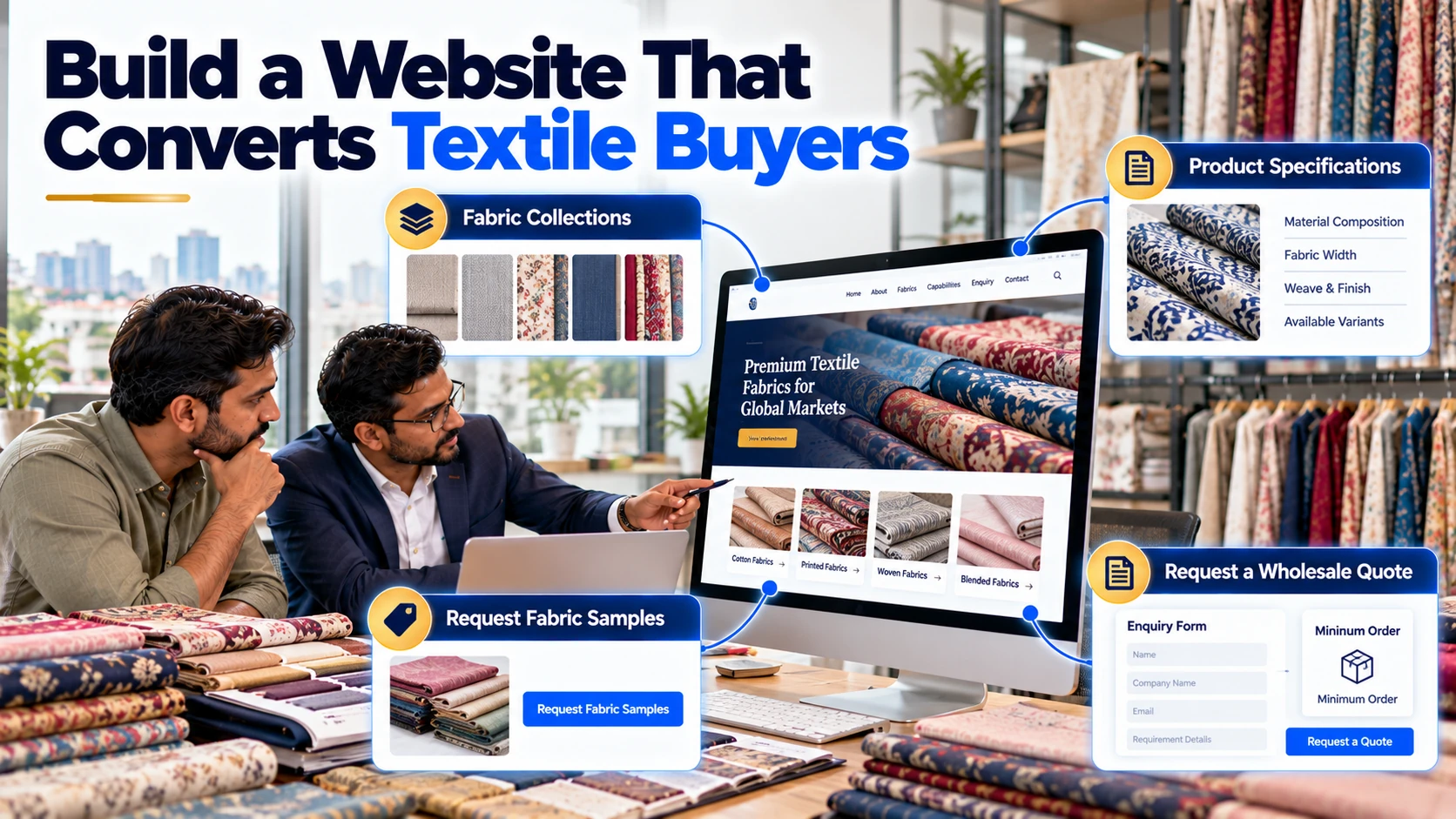
It should include product categories, specifications, quality information, manufacturing capabilities, minimum order requirements where relevant, catalogues, contact details, and simple quotation forms.
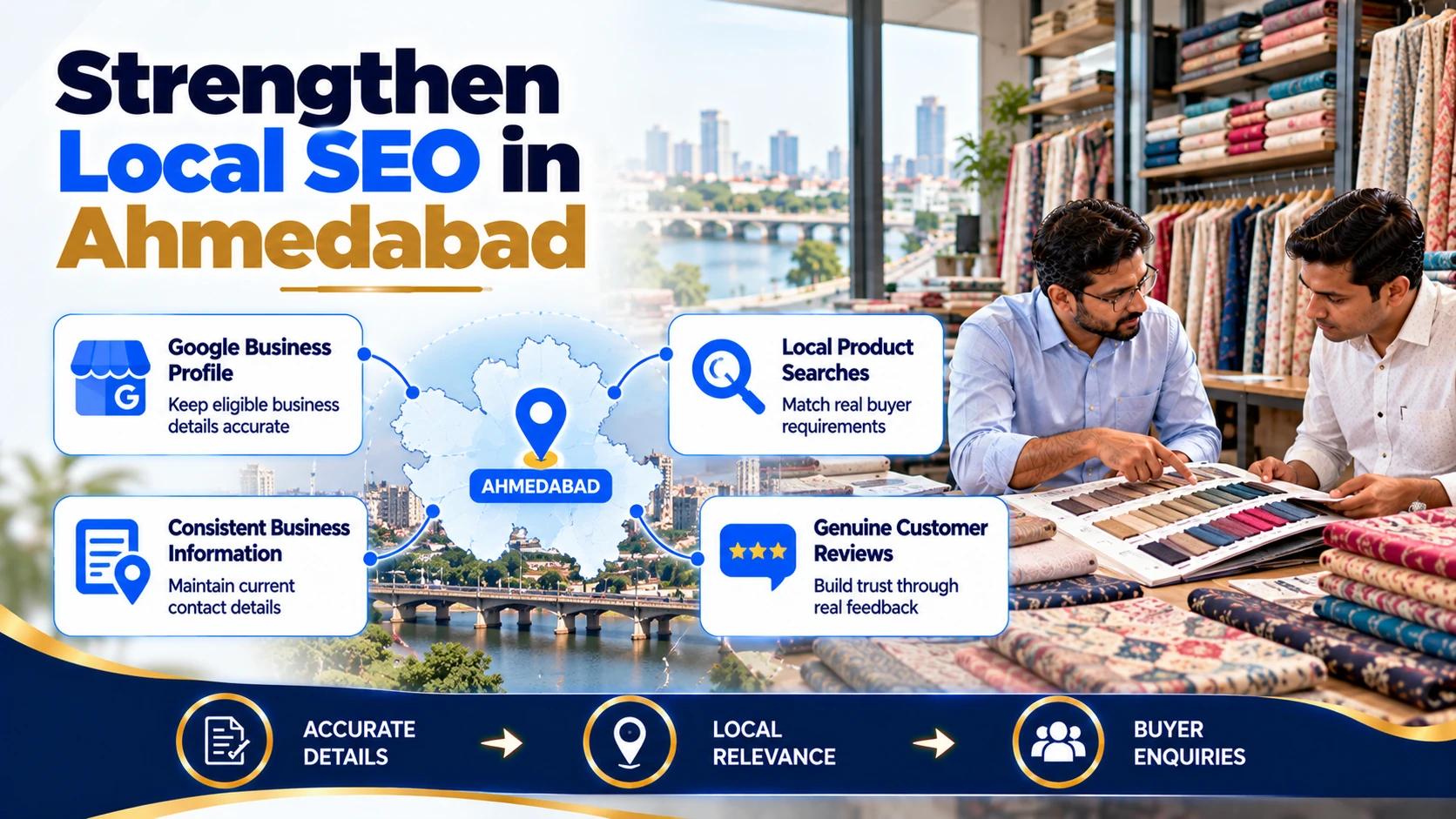
Local SEO can improve visibility for relevant nearby searches and help buyers find accurate business information. It is especially useful for companies serving local wholesalers, manufacturers, retailers, and other regional customers.
There is no single suitable budget. Spending depends on the target market, competition, product margins, advertising costs, website readiness, and sales capacity. Begin with a defined test budget and increase it based on qualified leads and commercial results.
SEO timelines vary according to competition, website condition, content quality, and existing authority. Improvements may take time to translate into meaningful rankings and enquiries, so monitor progress without assuming a fixed deadline.
Track campaign spending, qualified leads, quotations, customer acquisition costs, completed orders, revenue, and gross margin. Where sales cycles are long, connect marketing data with CRM records to understand eventual outcomes.
A CRM can help organise enquiries, assign follow-ups, track quotations, and record sales outcomes. It becomes particularly useful when enquiries arrive through several channels or involve multiple decision-makers.
Smaller businesses can target specific products, applications, buyer needs, or market segments instead of competing for every broad keyword. Useful product information, reliable service, and focused marketing can help them reach relevant buyers.
Looking for Digital Marketing Support for Your Textile Business?
Read Related Articles:
Author

FT Nexavvy
FT Nexavvy editorial team.


ON THIS PAGE
B2B Digital Marketing Ahmedabad: 10 Proven Strategies for 2026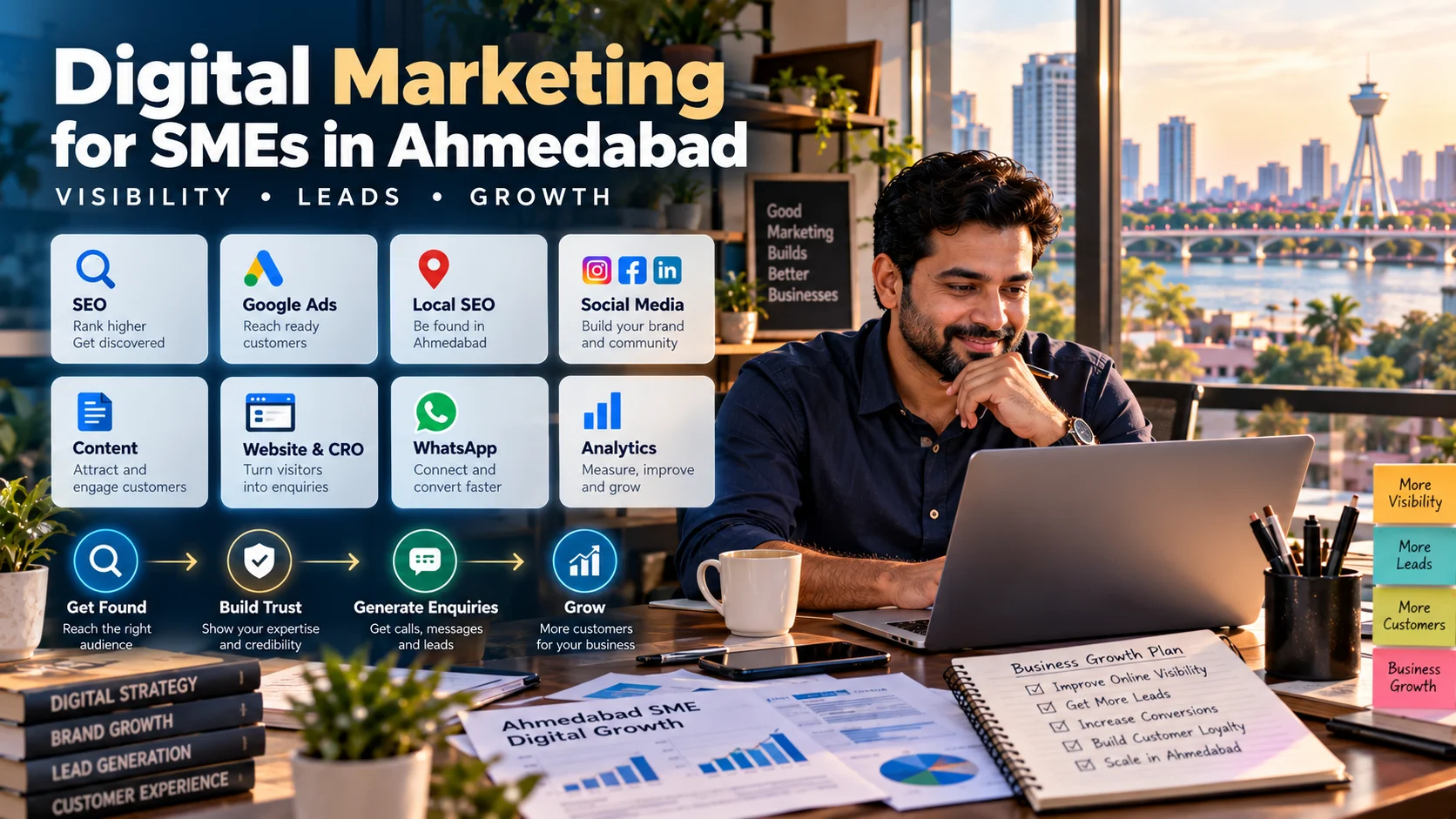 Digital Marketing for SMEs in Ahmedabad: 10 Proven Growth Strategies
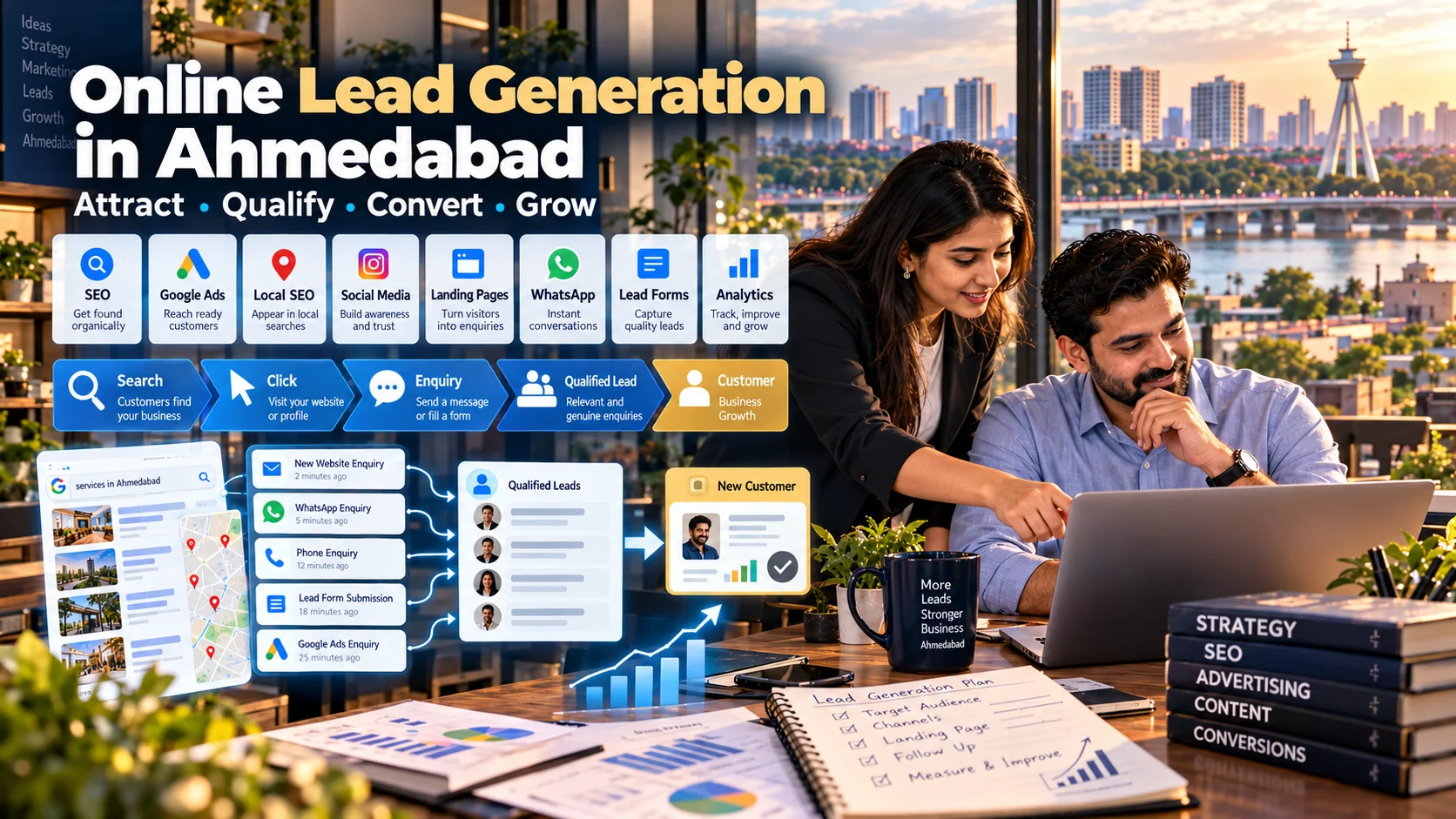 Online Lead Generation for Ahmedabad Businesses: 10 Proven Strategies
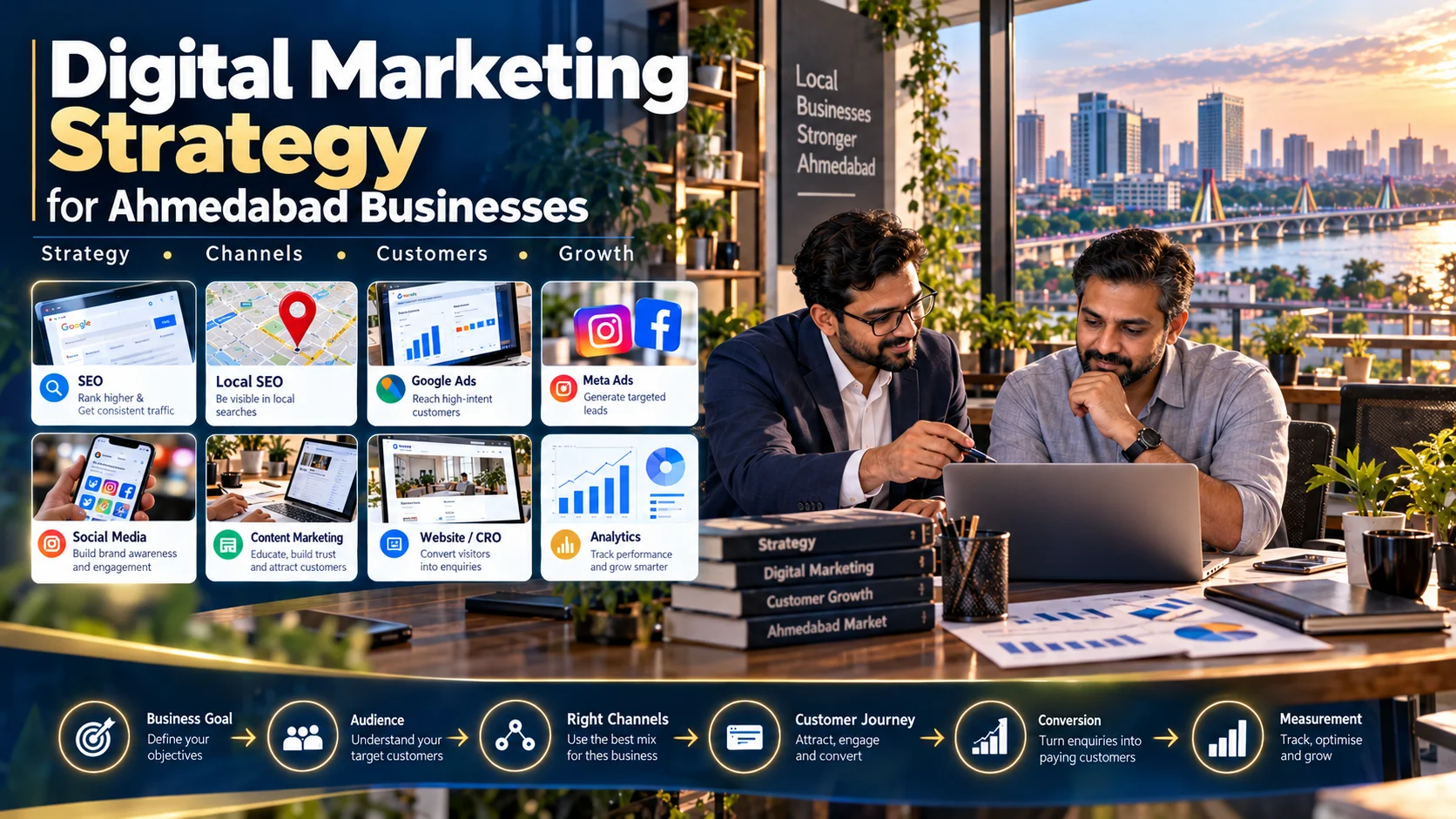 Digital Marketing Strategy for Ahmedabad Businesses: 10 Proven Strategies
Discuss Your
Digital Marketing Goals

NDA? Absolutely just ask.
We’ll respond in 24 hours fast & focused.
Work with senior UX experts, not juniors.
Schedule a call:
Mr Panchal
Founder & CEO
How can we help you?
Prefer email?
hello@ftnexavvy.com

DIGITAL MARKETING AGENCY IN AHMEDABAD

Working Hours
Monday – Saturday 9:00 am – 6:00 pm ( Sunday > Closed )
Services
Use Cases
Travel
Health & Fitness
Educations
News App
Food Order & Delivery App
Work inquiries
Interested in working with us?
hello@ftnexavvy.com
Call : +91 90303 48383
Ahmedabad Office:
A-531, Money Plant High Street,
Gota, Ahmedabad - 382470
Looking for a job opportunity?
See open positions
Sign up for the newsletter










Disclaimer
© 2025-2026 Nexavvy. All rights reserved.
