
 Digital Marketing for Export Businesses in Ahmedabad: A Practical Guide to Global B2B Leads
Digital MarketingOctober 16, 2026

"For ecommerce businesses in Ahmedabad, sustainable growth requires more than driving traffic to product listings. It is about understanding your unit economics, creating frictionless mobile shopping journeys, and combining high-intent customer acquisition with personalized retention marketing to maximize customer lifetime value and profitability."
– FT Nexavvy
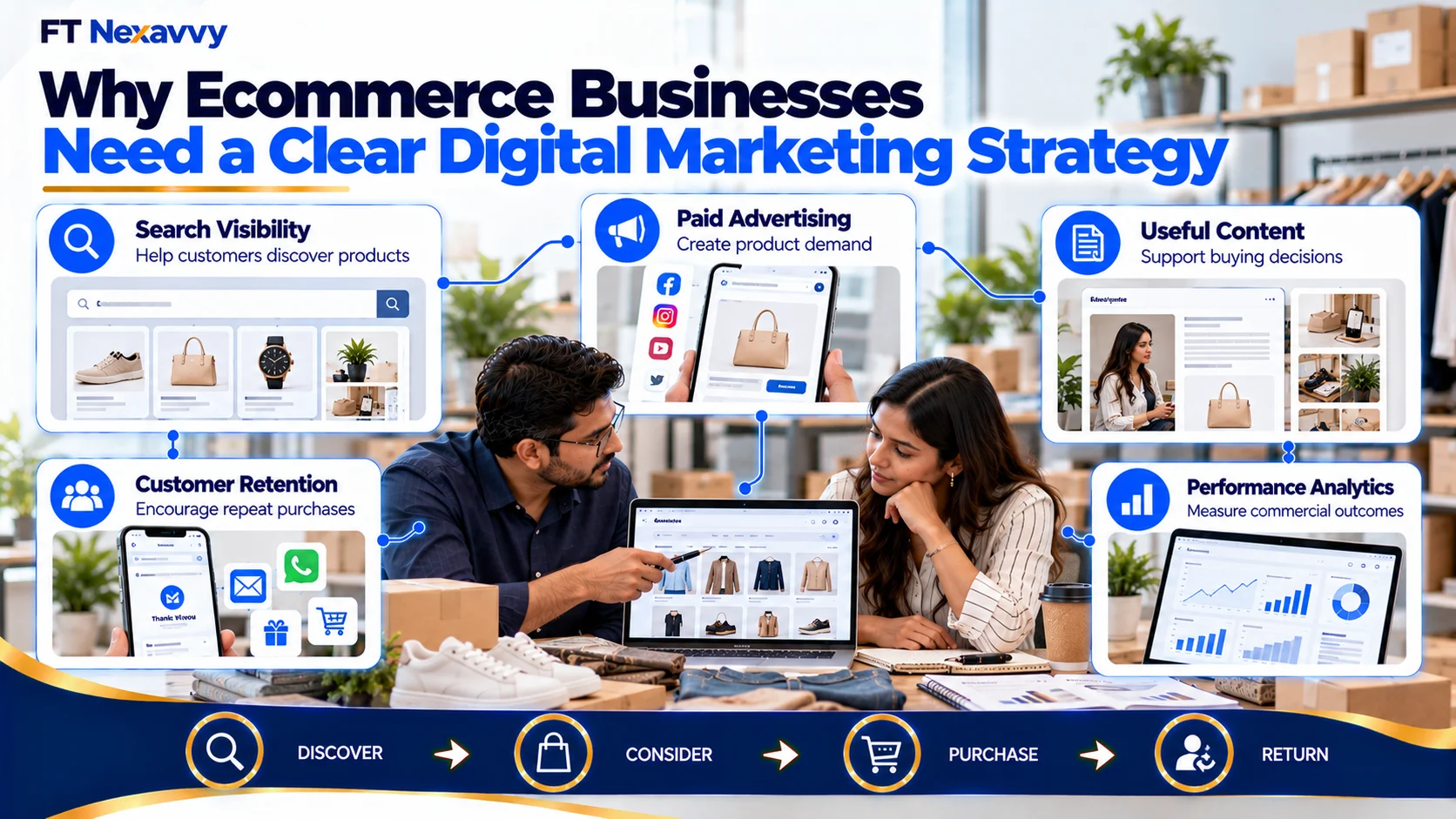
| Metric | What it tells you |
|---|---|
| Website conversion rate | Percentage of sessions that result in purchases |
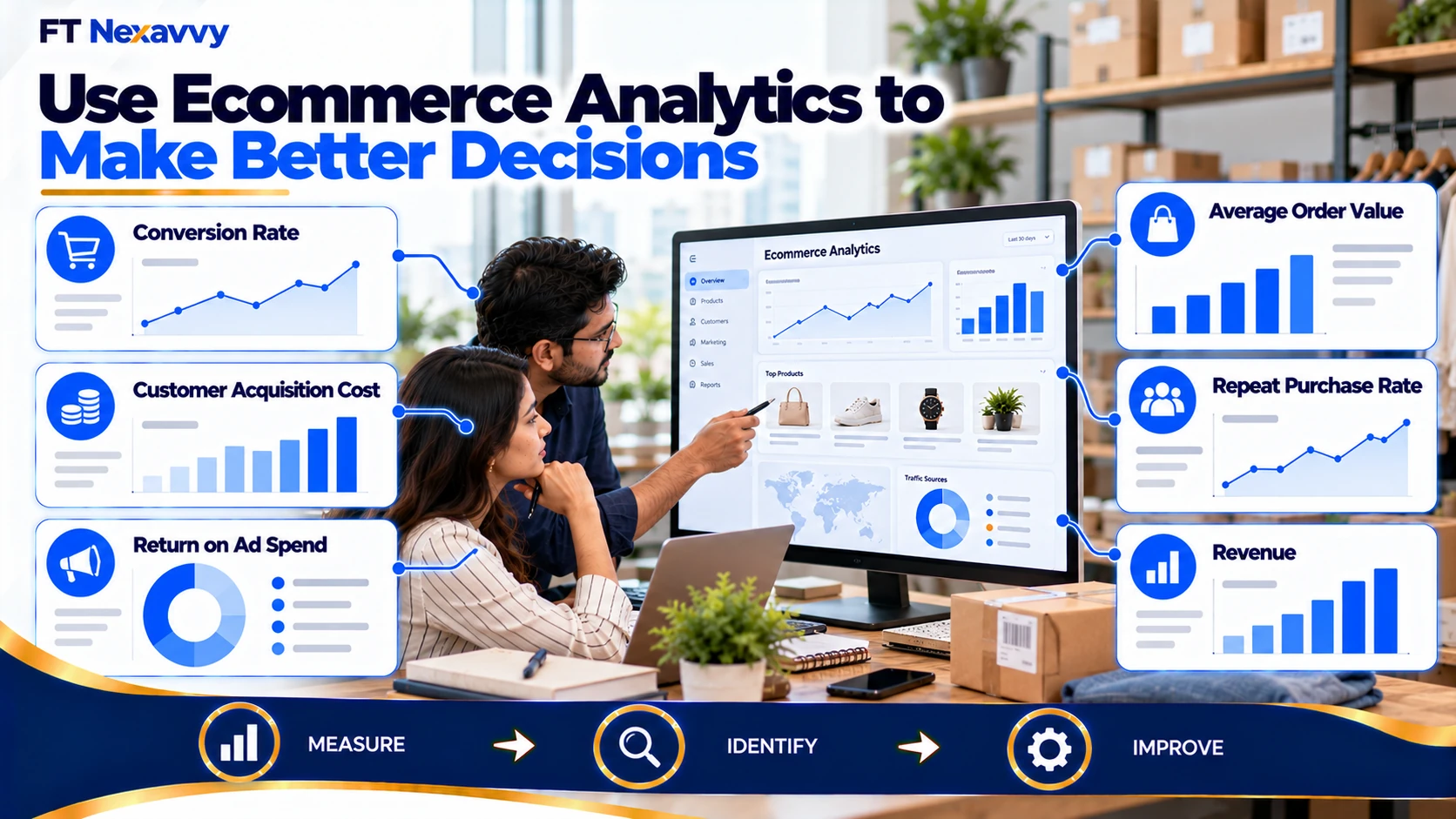
| Customer acquisition cost (CAC) | Average cost of acquiring a customer |
| Average order value (AOV) | Average revenue generated per order |
| Return on ad spend (ROAS) | Revenue attributed to advertising divided by ad spend |
| Cart abandonment rate | Share of shopping carts that do not become completed orders |
| Customer lifetime value (CLV) | Estimated value a customer generates over the relationship |
| Gross margin | Revenue remaining after the cost of goods sold |
Practical tip: Choose one primary business objective and two or three supporting metrics. Review them consistently before increasing your marketing budget.
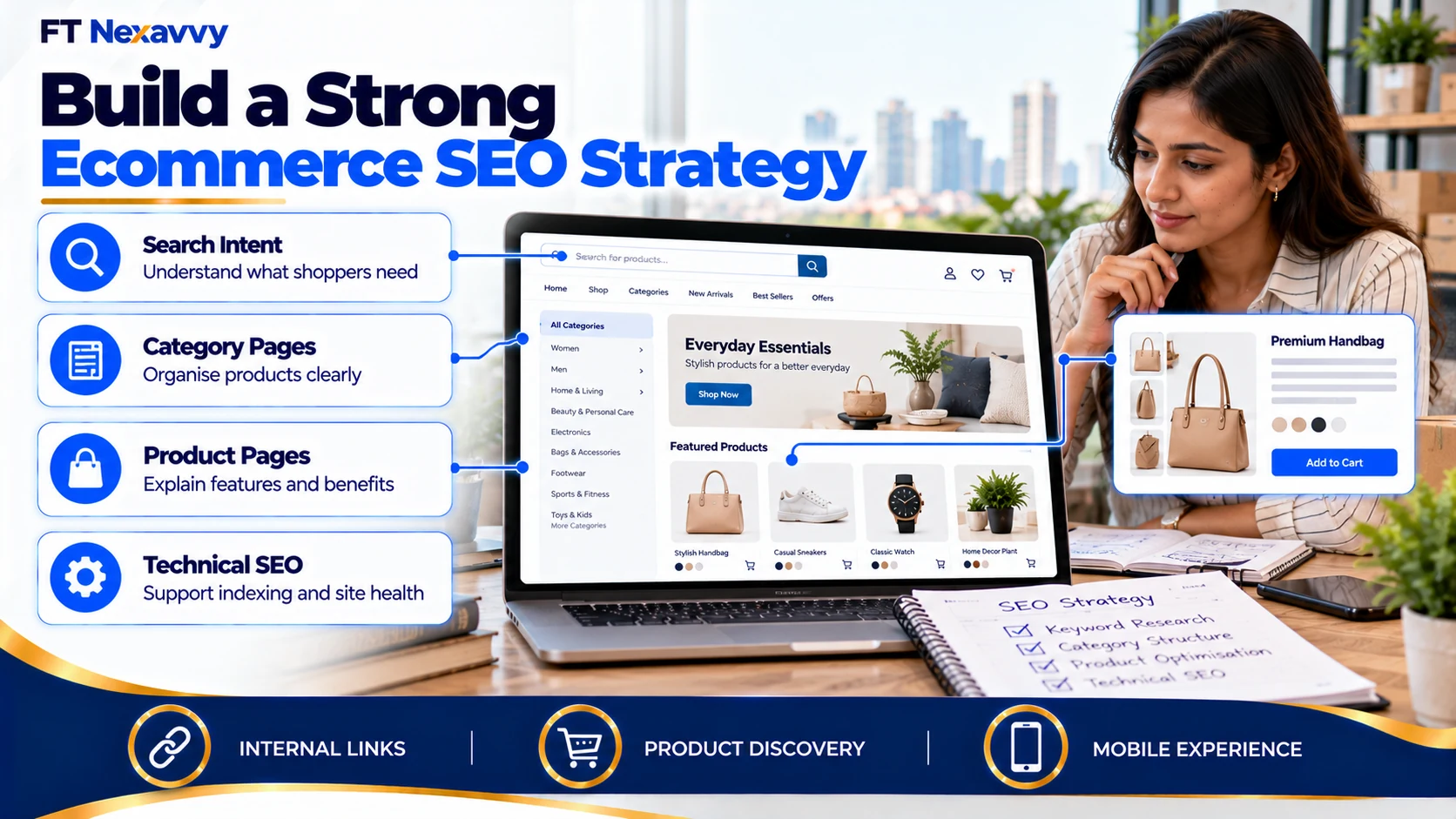
| Campaign type | Best use | Important consideration |
|---|---|---|
| Search campaigns | Reaching people searching for specific products | Monitor search intent and irrelevant queries |
| Shopping ads | Displaying product images, prices, and store information | Product feed quality is essential |
| Performance Max | Reaching customers across eligible Google inventory | Monitor product-level performance and conversion quality |
| Remarketing | Re-engaging eligible previous visitors or shoppers | Follow applicable consent and advertising policies |
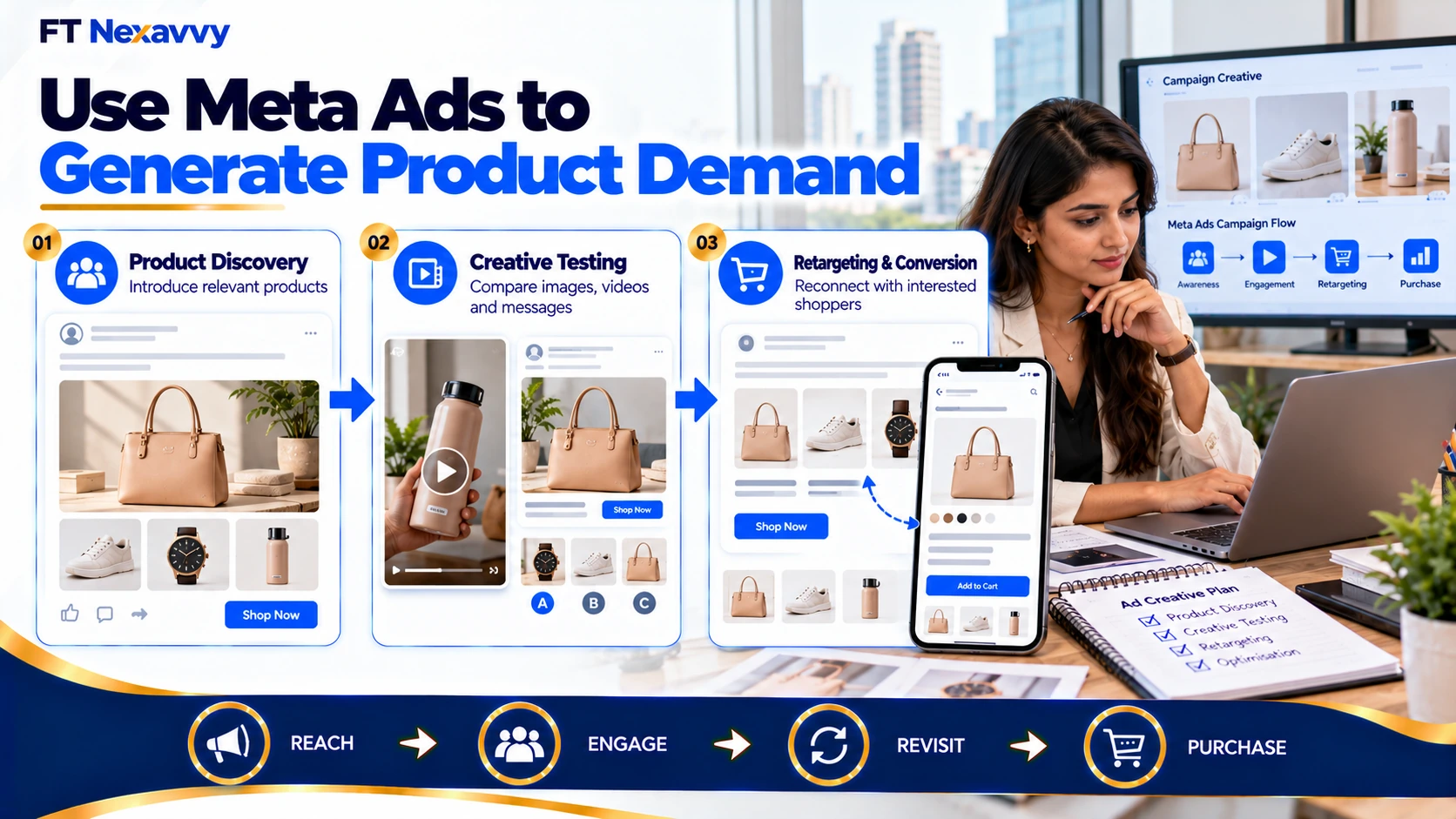
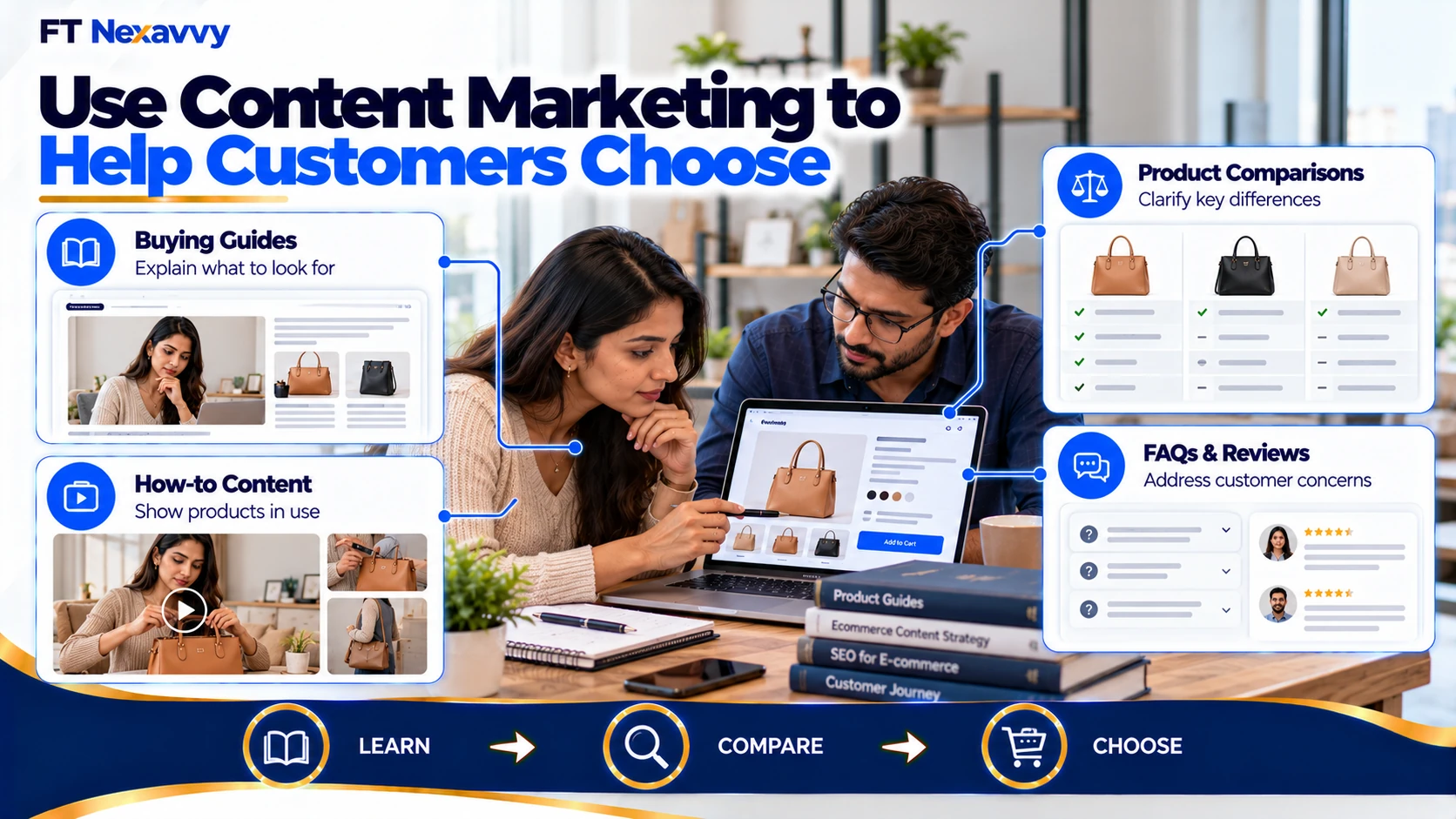
| Channel | Main advantage | Main limitation |
|---|---|---|
| Ecommerce SEO | Builds long-term organic visibility | Requires time and ongoing optimisation |
| Google Ads | Captures active search demand | Costs can rise in competitive categories |
| Meta Ads | Creates product awareness and demand | Creative testing and iteration are necessary |
| Content marketing | Helps customers research and compare | Results depend on relevance and distribution |
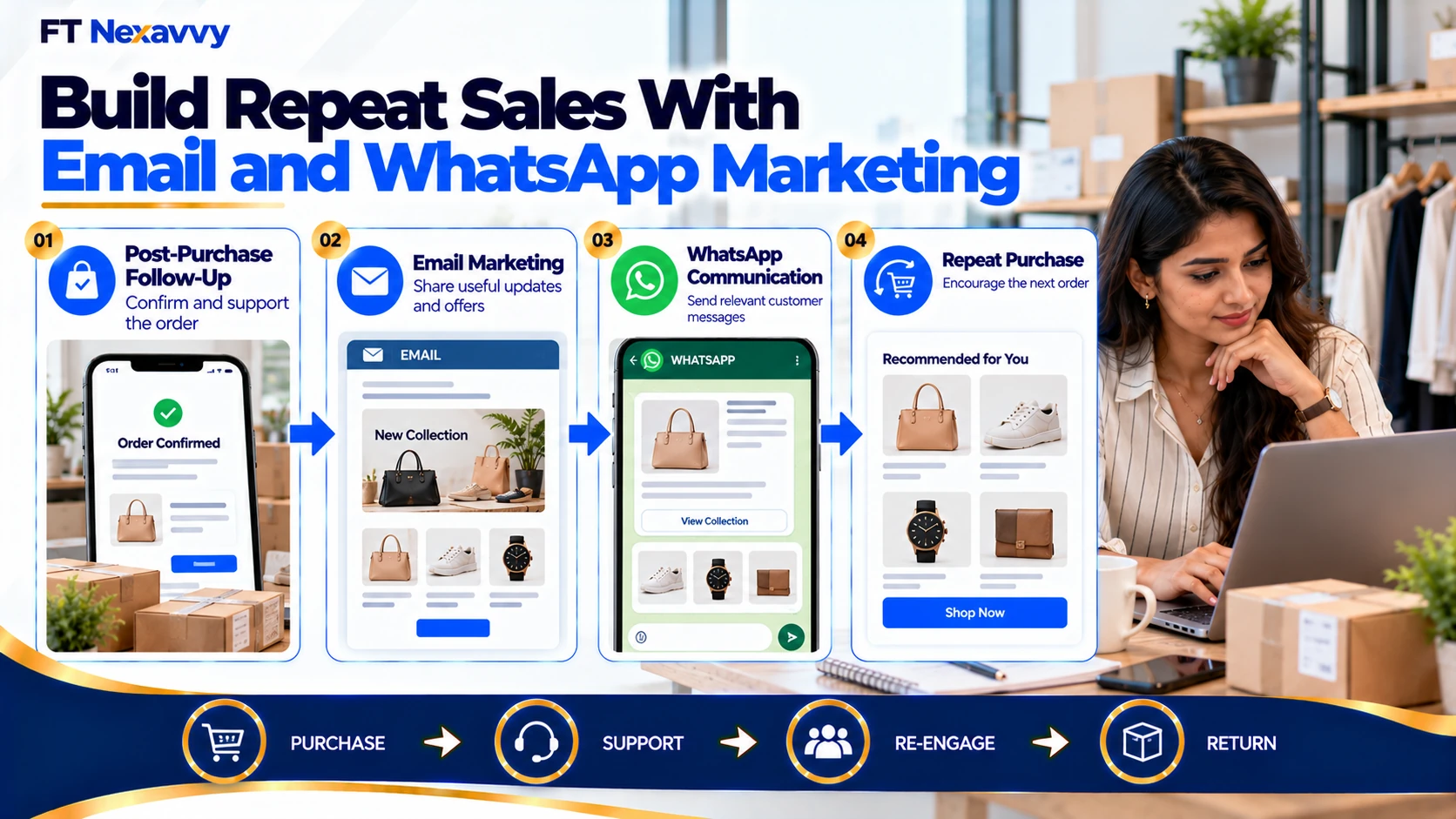
| Email marketing | Supports retention and repeat purchases | Requires a relevant, permission-based audience |
| WhatsApp marketing | Supports direct communication | Requires careful consent and frequency management |
| Conversion optimisation | Improves the buying experience | Requires testing and reliable measurement |
Recommended starting point: Build a technically sound website, improve priority product pages, configure purchase tracking, and test one or two acquisition channels. Expand once the data shows which activities attract valuable customers.
| Period | Key activities | Intended outcome |
|---|---|---|
| Days 1–30 | Audit website, review products and margins, fix tracking, improve priority product pages | Reliable foundations and clear priorities |
| Days 31–60 | Implement SEO improvements, publish useful content, test selected ad campaigns | Initial performance and customer data |
| Days 61–90 | Review conversion rates, analyse acquisition costs, refine campaigns, improve retention | Better-informed growth decisions |
Start with product-page optimisation, technical SEO, accurate purchase tracking, and a suitable customer acquisition channel. Expand based on customer behaviour, margins, and measured results.
Improve product discovery, target relevant shoppers, provide clear product information, simplify checkout, and measure completed purchases. The right channel mix depends on your audience and business model.
Yes. Ecommerce SEO can help customers discover product and category pages through relevant searches. Results depend on competition, website quality, product demand, and ongoing optimisation.
Google Ads can reach shoppers searching for specific products. Campaign performance depends on search intent, product pricing, feed quality, landing pages, and accurate conversion tracking.
Meta Ads can help businesses introduce products, reach suitable audiences, and re-engage eligible shoppers. Creative quality, product appeal, pricing, and purchase experience all influence performance.
The budget depends on margins, competition, average order value, fulfilment costs, and growth objectives. Start with a manageable test budget and increase spending when the results justify it.
There is no universal target. A business needs to consider product margins, returns, operating expenses, and repeat purchases to determine whether its advertising performance is profitable.
Timelines vary with competition, website condition, content quality, and existing visibility. Track improvements in indexing, impressions, relevant traffic, and sales without assuming a fixed deadline.
It is the process of improving product pages, navigation, trust information, and checkout so more suitable visitors complete purchases.
Review unexpected costs, confusing checkout steps, payment issues, delivery information, and mobile usability. Use analytics to identify where shoppers leave before making changes.
Email can help small stores welcome subscribers, provide useful product information, and encourage repeat purchases. Build a relevant audience and respect consent and communication preferences.
It can support customer communication, order updates, service, and relevant promotions. Use it responsibly, follow applicable requirements, and avoid excessive messages.
Both can support ecommerce marketing. The better choice depends on your operational needs, integrations, technical resources, product catalogue, and long-term requirements.
Track completed purchases, revenue, conversion rate, acquisition costs, average order value, gross margin, and repeat purchases. Compare platform reporting with actual order records.
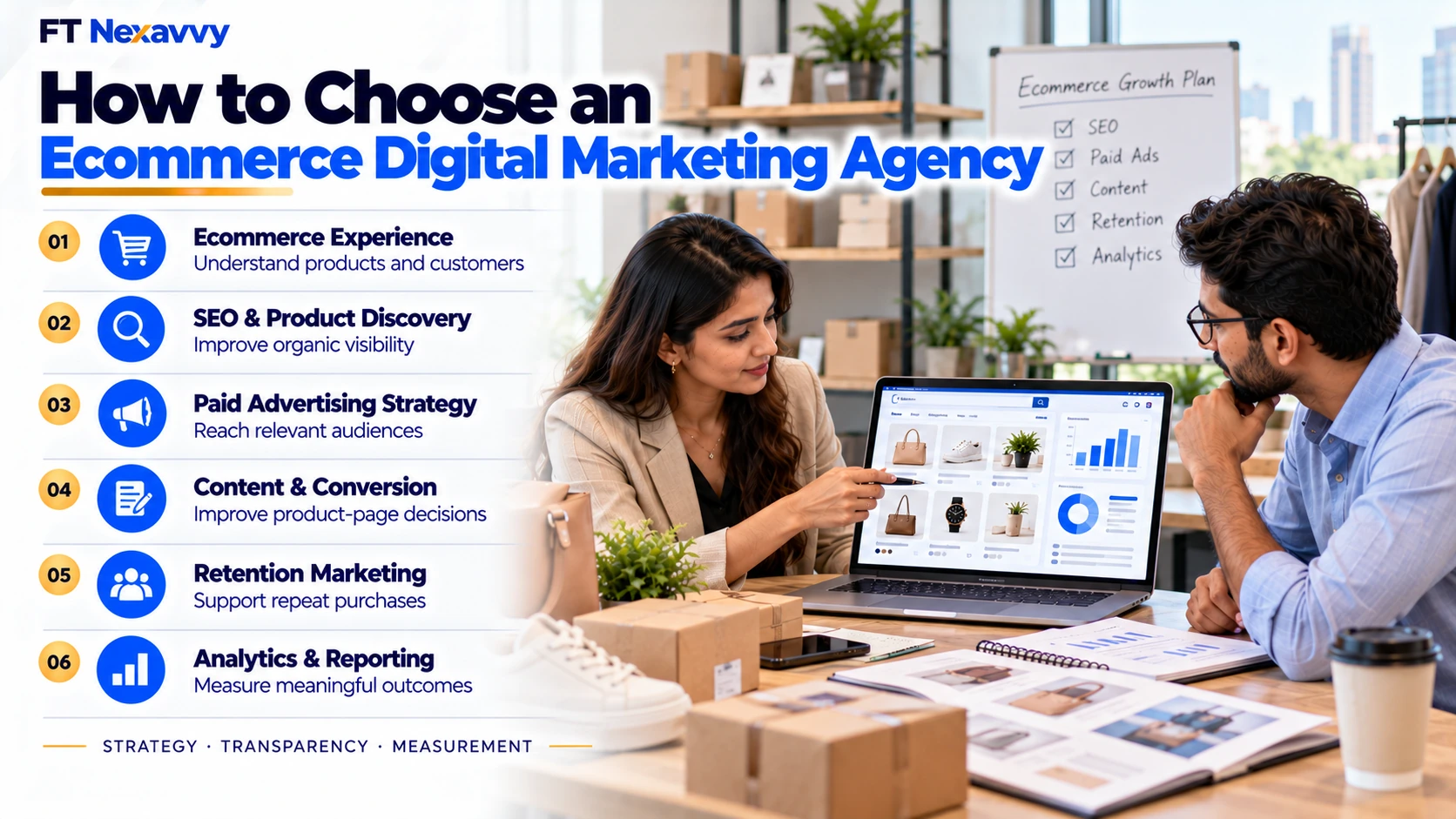
An agency may help with SEO, paid advertising, analytics, website optimisation, and retention campaigns. Choose a partner that explains its approach and measures meaningful business outcomes.
Looking for Digital Marketing Support for Your Ecommerce Business?
Read Related Articles:
Author

FT Nexavvy
FT Nexavvy editorial team.


ON THIS PAGE
Digital Marketing for Export Businesses in Ahmedabad: A Practical Guide to Global B2B Leads Digital Marketing for Textile Businesses in Ahmedabad: Grow Sales
 Digital Marketing for SMEs in Ahmedabad: 10 Proven Growth Strategies
 B2B Digital Marketing Ahmedabad: 10 Proven Strategies for 2026
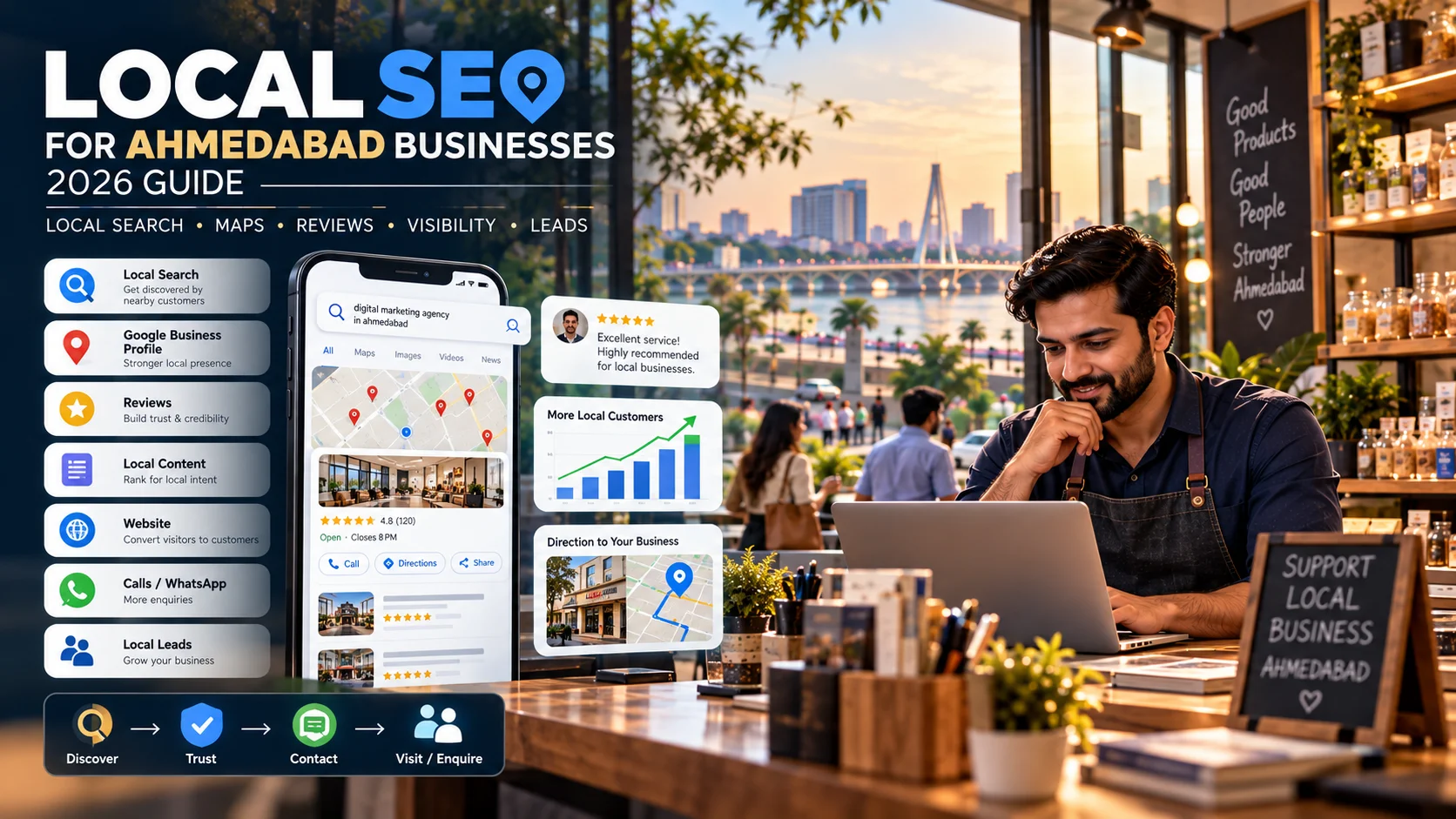 How Local SEO Helps Ahmedabad Businesses Grow: 10 Proven Benefits
Discuss Your
Digital Marketing Goals

NDA? Absolutely just ask.
We’ll respond in 24 hours fast & focused.
Work with senior UX experts, not juniors.
Schedule a call:
Mr Panchal
Founder & CEO
How can we help you?
Prefer email?
hello@ftnexavvy.com

DIGITAL MARKETING AGENCY IN AHMEDABAD

Working Hours
Monday – Saturday 9:00 am – 6:00 pm ( Sunday > Closed )
Services
Use Cases
Travel
Health & Fitness
Educations
News App
Food Order & Delivery App
Work inquiries
Interested in working with us?
hello@ftnexavvy.com
Call : +91 90303 48383
Ahmedabad Office:
A-531, Money Plant High Street,
Gota, Ahmedabad - 382470
Looking for a job opportunity?
See open positions
Sign up for the newsletter










Disclaimer
© 2025-2026 Nexavvy. All rights reserved.
