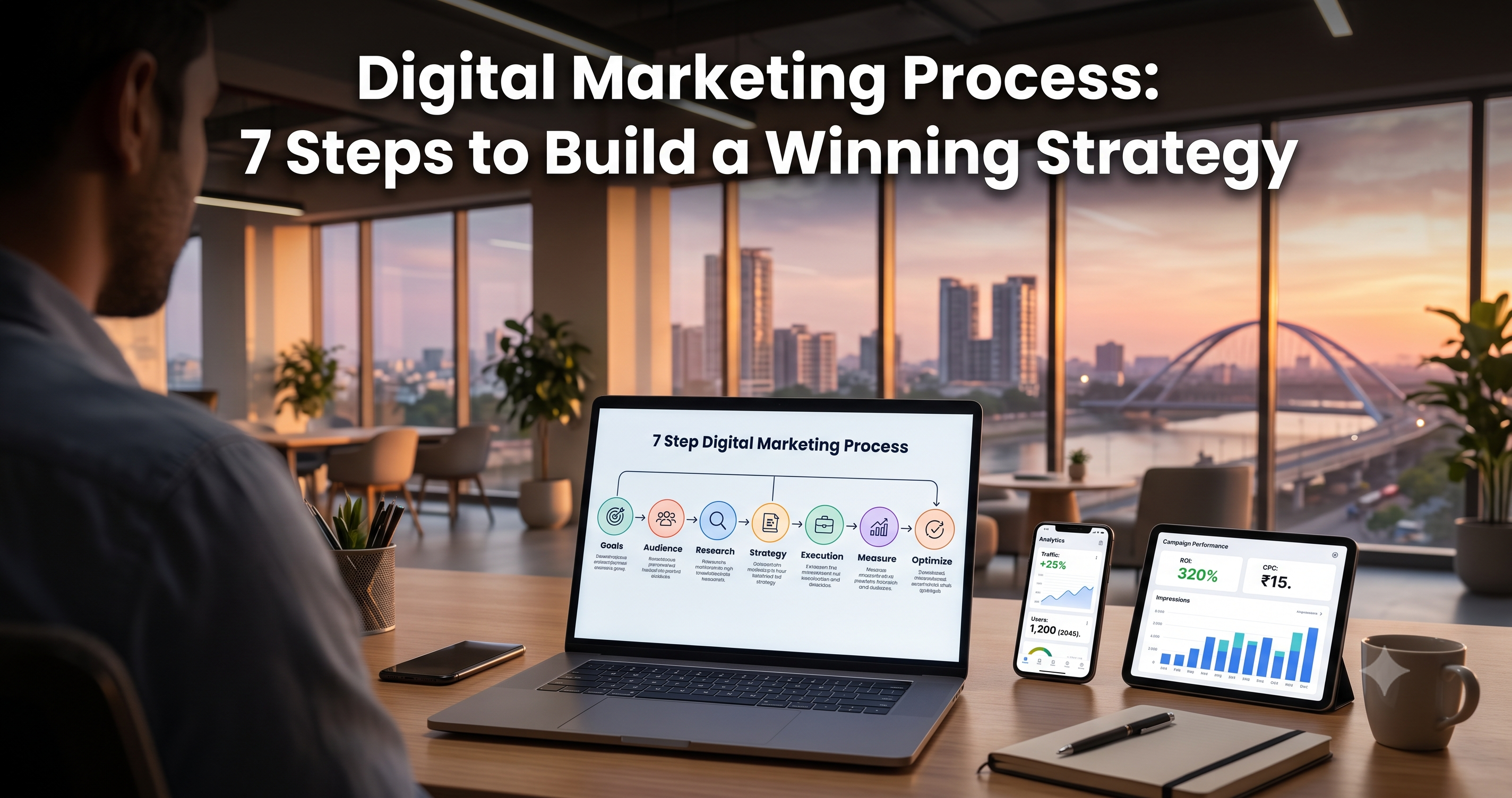

Strategy #1: What Is the Digital Marketing Process?
"Successful digital marketing rarely happens by running random campaigns. The digital marketing process connects business goals, customer research, channel selection, campaign execution, conversion tracking, and continuous optimisation."
– FT Nexavvy
Strategy #2: Why Does the Digital Marketing Process Matter?
- What business outcome are we trying to achieve?
- Who exactly are we trying to reach?
- Where can we reach these customers?
- What message or offer will influence them?
- How will we measure whether the strategy works?
Strategy #3: How Does Digital Marketing Work?
- Social Media → Google Search → Website → Remarketing → Enquiry
- Google Search → Blog Article → Service Page → Contact Form → Sales Call
Strategy #4: Benefits of Following a Structured Digital Marketing Process
Clear Marketing Direction
Better Budget Allocation
Consistent Customer Experience
Improved Measurement
Faster Optimisation
More Sustainable Growth
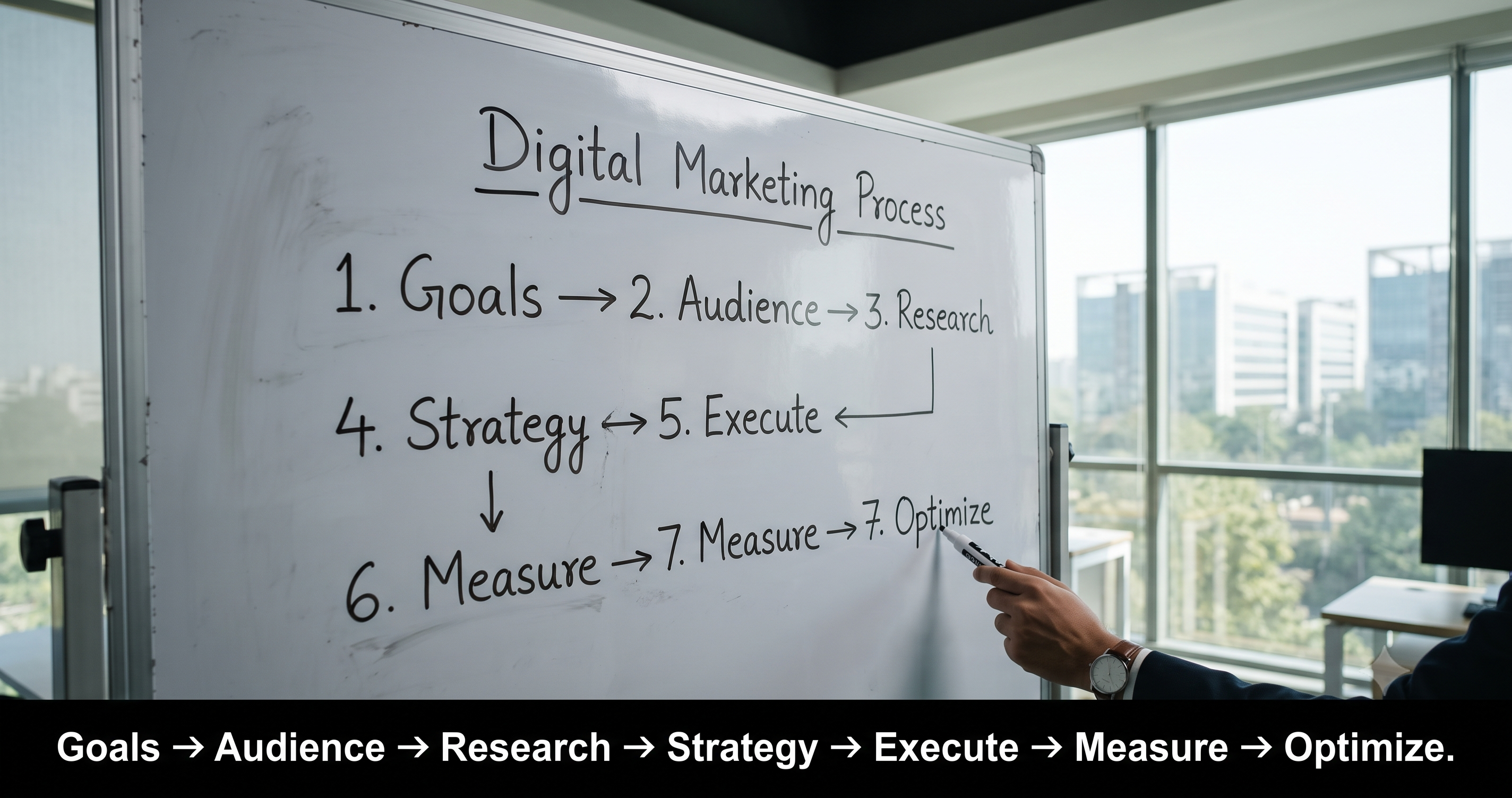
Strategy #5: The 7 Steps of the Digital Marketing Process

Strategy #6: Step 1: Define Your Business and Marketing Goals
- Generate qualified leads.
- Increase ecommerce sales.
- Improve local visibility.
- Increase online bookings.
- Launch a new product.
- Build brand awareness.
- Enter a new geographic market.
- Reduce customer acquisition costs.
Strategy #7: Step 2: Understand Your Target Audience
- Customer problems
- Search behaviour
- Buying motivations
- Common objections
- Preferred platforms
- Decision criteria
- Geographic location
- Buying timeline
Build a Simple Customer Profile
- Who are they?
- What problem are they trying to solve?
- What triggers them to search?
- What questions do they ask?
- What prevents them from buying?
- What makes them trust a business?
Strategy #8: Step 3: Research the Market and Competitors
- Customer search demand
- Competitor visibility
- Keyword opportunities
- Advertising competition
- Content gaps
- Local search results
- Customer reviews
- Market positioning
Information Gap Framework
- Search Gap: Customers search for topics your website does not cover.
- Content Gap: Existing content lacks depth or usefulness.
- Trust Gap: Competitors provide limited proof or expertise.
- Conversion Gap: Competitor websites make enquiries unnecessarily difficult.
Strategy #9: Step 4: Build Your Digital Marketing Strategy
- SEO: Best suited for building organic visibility and capturing ongoing search demand.
- Google Ads: Useful for reaching customers searching with commercial or transactional intent.
- Meta Ads: Useful for audience targeting, demand generation, remarketing, and visual campaigns.
- Content Marketing: Helps educate customers, answer questions, support SEO, and demonstrate expertise.
- Local SEO: Important for businesses serving customers within specific geographic areas.
- Email Marketing: Useful for nurturing leads, retaining customers, and maintaining relationships.
- Performance Marketing: Focuses on measurable outcomes such as leads, conversions, sales, and revenue.
- Marketing Automation: Helps businesses manage repetitive communication and lead nurturing workflows.
Strategy #10: Step 5: Execute the Campaign

- Keyword research
- Technical SEO
- Website optimisation
- Content creation
- Landing page development
- Google Ads setup
- Meta Ads campaigns
- Social media content
- Email sequences
- Local SEO optimisation
- Conversion tracking
Before Launching Any Campaign
- Is the offer clear?
- Is targeting relevant?
- Does the landing page match the campaign?
- Is the website mobile-friendly?
- Are conversion actions easy?
- Is tracking configured?
- Are trust signals visible?
Strategy #11: Step 6: Measure Marketing Performance

Awareness Metrics
- Impressions
- Reach
- Video views
- Branded searches
Engagement Metrics
- Clicks
- Engagement rate
- Website behaviour
Conversion Metrics
- Leads
- Purchases
- Bookings
- Calls
- Form submissions
Business Metrics
- Cost per lead
- Customer acquisition cost
- Revenue
- Return on ad spend
- Customer lifetime value
Strategy #12: Step 7: Analyse, Optimise, and Scale

Example
Strategy #13: A Practical Digital Marketing Workflow
Layer 1: Strategy
Layer 2: Execution
Layer 3: Growth
Strategy #14: Common Digital Marketing Process Mistakes
- Starting With Channels: Businesses often decide to "do SEO" or "run ads" before defining objectives. Start with business goals first.
- Targeting Everyone: Broad audiences often create irrelevant traffic. Define your ideal customer clearly.
- Ignoring the Customer Journey: Not every visitor is ready to buy. Create different content for awareness, consideration, and decision stages.
- Measuring Only Traffic: Traffic does not automatically produce revenue. Measure meaningful conversions and business outcomes.
- Weak Conversion Tracking: Without accurate tracking, optimization becomes guesswork. Verify tracking before scaling campaigns.
- Sending Traffic to Poor Landing Pages: Advertising cannot fully compensate for a confusing website. Improve the conversion experience first.
- Scaling Too Early: More budget can amplify existing problems. Scale campaigns only after understanding what works.
- Depending on One Channel: Algorithm changes, competition, or rising advertising costs can create risk. Build a diversified marketing ecosystem over time.
Strategy #15: Expert Tips for Improving Your Digital Marketing Process
Connect SEO and Paid Search Data
Connect Content With Customer Questions
Review Lead Quality
Build Conversion Before Scale
Use AI Carefully
Strategy #16: Digital Marketing Process for Ahmedabad Businesses
Strategy #17: Frequently Asked Questions
The digital marketing process is a structured method for planning, executing, measuring, and improving online marketing activities.
The seven steps are goal setting, audience research, market analysis, strategy development, campaign execution, performance measurement, and continuous optimisation.
A structured process helps businesses connect marketing activities with measurable objectives and make better decisions using performance data.
Digital marketing uses online channels to attract, engage, convert, and retain customers throughout different stages of their journey.
A digital marketing workflow is the sequence of activities used to plan, create, launch, measure, and optimise marketing campaigns.
The first step should be defining clear business and marketing goals.
It depends on customer behaviour, competition, goals, budget, and sales cycle. There is no single channel suitable for every business.
SEO helps businesses improve organic visibility and capture relevant search demand over time.
Google Ads can help businesses reach users actively searching for relevant products or services.
Meta Ads can support brand awareness, audience targeting, lead generation, customer acquisition, and remarketing.
Conversion tracking helps businesses understand which campaigns and channels generate meaningful customer actions.
Useful metrics may include qualified leads, conversion rates, customer acquisition costs, revenue, and return on advertising spend.
Campaigns should be reviewed regularly, but optimisation frequency depends on traffic volume, available data, campaign type, and business objectives.
No. Results depend on market demand, competition, strategy, execution, pricing, customer experience, and other business factors.
Digital marketing is continuous. Paid campaigns may produce data quickly, while SEO and content strategies often require several months.
Strategy #18: Conclusion
Ready to Grow Your Business Online?
Read Related Articles: