
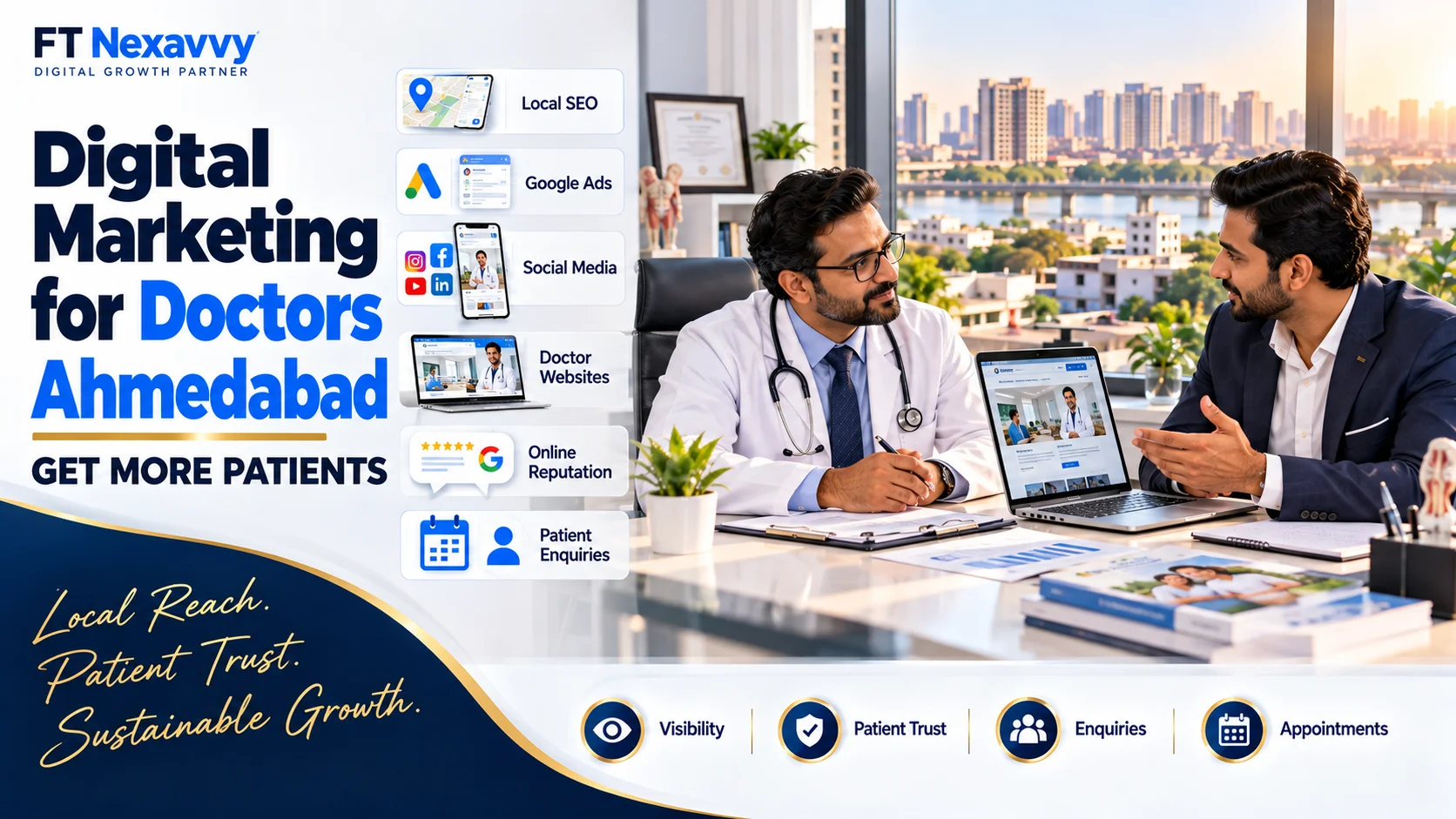
 Digital Marketing for Doctors in Ahmedabad: Get More Patients
Digital MarketingOctober 12, 2026
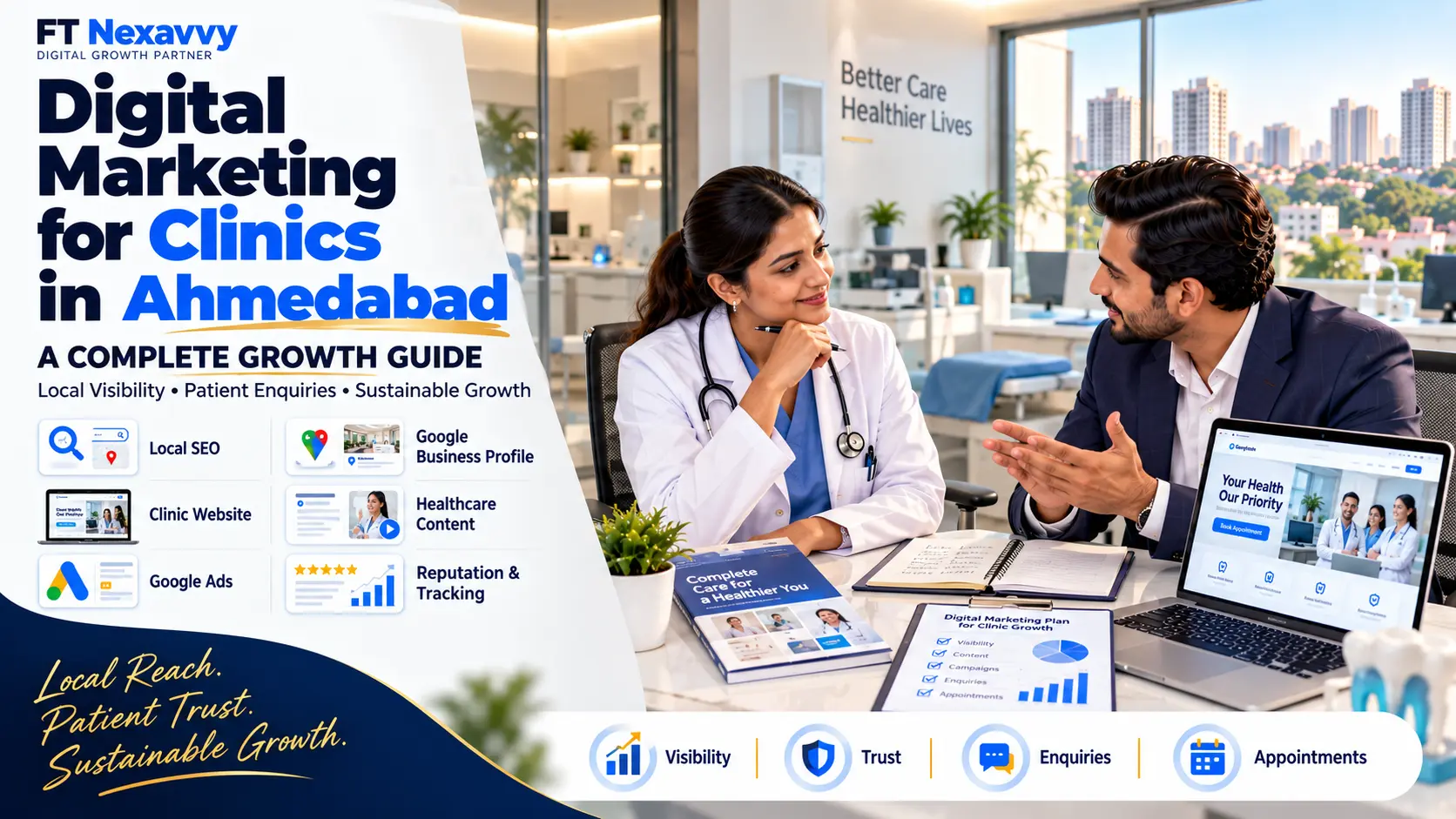
"Successful digital marketing for clinics is not simply about getting more website traffic or social media followers. The true goal is to attract qualified patient enquiries, streamline appointment booking, and build lasting patient trust through clear, ethical, and educational communication."
– FT Nexavvy
| Content type | Example | Main purpose |
|---|---|---|
| Educational posts | General preventive health guidance | Patient education |
| Short videos | A doctor explains a common health question | Improve understanding |
| Clinic updates | Updated hours or new facilities | Share useful information |
| Doctor introductions | Verified qualifications and specialisation | Explain professional credentials |
| Awareness campaigns | Seasonal health information | Community education |
| Frequently asked questions | Appointment preparation guidance | Reduce confusion |
| Metric | What it tells you |
|---|---|
| Organic search traffic | Whether search visibility is attracting visitors |
| Qualified enquiries | Whether relevant people are contacting the clinic |
| Appointment bookings | Whether enquiries are progressing |
| Attended appointments | Whether booked visits are taking place |
| Cost per qualified enquiry | How much marketing costs to generate a suitable enquiry |
| Patient acquisition cost | Marketing cost associated with acquiring a new patient, using a consistent definition |
| Conversion rate | The proportion of measured visitors or enquiries completing a defined action |
| Revenue contribution | Financial contribution where reliable attribution is possible |
| Channel | Best suited for | Main consideration |
|---|---|---|
| SEO | Long-term organic visibility | Results generally take time |
| Google Business Profile | Local discovery | Accurate information and eligibility matter |
| Google Ads | Targeted paid-search visibility | Spend and lead quality require monitoring |
| Social media | Education and professional awareness | Requires consistent, responsible content |
| Clinic website | Explaining services and supporting enquiries | User experience affects conversion |
| Healthcare content | Answering patient questions | Medical accuracy and review are essential |
| Reputation management | Building confidence | Privacy and ethical review practices matter |
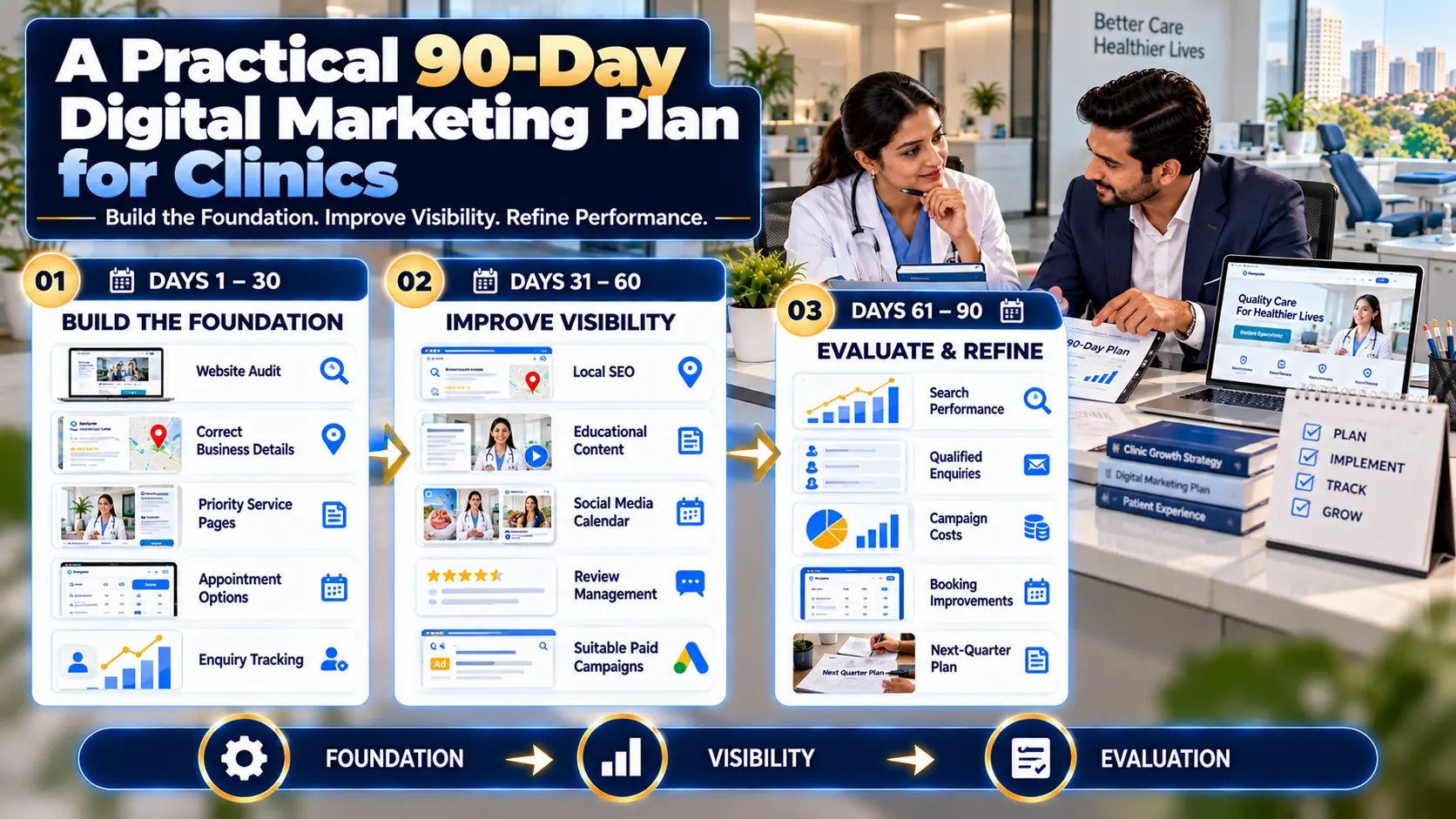
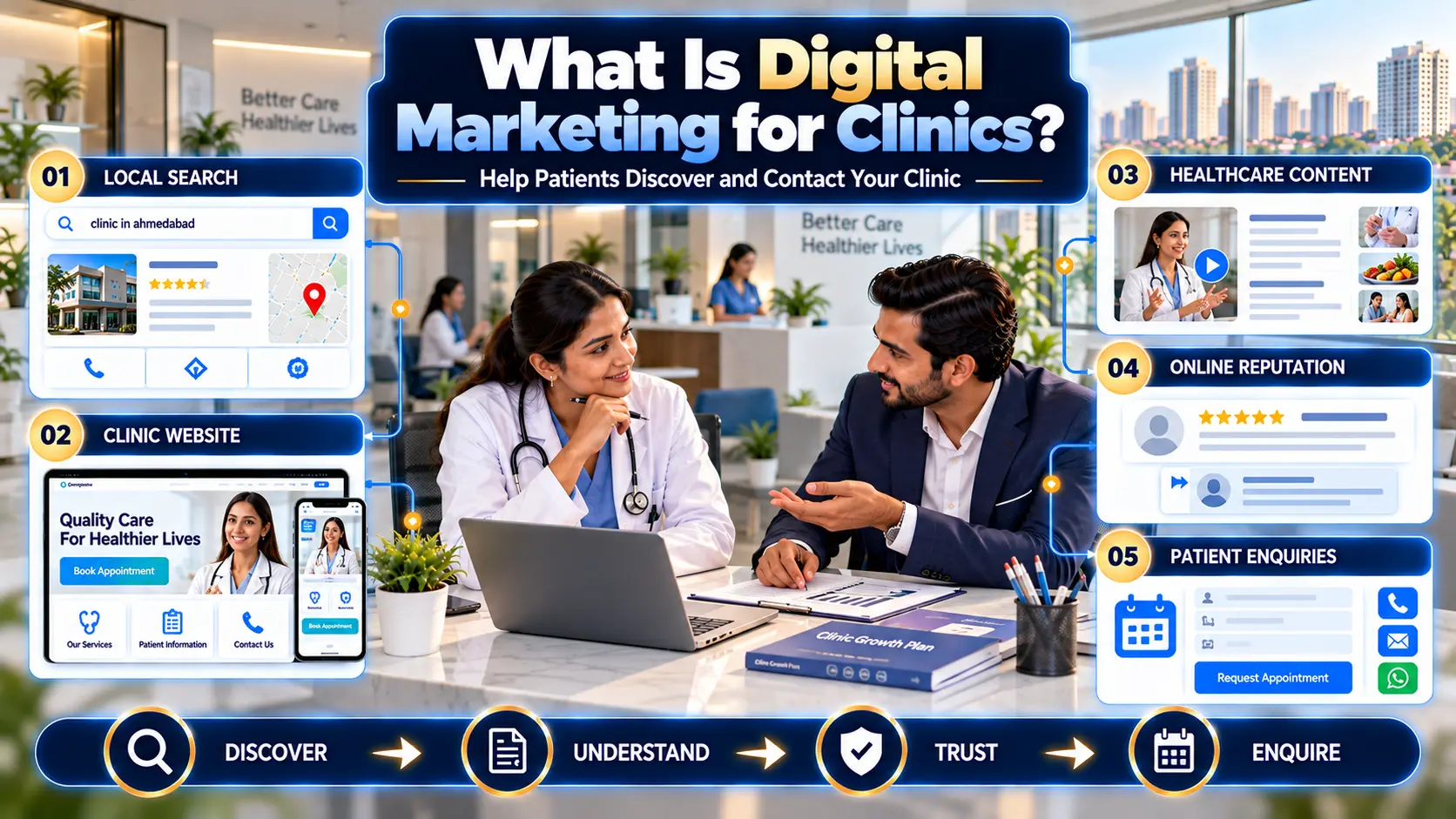
It is the use of online channels such as SEO, clinic websites, Google Business Profile, social media and paid advertising to help people discover healthcare services and contact a clinic.
Digital marketing helps clinics improve online visibility, communicate their services and make appointment information easier to find. The best approach depends on the clinic's specialty, audience and local competition.
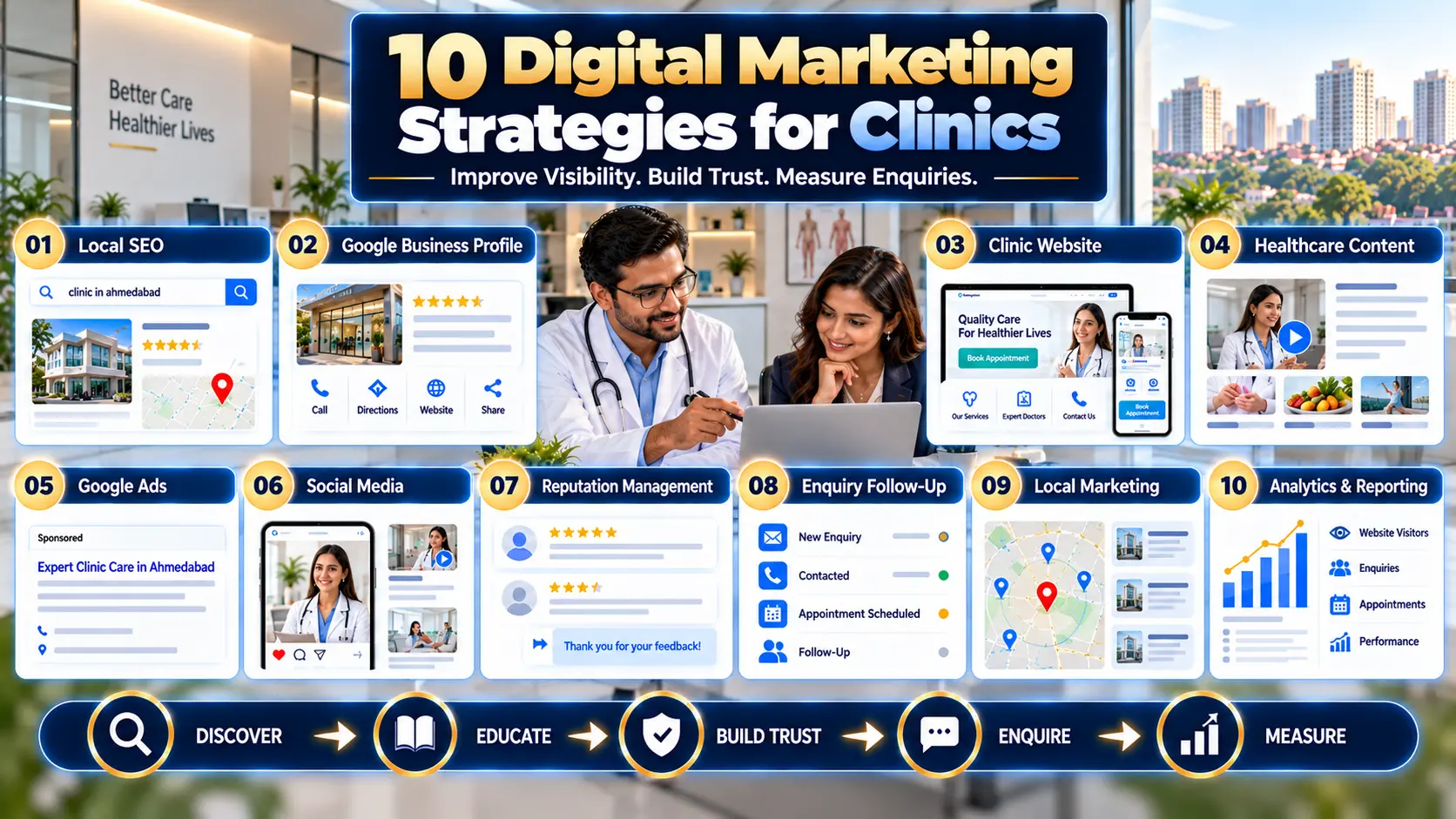
There is no universal best channel. Local SEO supports discovery, a good website supports enquiries, Google Ads can provide paid visibility and educational content can build understanding.
SEO improves the accessibility and relevance of clinic information in organic search. It can help people find appropriate service pages and local business details, although rankings and enquiry volumes are not guaranteed.
Yes. An eligible clinic can use its profile to maintain accurate business information and improve its presentation across Google Search and Maps.
Google Ads may suit clinics seeking targeted paid-search visibility. Before investing, assess demand, budget, landing-page quality, platform restrictions and the clinic's capacity to handle enquiries.
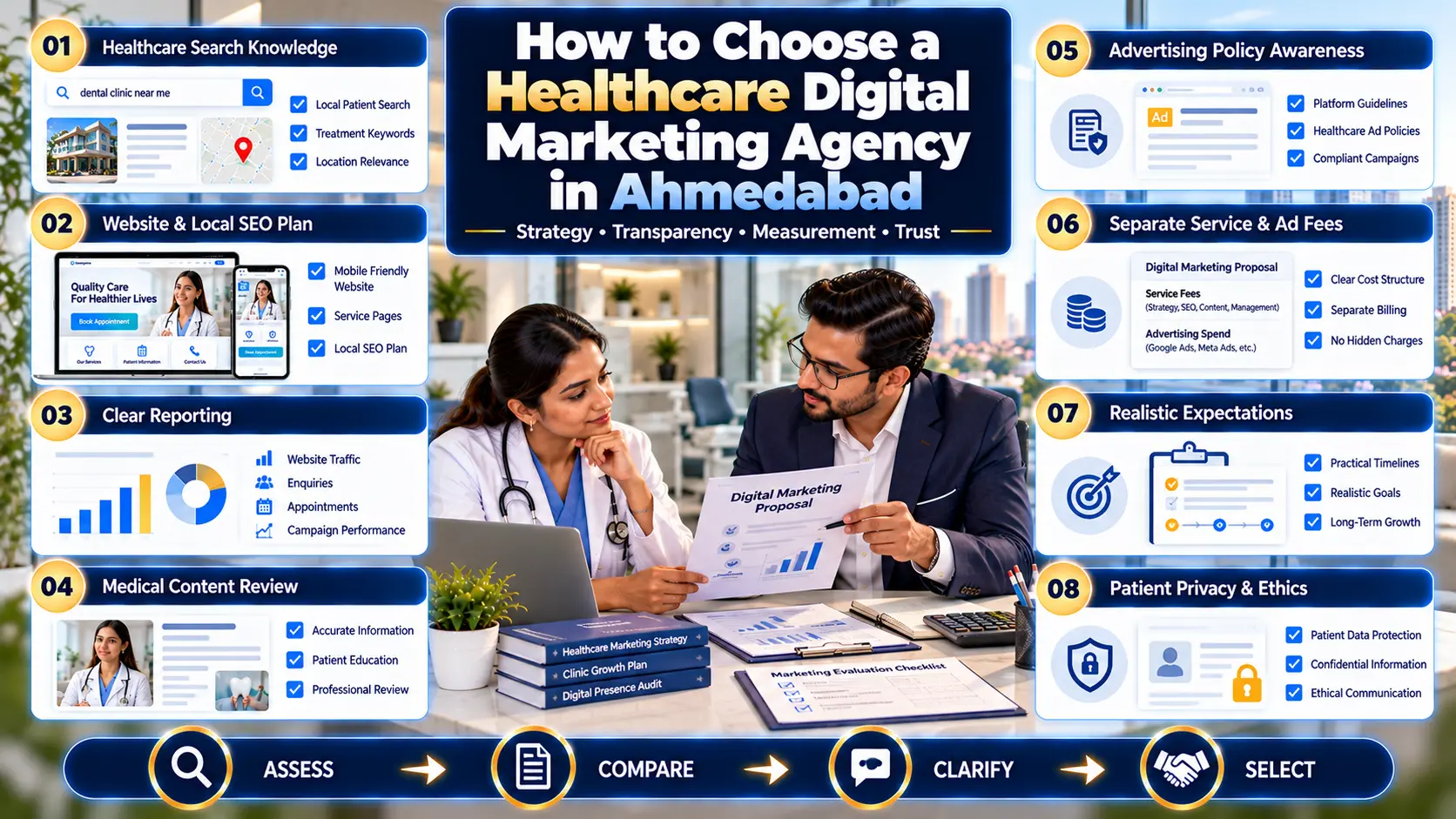
It should include accurate service information, doctor credentials, contact details, location, appointment options, mobile-friendly navigation and appropriate privacy information.
It can help clinics share educational content, introduce their team and communicate useful updates. Results depend on audience relevance, content quality and consistency.
There is no mandatory frequency. Choose a sustainable schedule that allows the team to publish useful, accurate content and obtain appropriate clinical review.
Improve local visibility, create relevant service pages, simplify contact options, target suitable searches and establish a reliable response process. Measure enquiry quality rather than relying only on total volume.
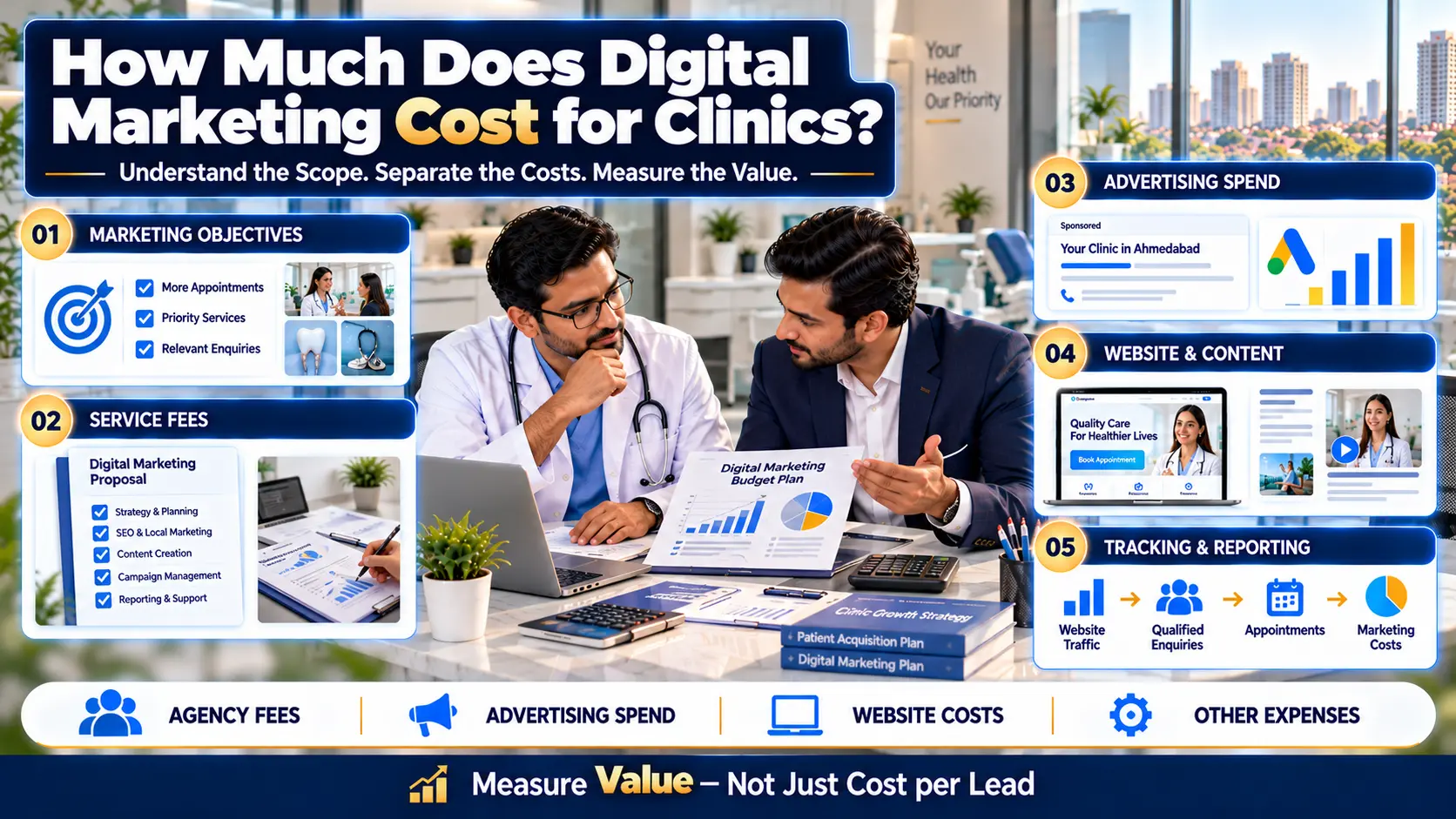
The budget depends on objectives, services, competition, website requirements and advertising plans. Start with a defined scope and evaluate performance before expanding expenditure.
SEO timelines vary based on competition, website quality, technical issues, content and existing authority. Meaningful improvement can take months, and specific ranking dates cannot be guaranteed.
Some healthcare advertising is permitted, but restrictions vary by service, location, targeting method and policy. Review current Google Ads policies and applicable professional requirements before launching a campaign.
Respond professionally without confirming patient status or disclosing medical information. Investigate the concern internally and offer an appropriate private channel when necessary.
Useful metrics include qualified enquiries, appointment bookings, attended appointments, conversion rates and cost per qualified enquiry. Website traffic and engagement provide supporting context.
Author

FT Nexavvy
FT Nexavvy editorial team.


ON THIS PAGE
Digital Marketing for Doctors in Ahmedabad: Get More Patients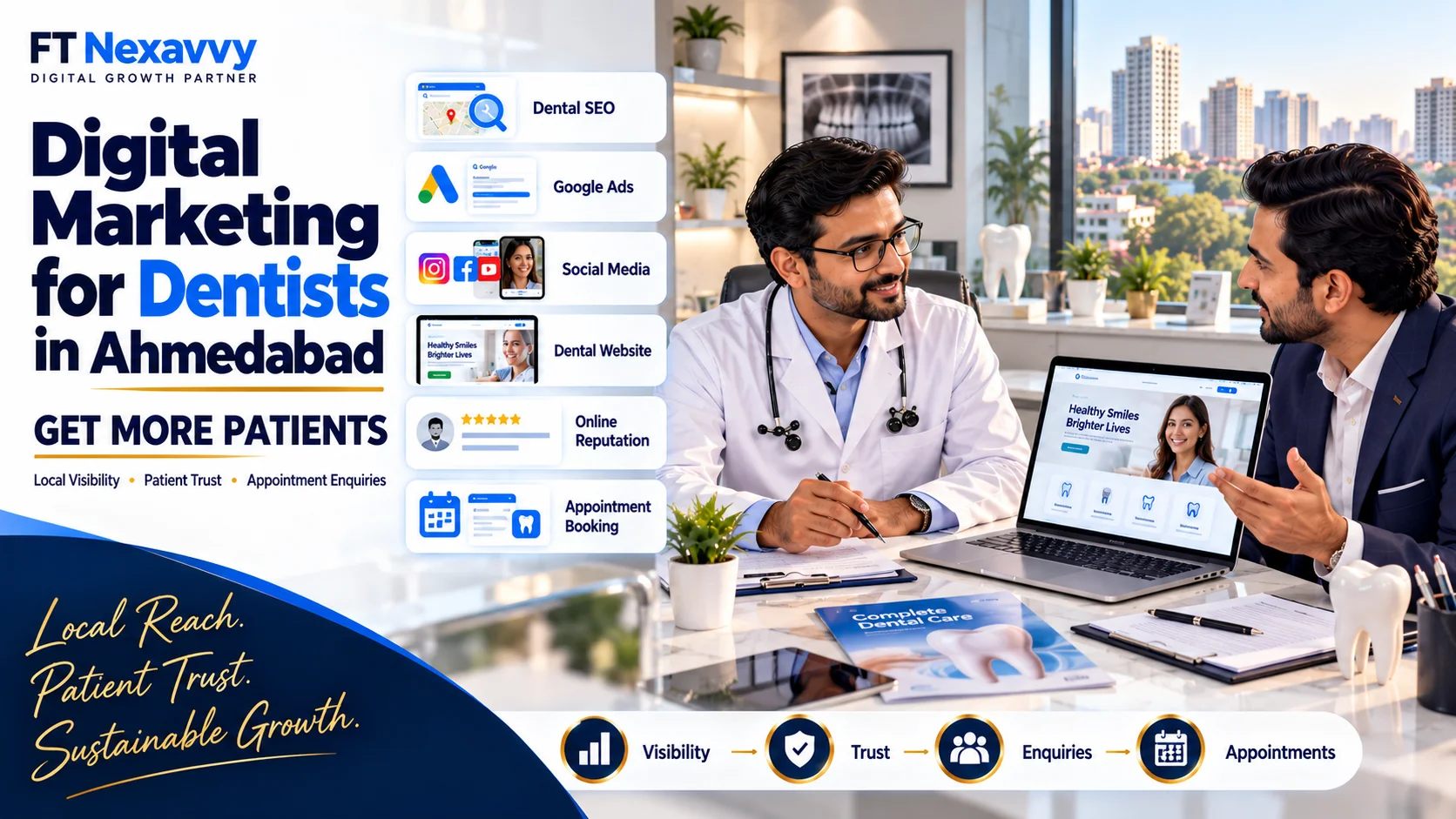 Digital Marketing for Dentists in Ahmedabad: Get More Patients
 Digital Marketing Strategy for Ahmedabad Businesses: 10 Proven Strategies
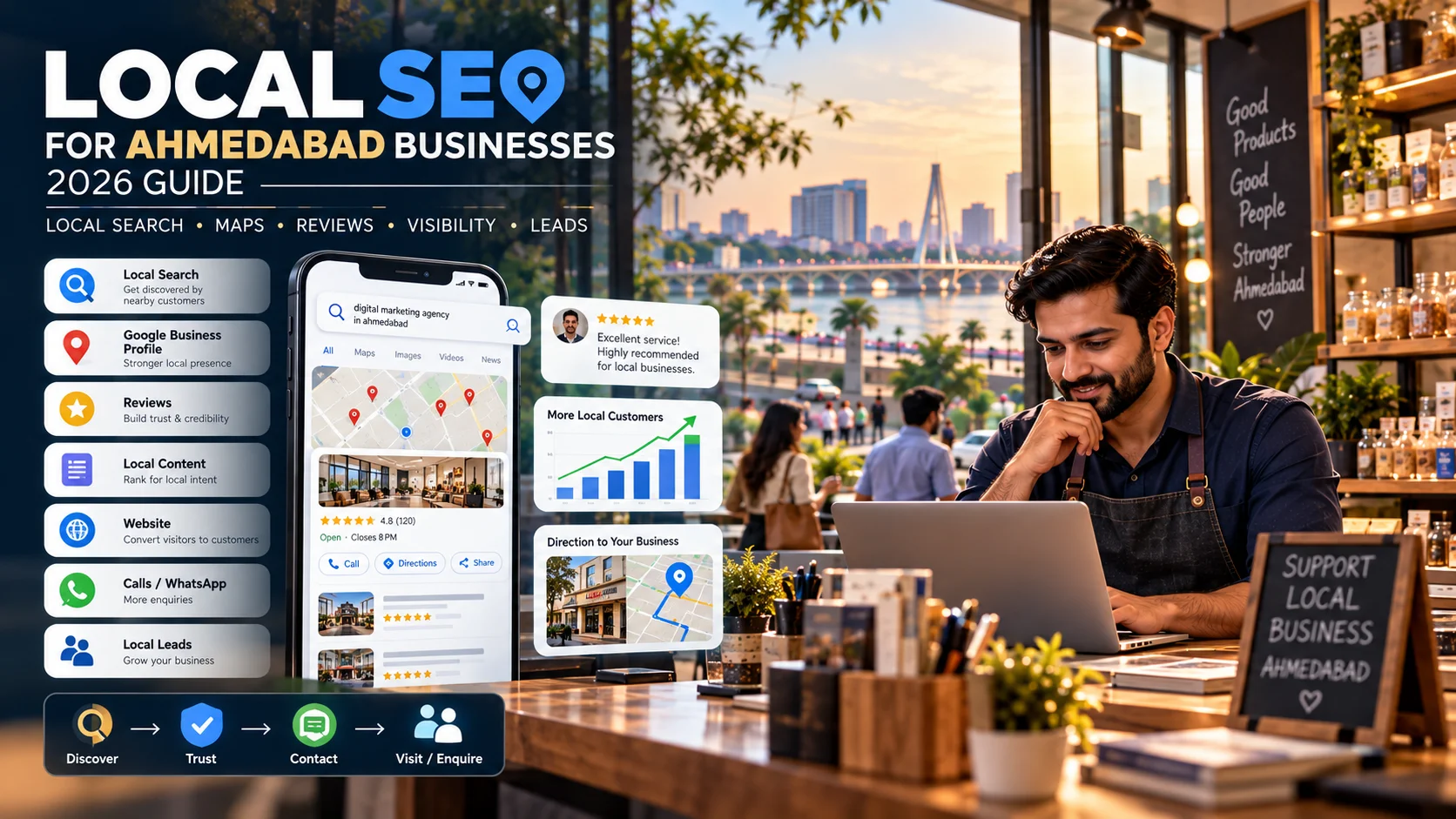 How Local SEO Helps Ahmedabad Businesses Grow: 10 Proven Benefits
Discuss Your
Digital Marketing Goals

NDA? Absolutely just ask.
We’ll respond in 24 hours fast & focused.
Work with senior UX experts, not juniors.
Schedule a call:
Mr Panchal
Founder & CEO
How can we help you?
Prefer email?
hello@ftnexavvy.com

DIGITAL MARKETING AGENCY IN AHMEDABAD

Working Hours
Monday – Saturday 9:00 am – 6:00 pm ( Sunday > Closed )
Services
Use Cases
Travel
Health & Fitness
Educations
News App
Food Order & Delivery App
Work inquiries
Interested in working with us?
hello@ftnexavvy.com
Call : +91 90303 48383
Ahmedabad Office:
A-531, Money Plant High Street,
Gota, Ahmedabad - 382470
Looking for a job opportunity?
See open positions
Sign up for the newsletter










Disclaimer
© 2025-2026 Nexavvy. All rights reserved.
