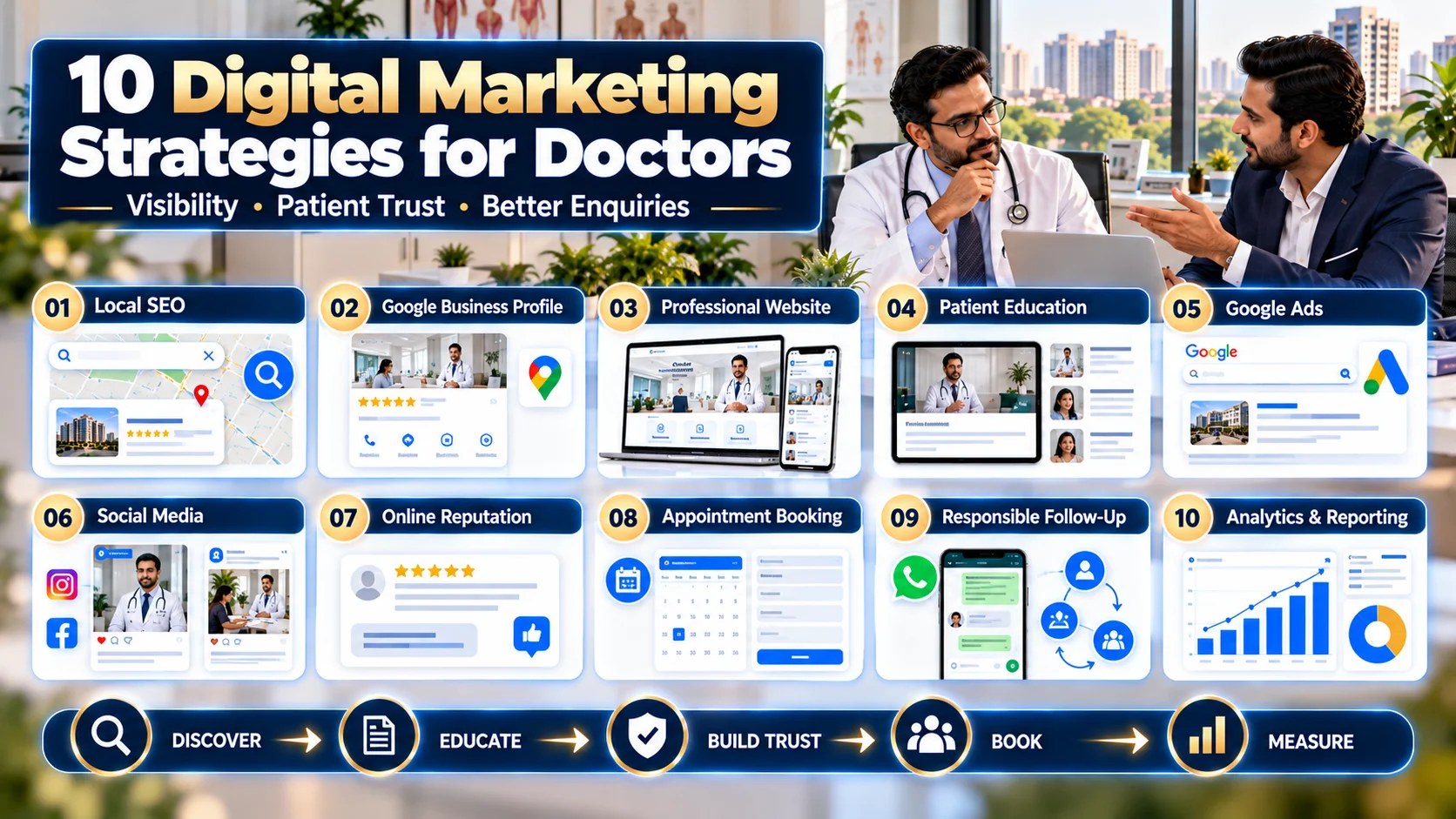
10 Digital Marketing Strategies for Doctors
 Digital Marketing for Doctors in Ahmedabad
1. Improve Local SEO for Your Medical Practice
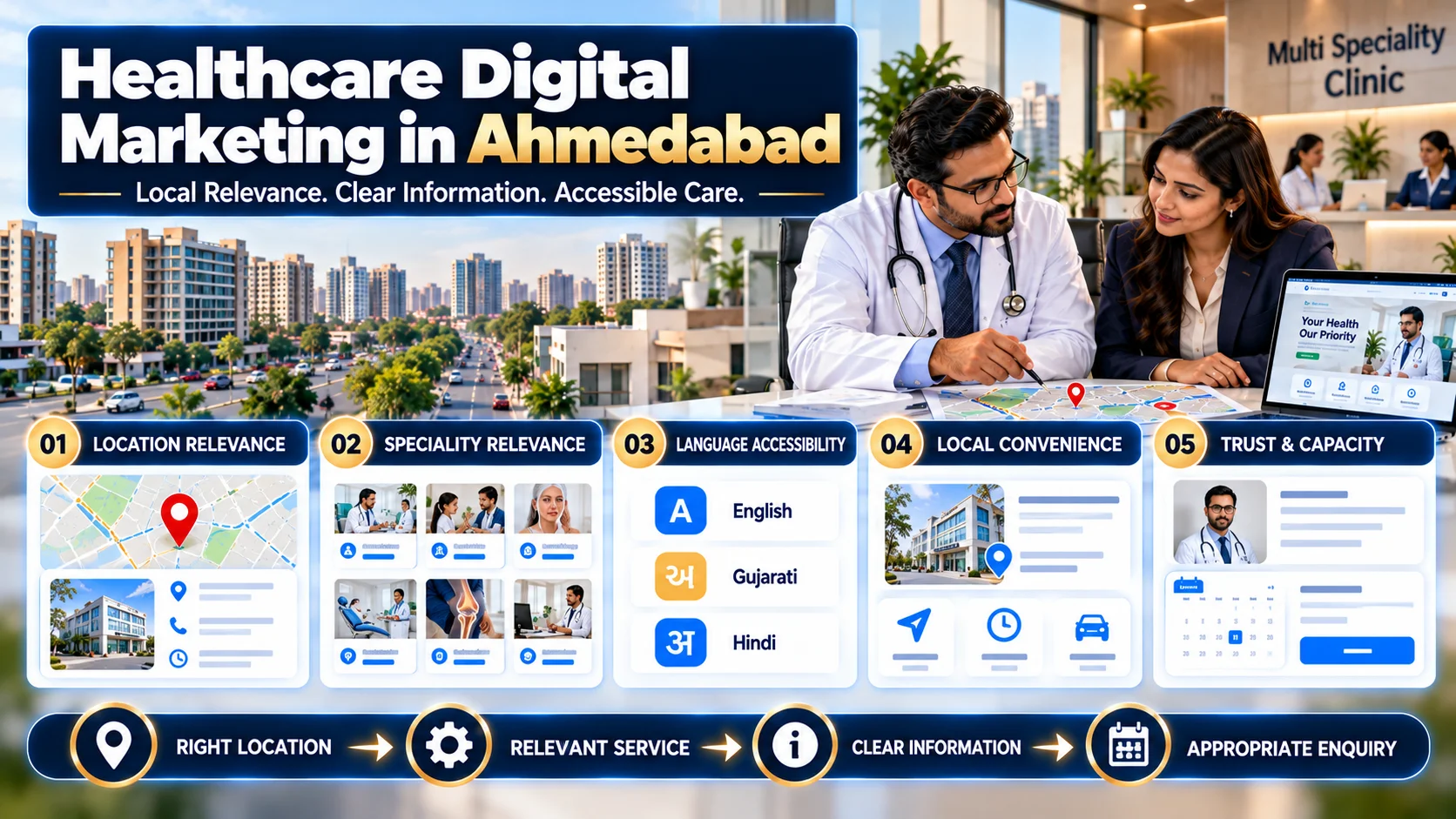
Local SEO helps patients discover your practice when they search for relevant medical services in a particular area.
For example, potential patients might search for a dermatologist in Satellite, an orthopaedic doctor near SG Highway or a physiotherapy clinic in South Bopal.
Your website and local business information should clearly communicate your speciality, location and available services.
Practical steps:
- Create a dedicated website page for your main speciality.
- Mention your clinic's actual location and service area naturally.
- Use descriptive page titles and headings.
- Include accurate contact details and consultation information.
- Ensure your website works properly on mobile devices.
- Link relevant educational articles to your speciality pages.
Avoid creating numerous near-identical location pages that provide little unique information. Each page should serve a genuine patient need.
A focused local SEO strategy can help improve relevant organic visibility over time.
For clinics that need a more structured approach, professional
SEO services in Ahmedabad can help bring technical optimisation, service-page content and local search improvements together. The right priorities will depend on the clinic's location, speciality, website condition and competition.
2. Optimise Your Google Business Profile
For clinics that serve patients at a physical location, Google Business Profile can be an important discovery channel.
A complete profile helps people find your address, contact details, operating hours and other relevant business information.
Optimisation checklist:
- Use your genuine practice or clinic name.
- Select the most accurate available business category.
- Maintain the correct address and telephone number.
- Update operating hours and holiday information.
- Add appropriate clinic photographs.
- Keep the website and appointment links accurate.
- Respond professionally to reviews without revealing confidential information.
For doctors working across multiple locations, create or manage profiles according to Google's eligibility guidelines. Do not create duplicate profiles simply to target additional neighbourhoods.
Remember that profile completeness alone does not guarantee higher rankings. Local relevance, distance, prominence and other factors can influence results.
Your Google Business Profile should support the wider local search strategy, not work in isolation. Website content, accurate business details and relevant local signals should reinforce one another as part of your
local SEO strategy.
3. Build a Professional, Patient-Friendly Website
Your website should help potential patients understand your practice and take the next step.
If your current website is difficult to navigate, slow on mobile or confusing about how to book an appointment, consider improving its structure and usability. A professionally planned
website design and development solution can help organise service information, contact options and appointment pathways more clearly.
A website that looks attractive but hides essential information may generate visits without producing appointment enquiries.
At a minimum, include the following pages and elements:
- Doctor profile, qualifications and professional experience.
- Speciality and treatment information.
- Clinic address, directions and consultation hours.
- Appointment booking or enquiry options.
- Frequently asked questions about consultations.
- Relevant educational articles.
- Clear privacy information and secure form handling.
Make the website mobile-friendly and keep loading times reasonable. Appointment buttons should be easy to find without overwhelming visitors.
If you provide multiple specialities, create useful pages for each one instead of placing every service on a single generic page.
For example, a clinic offering dermatology and hair-related consultations should explain those services separately, with accurate information about what patients can expect.
4. Publish Helpful, Medically Responsible Content
Patients often search online to understand symptoms, health conditions, diagnostic procedures and treatment options.
Healthcare content marketing allows doctors to answer these questions using accurate, accessible information.
Useful content formats include:
- Articles explaining common health conditions.
- Preparation guides for consultations or diagnostic tests.
- Educational videos about preventive healthcare.
- Answers to frequently asked questions.
- Explanations of medical procedures.
- Guidance on when professional medical evaluation may be appropriate.
For example, an orthopaedic practice might publish an educational article about common causes of knee pain. A dermatologist might explain basic skin-care practices and when persistent symptoms need professional assessment.
Content should be medically reviewed and should not diagnose individual readers. Explain limitations and encourage appropriate consultation when necessary.
Avoid sensational headlines, unsupported treatment claims and promises of guaranteed results.
This approach supports patient education while demonstrating professional knowledge and credibility.
5. Use Google Ads to Reach Relevant Searchers
Google Ads can help eligible healthcare practices reach people searching for relevant services.
Unlike organic SEO, paid search can generate visibility soon after a properly configured campaign launches. However, advertising costs continue while campaigns run, and results are not guaranteed.
Start by defining the service, location and appointment action you want to promote.
A practical campaign structure:
| Campaign component | Recommended approach |
|---|
| Objective | Relevant appointment enquiries |
| Location | Areas the clinic can genuinely serve |
| Keywords | Relevant speciality and consultation searches |
| Landing page | Matching speciality or service page |
| Conversion tracking | Valid calls and appointment enquiries |
| Evaluation | Cost per qualified enquiry and completed appointment |
Keep the advertisement, keyword and landing page closely aligned.
For example, an advertisement for dermatology consultations should lead to a page explaining dermatology services, doctor credentials, location and appointment options.
Before launching campaigns, review Google's current healthcare advertising policies, applicable Indian regulations and any platform-specific restrictions. Certain medical services, products, claims and audience-targeting practices may be restricted.
Any healthcare campaign should first be checked against the policies and professional requirements that apply to the specific service.
Do not judge campaign success using clicks alone. Assess whether enquiries are relevant and whether they lead to actual appointments.
6. Use Social Media for Patient Education
Social media marketing can help doctors share educational information and maintain a professional online presence.
Instagram, Facebook and other suitable platforms can support awareness, although they should not replace essential website information or clinical communication.
Content ideas for doctors:
- Short educational videos.
- General preventive healthcare guidance.
- Answers to common questions.
- Explanations of medical terminology.
- Clinic announcements and schedule updates.
- Awareness content related to relevant health observances.
- Introductions to the practice and its facilities.
A simple weekly schedule could include one educational video, one informative post and one frequently asked question.
Choose a manageable publishing frequency rather than posting daily without a clear purpose.
For practices that need help planning consistent educational content,
social media marketing services in Ahmedabad can provide a structured approach to content planning, creative production and platform management. Medical information and patient-related content should still receive the appropriate review and consent checks before publication.
Do not share identifiable patient information, photographs or case details without appropriate consent and safeguards. Avoid public discussions that reveal a person's medical circumstances.
Social media should build understanding and familiarity, not create pressure through fear or exaggerated medical claims.
7. Strengthen Online Reputation and Patient Trust
Patients may consider online reviews when evaluating a medical practice. However, reviews should be treated as one source of information rather than a substitute for clinical qualifications or professional judgement.
Doctors can support a responsible reputation-management process by:
- Providing accurate information about qualifications and services.
- Making it easy for patients to find the correct contact details.
- Inviting honest feedback through appropriate, neutral requests.
- Responding professionally to feedback.
- Identifying recurring administrative problems.
- Protecting patient confidentiality in every response.
Never reveal that a reviewer is your patient or disclose details about consultations, diagnoses or treatment.
Do not buy reviews, fabricate testimonials or offer incentives in exchange for positive ratings.
If a negative review raises a concern, acknowledge it appropriately and offer a private channel for resolution without discussing confidential information publicly.
Reputation management should improve communication and accountability, not manipulate ratings.
8. Make Appointment Booking Easy
Generating website traffic is only part of patient acquisition. Visitors must also be able to contact the practice without unnecessary friction.
Review your website from a prospective patient's perspective.
Can someone quickly find your phone number? Are consultation hours clear? Does the appointment form work on a mobile phone? Is the clinic address easy to locate?
Ways to reduce booking friction:
- Place clear appointment buttons on relevant pages.
- Keep forms short and collect only necessary information.
- Display accurate consultation hours.
- Offer appropriate calling or appointment-request options.
- Provide clear confirmation after a form submission.
- Explain when and how the clinic will respond.
WhatsApp may be useful for appointment coordination where appropriate, but it should not become an unsecured channel for sharing sensitive medical information.
Do not request detailed medical histories through ordinary marketing forms. Use suitable systems and safeguards for any necessary health information.
Measure completed appointments separately from clicks on appointment buttons. This distinction helps identify where potential patients are dropping out.
The same principle applies to other enquiry journeys: the goal is not simply to generate clicks, but to help relevant visitors take the next appropriate step. Read our guide to
online lead generation for Ahmedabad businesses for more ideas on connecting visibility, enquiries and conversion measurement.
9. Use Email and Follow-Up Responsibly
Some prospective patients need additional information before booking. A structured follow-up process can help manage genuine enquiries without creating unwanted communication.
For example, a person might submit a request asking about consultation hours. Your team can respond with the requested details and explain the next booking step.
A responsible follow-up process should include:
- Record the enquiry in an appropriately secured system.
- Assign responsibility for responding.
- Reply within the clinic's stated response timeframe.
- Provide accurate, relevant information.
- Respect communication preferences and consent.
- Avoid unnecessary collection or sharing of personal data.
Marketing messages should be sent only where appropriate consent and applicable rules permit them.
Do not use a patient's health condition to create aggressive retargeting campaigns or send sensitive information through unsecured communication channels.
The objective is to improve service and appointment coordination, not pressure people into treatment.
10. Track Results and Improve Your Strategy
A healthcare marketing strategy needs reliable measurement. Otherwise, a clinic may spend money on channels that produce activity but few meaningful appointments.
Start with a small set of clearly defined metrics.
| Metric | What it helps you understand |
|---|
| Relevant organic visits | Whether search visibility is attracting suitable visitors |
| Website enquiry rate | Whether visitors are taking the desired action |
| Qualified enquiries | Whether enquiries match the practice's services |
| Appointment conversion rate | Whether enquiries become booked appointments |
| Completed appointments | Whether marketing contributes to actual consultations |
| Cost per qualified enquiry | How efficiently advertising generates relevant enquiries |
| Patient acquisition cost | The cost of acquiring a patient, using a clearly defined method |
When SEO, paid campaigns and website enquiries need to be evaluated together,
performance marketing services in Ahmedabad may be relevant for campaign measurement and optimisation. Clinics should define meaningful conversions carefully and use privacy-conscious reporting practices.
Use analytics and advertising conversion tracking carefully. Avoid sending identifiable patient information or sensitive health data to analytics and advertising platforms.
Where possible, use aggregated reporting and suitable privacy safeguards. Staff should know how to record enquiry outcomes consistently.
Review results monthly, investigate unexpected changes and improve the weakest part of the patient journey first.

 Digital Marketing Strategy for Ahmedabad Businesses: 10 Proven Strategies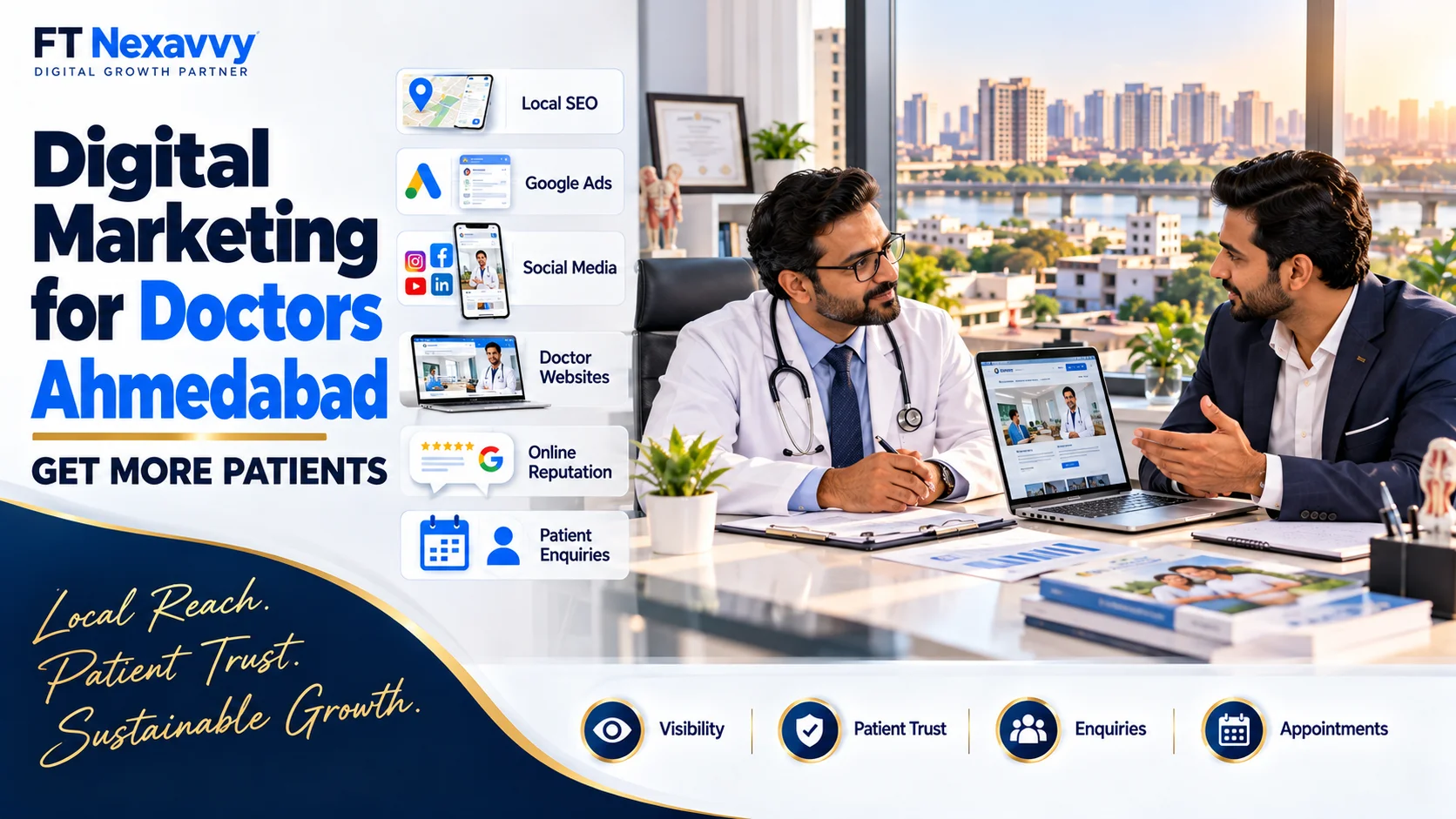



 How Local SEO Helps Ahmedabad Businesses Grow: 10 Proven Benefits
 Online Lead Generation for Ahmedabad Businesses: 10 Proven Strategies
 Digital Marketing for Builders in Ahmedabad: Get More Leads