FT Nexavvy LogoCONTACT US
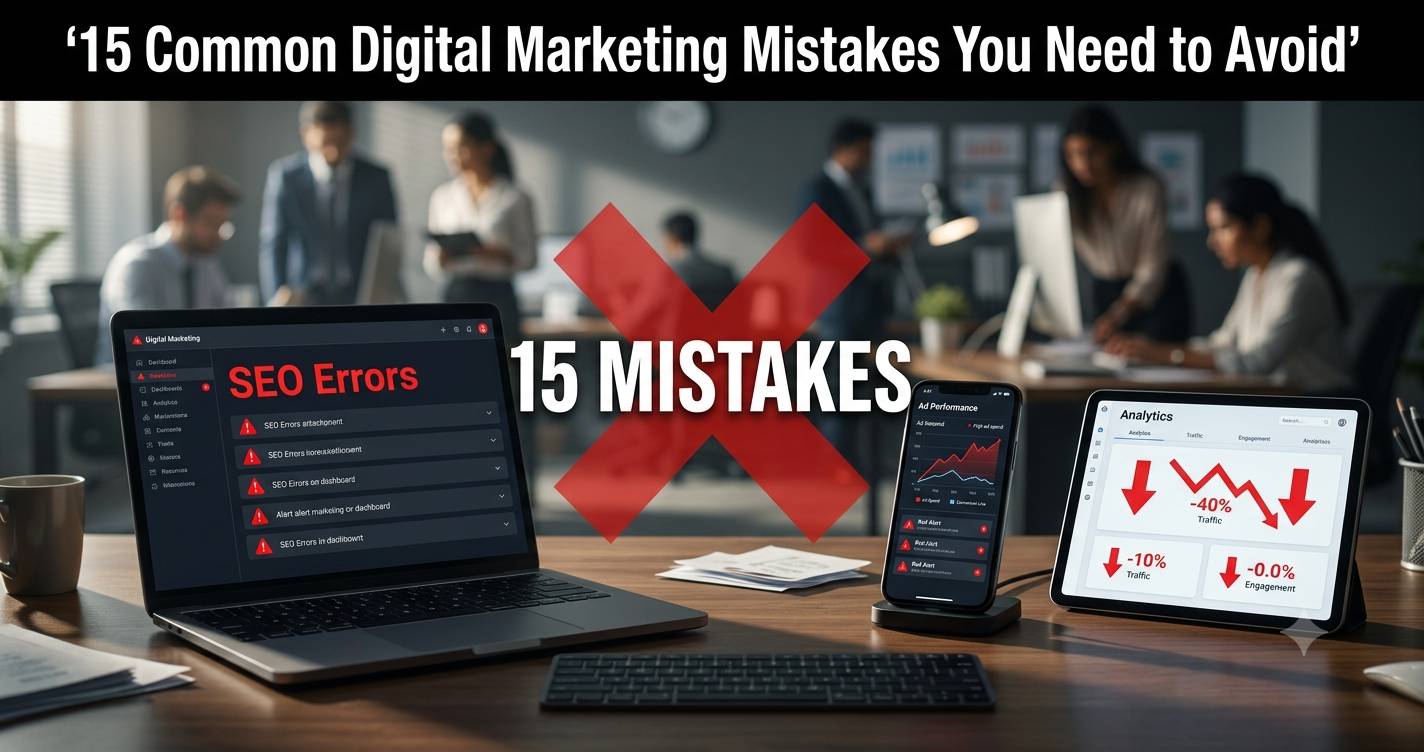
Digital marketing dashboard highlighting SEO errors, declining analytics, and common digital marketing mistakes that reduce website traffic, engagement, conversions, and business growth.

15 Common Digital Marketing Mistakes You Need to Avoid

Comprehensive guide and insights about Analytics: 15 Common Digital Marketing Mistakes You Need to Avoid

Recent12 MIN Read    BYFT Nexavvy
Digital marketing gives businesses more ways to reach customers than ever before.
But having access to SEO, Google Ads, Meta Ads, social media, content marketing, email, and automation does not automatically produce results.
Many businesses struggle because their marketing activities are disconnected.
They may generate traffic without leads, leads without customers, or engagement without measurable business growth.
The problem is often not the marketing channel itself.
It is how the strategy is planned, executed, measured, and improved.
Understanding the most common digital marketing mistakes can help businesses identify weak points before increasing budgets or adding more channels.
This guide explains 15 mistakes, why they happen, and practical ways to fix them.

Strategy #1: What Are the Most Common Digital Marketing Mistakes?

The most common digital marketing mistakes include starting without clear goals, targeting the wrong audience, ignoring customer search intent, neglecting SEO, publishing low-value content, running ads without conversion tracking, using weak landing pages, ignoring mobile users, measuring vanity metrics, overlooking local SEO, depending on one marketing channel, neglecting existing customers, automating broken processes, using AI-generated content without expert review, and scaling campaigns too early. Businesses can avoid these mistakes by connecting marketing activities to customer needs and measurable goals.
A strong digital strategy should continuously follow four steps: Diagnose the problem, prioritise the biggest opportunity, fix it, and measure the outcome.

"Understanding the most common digital marketing mistakes can help businesses identify weak points before increasing budgets or adding more channels."

FT Nexavvy

Strategy #2: Why Digital Marketing Mistakes Matter

Small marketing mistakes can become expensive when repeated at scale.
Consider a business running Google Ads. The campaign generates hundreds of clicks, but the landing page does not match the advertisement. Visitors leave. The business responds by increasing the advertising budget. Traffic increases, but conversions remain poor.
The real problem was never traffic. It was the experience after the click.
This example highlights an important marketing principle: Do not scale a broken system.
Before increasing traffic, content output, advertising budgets, or automation, businesses should identify the actual bottleneck.

Strategy #3: What Causes Digital Marketing Strategies to Fail?

Digital marketing rarely fails because of one single mistake. Problems often appear across the customer journey.
A typical digital journey may look like: Discovery → Website Visit → Evaluation → Conversion → Follow-Up → Retention
A weakness at any stage can reduce overall performance. For example:
  • Poor SEO reduces discovery.
  • Wrong targeting brings irrelevant visitors.
  • Weak content reduces trust.
  • Slow websites create friction.
  • Poor landing pages reduce conversions.
  • Missing tracking hides performance.
  • Weak follow-up loses qualified leads.
This is why businesses should evaluate the complete marketing system rather than judging individual channels separately.

Strategy #4: 1. Starting Digital Marketing Without Clear Goals

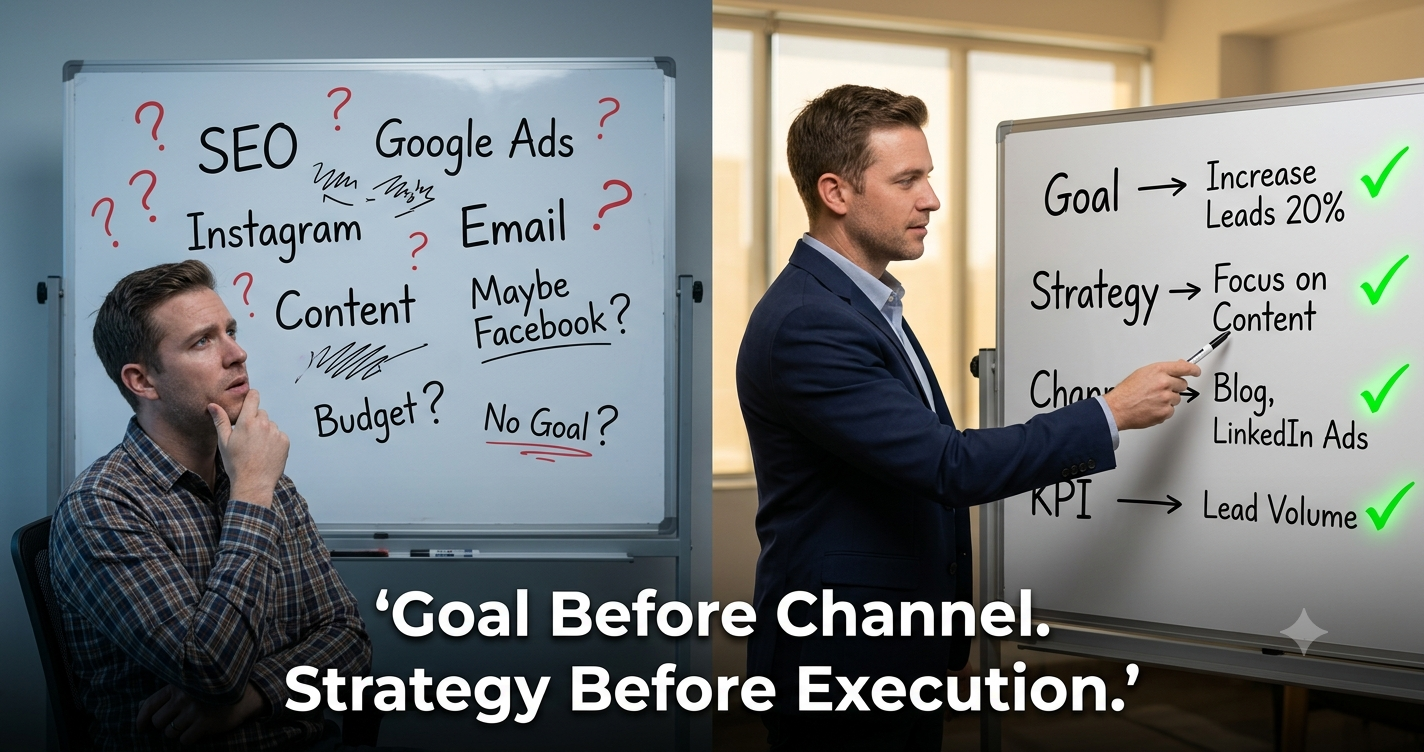
Split-screen comparison showing unstructured digital marketing planning versus a goal-driven marketing strategy with defined objectives, content planning, channel selection, KPIs, and lead generation.
One of the biggest mistakes is starting with platforms instead of objectives. Businesses often say:
"We need SEO."
"We should run Google Ads."
"We need to post on Instagram."
But why? Every marketing activity should support a clear objective. Examples include:
  • Generate qualified leads
  • Increase ecommerce sales
  • Improve local visibility
  • Reduce customer acquisition cost
  • Increase repeat purchases
  • Build brand awareness
Once the goal is clear, selecting channels becomes easier.
How to Fix It
Use this sequence:
Business Goal → Marketing Goal → Channel → KPI
For example: Increase Sales → Generate Qualified Leads → Google Ads → Cost per Qualified Lead.
This keeps marketing connected to business outcomes.

Strategy #5: 2. Targeting the Wrong Audience

More reach does not automatically mean better marketing. A campaign reaching 100,000 irrelevant people may produce less value than one reaching 5,000 potential customers.
Businesses should understand: Who needs the solution? What problems do they have? What influences their decisions? Where do they search? What prevents them from buying?
Avoid creating customer personas based entirely on assumptions. Use real information from sales conversations, customer questions, search behaviour, website analytics, and CRM data.
How to Fix It
Build audience profiles around:
Problem → Intent → Behaviour → Objection → Desired Outcome
This creates more useful customer insights than demographic information alone.

Strategy #6: 3. Ignoring Customer Search Intent

Keyword research alone is not enough for SEO. Businesses must understand why someone searches. Search intent generally includes: Informational, Navigational, Commercial, and Transactional.
For example, "What is digital marketing?" is informational, while "Digital marketing agency in Ahmedabad" shows stronger commercial intent. Creating the same type of page for both queries would be a mistake.
How to Fix It
Before creating a page, ask: What does the searcher expect to find? Then create content that directly satisfies that expectation.

Strategy #7: 4. Treating SEO as a One-Time Activity

SEO is not simply adding keywords and waiting for rankings. A strong SEO strategy involves several connected areas: Technical SEO, search intent, content quality, internal linking, website structure, page experience, authority, and ongoing improvement.
Another common mistake is publishing isolated articles without building topical relationships.
How to Fix It
Organise important topics using: Pillar Page → Supporting Articles → Service Pages
For example, a digital marketing pillar may connect to articles about SEO, paid advertising, marketing funnels, strategies, trends, and common mistakes. This creates a more useful content ecosystem.

Strategy #8: 5. Publishing Content Only for Search Engines

Some businesses publish hundreds of articles but generate little meaningful traffic or business value. The problem is often content quality. Content written only around keywords may lack original experience, useful examples, expert insights, clear answers, practical guidance, or unique information.
With AI making generic content easier to produce, original expertise becomes more valuable.
How to Fix It
Before publishing, ask: What will readers learn here that they cannot easily find elsewhere?
Add original frameworks, observations, data, examples, case studies, checklists, and processes. Optimise for usefulness first, then improve search visibility.

Strategy #9: 6. Running Digital Ads Without Proper Conversion Tracking

Clicks are easy to measure. Business outcomes matter more. A Google Ads campaign may generate 1,000 clicks. But how many became qualified leads, phone calls, purchases, appointments, or customers?
Without conversion tracking, businesses may optimise campaigns using incomplete information.
How to Fix It
Track meaningful actions such as form submissions, calls, purchases, demo requests, bookings, and qualified leads.
Where possible, connect marketing data with CRM or sales outcomes. This helps distinguish between cheap leads and valuable leads.

Strategy #10: 7. Sending Every Campaign to the Homepage

Split-screen comparison showing a user leaving a generic homepage versus converting on a targeted landing page, demonstrating how relevant landing pages improve conversion rates and lead generation.
The homepage serves many purposes. A landing page should usually serve one primary purpose. Sending every advertisement to the homepage can create unnecessary friction.
Consider a search for "Google Ads services in Ahmedabad". If the advertisement is "Google Ads Management for Ahmedabad Businesses" but the destination is a generic homepage, the visitor must search again for relevant information.
How to Fix It
Create a stronger message match: Search Intent → Advertisement → Landing Page → CTA
Each step should feel connected. The easier the journey, the lower the unnecessary friction.

Strategy #11: 8. Ignoring Website and Mobile Experience

A strong advertising campaign cannot compensate for a poor website indefinitely. Customers may leave because of slow loading, confusing navigation, poor mobile design, unclear content, difficult forms, broken pages, or weak calls to action.
Website development and digital marketing should not operate independently. Your website is where many marketing journeys eventually meet.
How to Fix It
Review important pages on mobile first. Check speed, navigation, readability, form usability, calls to action, and trust signals. Make important actions easy to complete.

Strategy #12: 9. Measuring Vanity Metrics Instead of Business Outcomes

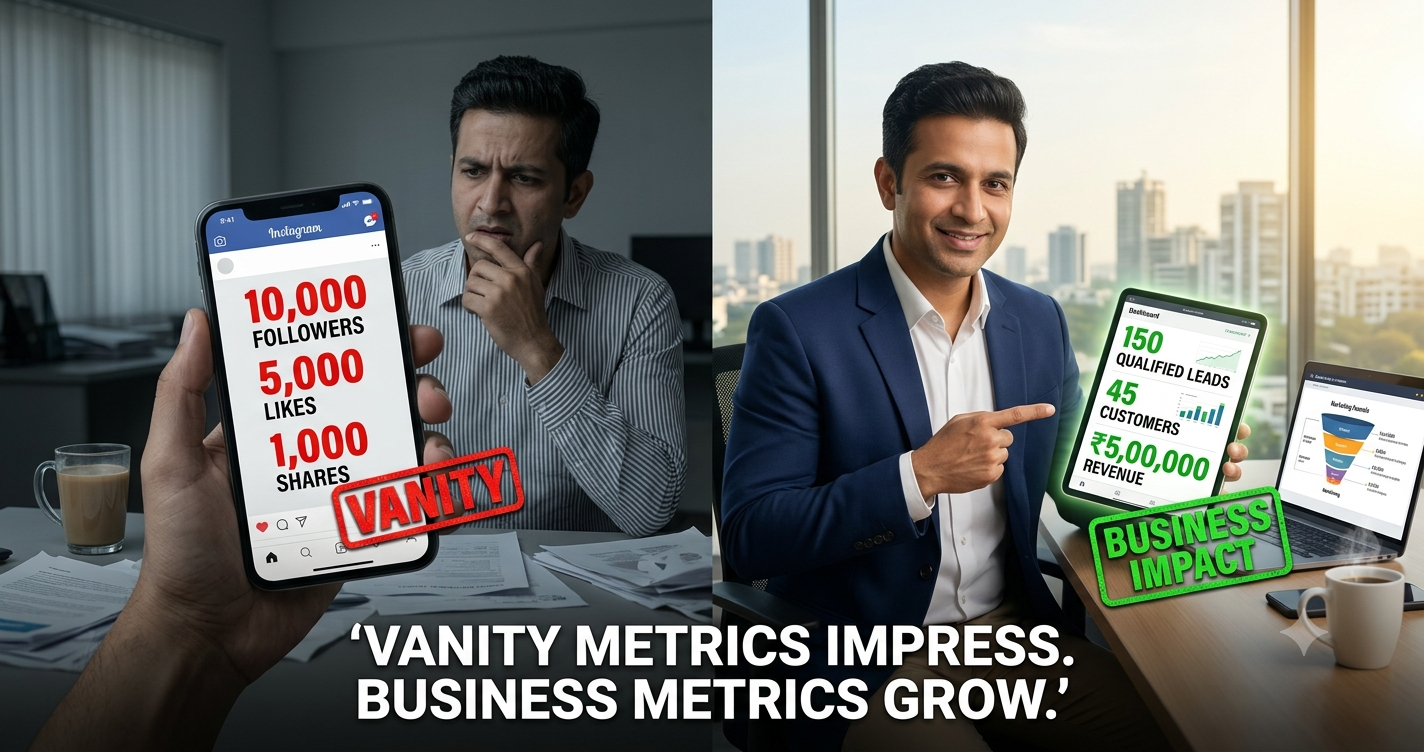
Split-screen comparison showing vanity metrics like followers, likes, and shares versus business metrics such as qualified leads, customers, and revenue generated through digital marketing.
Impressions, followers, likes, and traffic can provide useful context. But they do not automatically equal growth. A business may have 50,000 Instagram followers and very few customers, while another may receive 2,000 monthly visitors and generate consistent qualified enquiries.
Which one performs better? You cannot answer without business metrics.
How to Fix It
Connect marketing metrics to outcomes. A useful measurement hierarchy is: Reach → Engagement → Leads → Qualified Leads → Customers → Revenue. The further you move down this chain, the closer you get to business impact.

Strategy #13: 10. Ignoring Local SEO

Businesses serving geographic markets often focus heavily on social media while neglecting local search. This can be a major missed opportunity. Local customers may search using phrases related to services, products, location, and "near me" queries.
Local SEO may involve Google Business Profile, accurate business information, reviews, relevant service pages, local content, and consistent citations.
How to Fix It
Ensure search engines and customers can clearly understand: Who you are + What you offer + Where you operate
Avoid creating dozens of low-quality location pages with nearly identical content. Local relevance should be genuine.

Strategy #14: 11. Depending Too Much on One Marketing Channel

Businesses sometimes become dependent on one source of customers, whether it is Google Ads, organic search, Instagram, Facebook, or third-party marketplaces. This creates risk. Algorithms change, advertising costs increase, competition grows, and platform policies evolve.
How to Fix It
Build a balanced acquisition system. For example: SEO + Content + Paid Ads + Email + Direct Brand Demand. You do not need every channel, but depending entirely on one platform can make growth fragile.

Strategy #15: 12. Focusing Only on Customer Acquisition

Many businesses spend heavily to acquire customers and then stop communicating with them. This ignores retention. Existing customers may provide repeat purchases, renewals, referrals, reviews, and higher lifetime value. Customer acquisition and retention should work together.
How to Fix It
Build a post-conversion journey: Purchase → Onboarding → Support → Follow-Up → Retention → Referral. Email marketing and marketing automation can support this process. However, communication should remain relevant. More messages do not automatically create stronger relationships.

Strategy #16: 13. Automating a Broken Marketing Process

Marketing automation can save time. But automating a poor process makes the problem happen faster. For example, if a lead nurturing sequence contains irrelevant messages, automation simply sends irrelevant messages more efficiently.
How to Fix It
Follow this order: Design → Test → Improve → Automate. First, create a process that works manually. Then identify repetitive steps and automate those steps where technology genuinely improves efficiency.

Strategy #17: 14. Using AI-Generated Content Without Expert Review

AI can support marketing research, content workflows, data analysis, and automation. But publishing AI-generated content without human review creates risks. Content may be generic, inaccurate, repetitive, outdated, or poorly differentiated.
The problem is not using AI. The problem is removing expertise from the process.
How to Fix It
Use this workflow: AI Assistance → Human Expertise → Fact Check → Original Insight → Editorial Review. AI can accelerate production, but human experience should improve accuracy, usefulness, and differentiation.

Strategy #18: 15. Scaling Marketing Before Fixing the Funnel

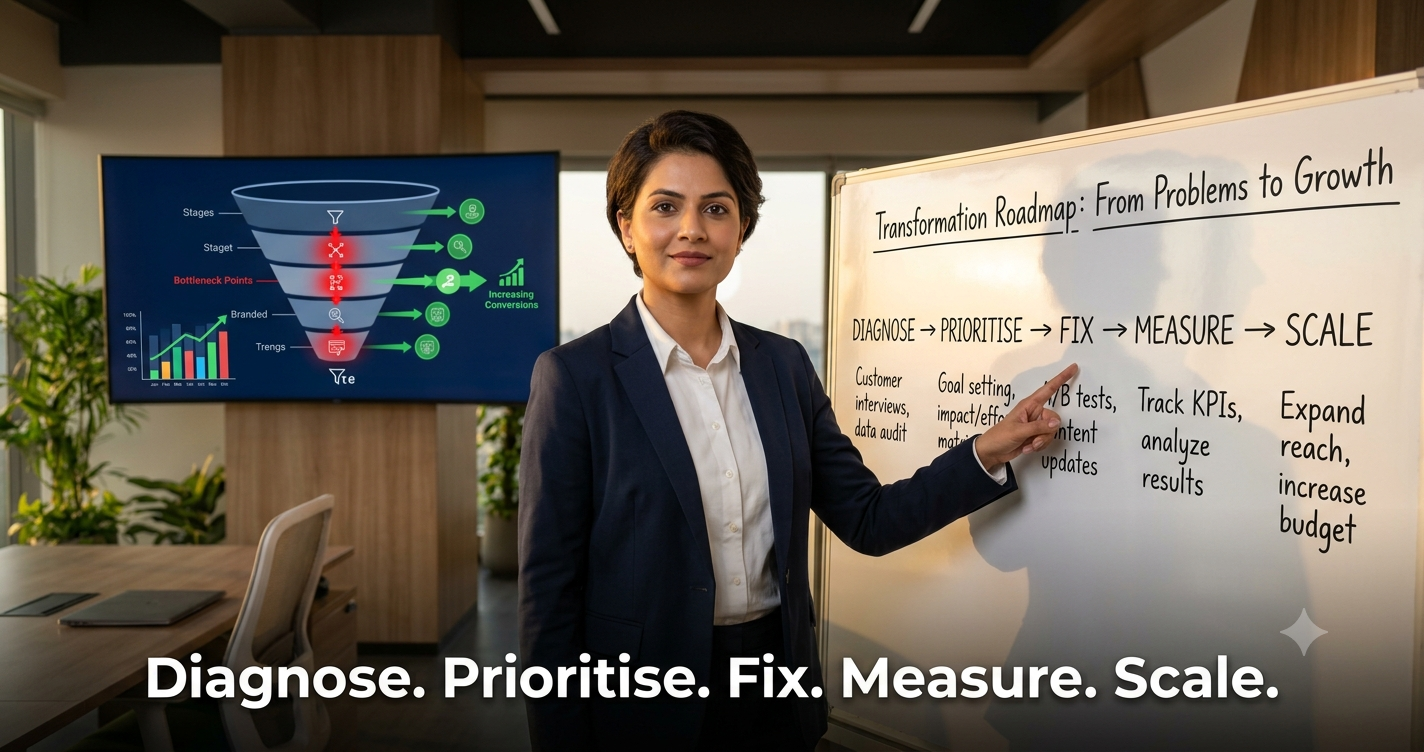
Digital marketing strategist presenting a transformation roadmap from diagnosing marketing problems to prioritizing, fixing, measuring performance, and scaling business growth.
This may be the most expensive mistake. Businesses often increase budgets when results are weak. But more traffic cannot fix every problem. Imagine: 10,000 Visitors → 100 Leads → 5 Qualified Leads → 1 Customer. Where is the problem? It may be traffic quality, the landing page, lead qualification, or the sales process. Increasing traffic before diagnosing the issue may increase costs without solving anything.
How to Fix It
Use this framework: Diagnose → Prioritise → Fix → Measure → Scale. Identify the biggest bottleneck. Fix it. Measure the result. Then decide whether scaling makes sense.

Strategy #19: Quick Comparison: Mistake vs Better Approach

Here is a quick reference table comparing common digital marketing mistakes with their corresponding strategic solutions:
Common MistakeBetter Approach
Start with platformsStart with business goals
Target everyoneDefine relevant audiences
Focus only on keywordsUnderstand search intent
Publish isolated contentBuild topic clusters
Create generic AI contentAdd expert insight
Track clicksTrack conversions
Use homepage for all adsBuild relevant landing pages
Ignore mobile UXOptimise key mobile journeys
Measure followersMeasure business outcomes
Ignore local SEOBuild genuine local relevance
Depend on one channelDiversify strategically
Focus only on acquisitionBuild retention
Automate immediatelyTest before automating
Publish AI output directlyAdd human review
Scale weak campaignsFix bottlenecks first

Strategy #20: Benefits of Avoiding These Digital Marketing Mistakes

Fixing strategic mistakes can improve marketing performance without immediately increasing your advertising spending. Potential benefits include:

Better Budget Efficiency

Marketing investment goes towards activities connected to clear, measurable goals.

Higher-Quality Traffic

Better targeting and search intent alignment can attract more relevant visitors who are likely to buy.

Improved Conversion Rates

Optimised websites and landing pages reduce unnecessary friction in the customer journey.

Stronger Measurement

Businesses can clearly understand which marketing activities contribute to meaningful outcomes.

Sustainable Growth

Diversified customer acquisition and active retention reduce dependence on any single channel.

Strategy #21: Step-by-Step Process to Fix Digital Marketing Problems

If your current marketing performance is not meeting expectations, use this 10-step process to diagnose and fix the issues:
  1. Define the Business Outcome: Identify what marketing should achieve.
  2. Audit Your Customer Journey: Map how customers discover, evaluate, and choose your business.
  3. Review Traffic Quality: Check whether your marketing attracts relevant audiences.
  4. Review Conversion Paths: Test landing pages, forms, calls, checkout flows, and mobile usability.
  5. Check Measurement: Confirm that important conversion actions are tracked correctly.
  6. Review Lead Quality: Determine whether marketing leads become genuine sales opportunities.
  7. Identify the Biggest Bottleneck: Do not try to fix everything simultaneously.
  8. Prioritise One Improvement: Choose the change most likely to affect business outcomes.
  9. Measure the Result: Compare performance before and after the change.
  10. Scale What Works: Increase investment only when the underlying system performs reliably.

Strategy #22: Expert Tips to Avoid Digital Marketing Mistakes

Audit Before Adding New Channels

If existing channels perform poorly, adding another platform may increase complexity without solving the root issue.

Connect Marketing With Sales

Marketing knows where leads come from. Sales knows which leads become customers. Both teams need shared feedback.

Separate Traffic Problems From Conversion Problems

Low traffic requires an acquisition solution. High traffic with low conversions requires a different solution.

Measure Lead Quality

A ₹100 lead that never buys may be more expensive than a ₹1,000 lead that becomes a profitable customer.

Build Owned Digital Assets

Invest in your website, content, customer relationships, and brand. Do not rely entirely on rented platforms.

Strategy #23: Common Digital Marketing Mistakes Ahmedabad Businesses Should Avoid

Ahmedabad has businesses across manufacturing, pharmaceuticals, healthcare, real estate, education, ecommerce, retail, technology, and professional services. Their marketing needs are different.
  • A local clinic may lose opportunities by neglecting Google Business Profile and local search.
  • A real estate company may generate large numbers of Meta Ads leads but fail to measure lead quality.
  • A manufacturer may publish generic blogs without addressing the technical questions B2B buyers actually ask.
  • An ecommerce business may increase advertising spend while ignoring checkout abandonment.
  • A professional service company may invest in SEO but have weak service pages that fail to build trust.
The solution is not copying competitors. Businesses should understand how their own customers discover, evaluate, and choose providers.
For companies managing several channels, a structured digital marketing agency in Ahmedabad strategy can help connect SEO, paid advertising, content, website experience, analytics, and conversion optimization around measurable goals.

Strategy #24: Frequently Asked Questions

Common mistakes include unclear goals, poor targeting, weak SEO, generic content, missing conversion tracking, poor landing pages, and measuring the wrong metrics.

Strategies often fail because marketing activities are disconnected from customer behaviour, business objectives, conversion processes, or accurate measurement.

One of the biggest mistakes is scaling marketing before identifying why the existing system performs poorly.

Businesses should define goals, understand customers, track conversions, audit performance, identify bottlenecks, and continuously improve their strategy.

Common SEO mistakes include ignoring search intent, weak technical foundations, keyword stuffing, poor internal linking, and publishing low-value content.

Common problems include poor keyword targeting, weak conversion tracking, irrelevant landing pages, and optimising for clicks instead of business outcomes.

Common issues include weak creative testing, poor audience strategy, ineffective offers, missing tracking, and failing to evaluate lead quality.

No. Publishing more content does not guarantee better performance. Quality, relevance, originality, technical accessibility, and search intent matter.

Not automatically. AI can support content workflows, but important content should receive expert review, fact-checking, and original human input.

Conversion tracking helps businesses understand whether marketing activities contribute to meaningful actions such as leads, purchases, calls, or bookings.

A vanity metric looks impressive but may not directly show business performance. Examples can include followers or impressions when viewed without deeper context.

Relevant landing pages create stronger alignment between customer intent, advertisements, content, offers, and calls to action.

Local SEO helps businesses improve visibility when potential customers search for geographically relevant products, services, or providers.

No. Businesses should select channels based on customer behaviour, goals, resources, and measurable performance.

Retention can increase repeat purchases, renewals, referrals, reviews, and long-term customer value.

Automation works best after a clear and effective process has been designed and tested.

Review each stage from discovery to conversion and retention. Compare traffic quality, engagement, conversion rates, lead quality, and customer outcomes.

Businesses should focus on channels that match local customer behaviour while strengthening SEO, local visibility, paid advertising, website experience, tracking, and conversion processes.

Strategy #25: Conclusion

Avoiding common digital marketing mistakes does not require using more tools or spending more money. It requires better decisions.
Businesses should understand their customers, define clear goals, select relevant channels, build strong digital experiences, and measure meaningful outcomes.
SEO should attract relevant search demand. Content should answer real customer questions. Paid advertising should connect with relevant landing pages. Websites should make conversion easy. Analytics should help identify problems. Automation should improve proven processes. AI should support human expertise rather than replace it.
When performance is weak, resist the urge to immediately increase spending. Instead, follow a simple process: Diagnose → Prioritise → Fix → Measure → Scale.
Fixing the right problem can often create more value than adding another marketing channel.

Ready to Build Your Connected Marketing Strategy?

Digital marketing becomes difficult when SEO, Google Ads, Meta Ads, content, website development, analytics, and conversion optimization operate as separate activities.
A stronger approach connects these channels around one customer journey and measurable business goals.
If your business wants to identify marketing gaps and build a more connected growth strategy, explore our digital marketing agency in Ahmedabad services to understand how SEO, paid advertising, content, analytics, website experience, and performance marketing can work together.

Read Related Articles:

Analytics

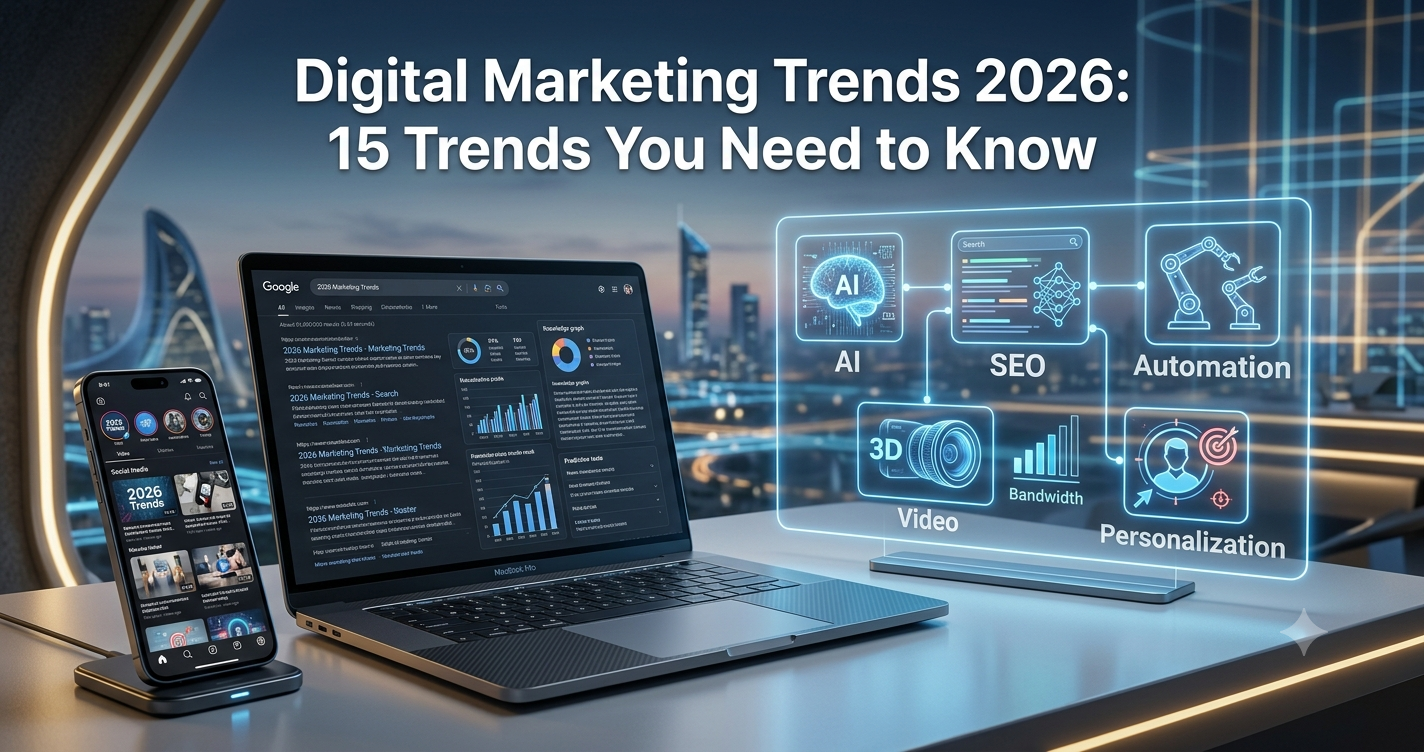
Digital Marketing Trends 2026: 15 Trends You Need to Know

SEO Strategies

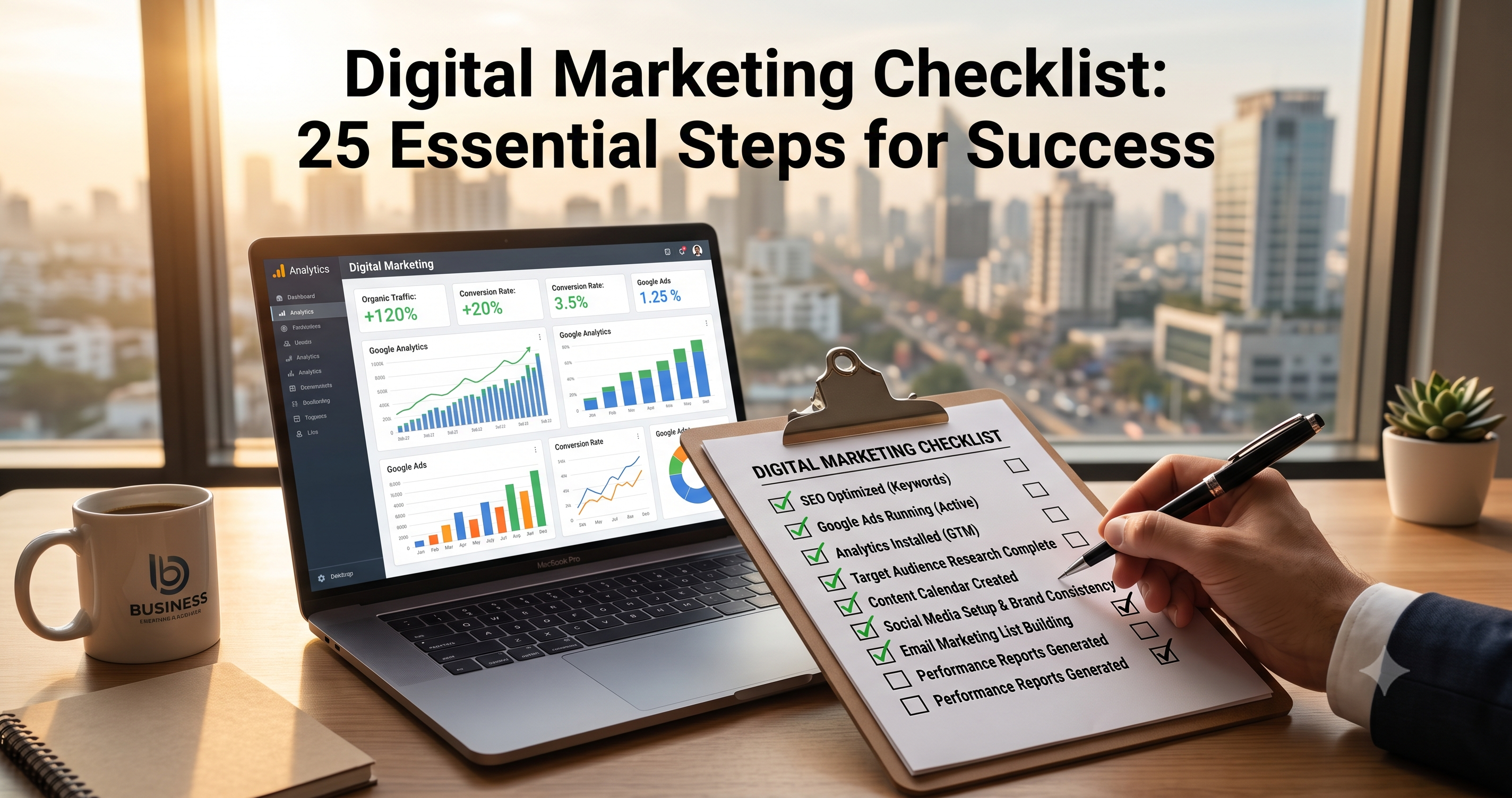
Digital Marketing Checklist: 25 Essential Steps for Success
Author

FT Nexavvy

FT Nexavvy

Digital Marketing Expert at FT Nexavvy.

InstagramFacebookTwitterLinkedIn

ON THIS PAGE

Related Articles

Have a Project?
Let’s talk!

green tick

NDA? Absolutely just ask.

green tick

We’ll respond in 24 hours fast & focused.

green tick

Work with senior UX experts, not juniors.

Schedule a call:

Mr Panchal

Founder & CEO

How can we help you?

Send Message

Prefer email?

hello@ftnexavvy.com

UI/UX DESIGN
WEBSITE DESIGN
BRANDING
GOOGLE ADS
SEO
SOCIAL MEDIA MARKETING
UI/UX DESIGN
WEBSITE DESIGN
BRANDING
GOOGLE ADS
SEO
SOCIAL MEDIA MARKETING
UI/UX DESIGN
WEBSITE DESIGN
BRANDING
GOOGLE ADS
SEO
SOCIAL MEDIA MARKETING
FT Nexavvy Logo

DIGITAL MARKETING AGENCY IN AHMEDABAD

ISO Certification Badge

Working Hours

Monday – Saturday 9:00 am – 6:00 pm ( Sunday > Closed )

Use Cases

Travel

Health & Fitness

Educations

News App

Food Order & Delivery App

Work inquiries

Interested in working with us?
hello@ftnexavvy.com

Call : +91 90303 48383

Ahmedabad Office:
A-531, Money Plant High Street,
Gota, Ahmedabad - 382470

Career

Looking for a job opportunity?
See open positions

Sign up for the newsletter

flag-1flag-2flag-3flag-4flag-5flag-6flag-7flag-8flag-9flag-10

Disclaimer

FT NEXAVVY PRIVATE LIMITED (CIN:U62011GJ2025PTC168186) is a registered company under the Companies Act, 2013.
We operate with GST (GSTIN:24AAGCF6405M1ZJ), PAN ( AAGCF6405M), TAN (BRDF01128B), DPIIT Registration (DIPP225956), and MSME / UDYAM Registration (Udyam No:UDYAM-GJ-01-0555205).

Our brand name FT NEXAVVY is currently under Trademark Application (Application No:7297017) with the relevant authorities in India.

We are committed to providing transparent, ethical, and result-driven digital solutions. While our strategies are based on proven industry standards, actual results may vary depending on market conditions, competition, and platform algorithm updates.

As a responsible agency, we do not guarantee fixed sales, instant leads, or overnight rankings. Digital success requires consistent effort, collaboration, and long-term commitment. All services are executed only as per the mutually agreed scope of work in our service agreements.Any additional tasks or requirements may involve revised terms.

For your safety, please note that FT Nexxavy Private Limited has not authorized any third party or individual to make commitments, promise guaranteed results, or operate accounts on your behalf. Always communicate with us only through our official channels for authentic updates and support.

If you find any unauthorized use of our brand name, please report it immediately at legal@ftnexavvy.com

© 2025-2026 Nexavvy. All rights reserved.

Nexavvy