Your paid campaigns can attract the right visitors, but the landing page still needs to help them understand your offer and take the next step.
FT Nexavvy provides landing page optimization services in Ahmedabad focused on improving the experience people receive after clicking an advertisement—whether the intended action is an enquiry, consultation booking, registration or purchase.
Our approach looks at the connection between the ad, the landing-page message, the offer, the user experience and the conversion journey. Rather than assuming every page needs a full redesign, we identify the specific issues that may be making it harder for visitors to act and prioritise improvements around your campaign goals.
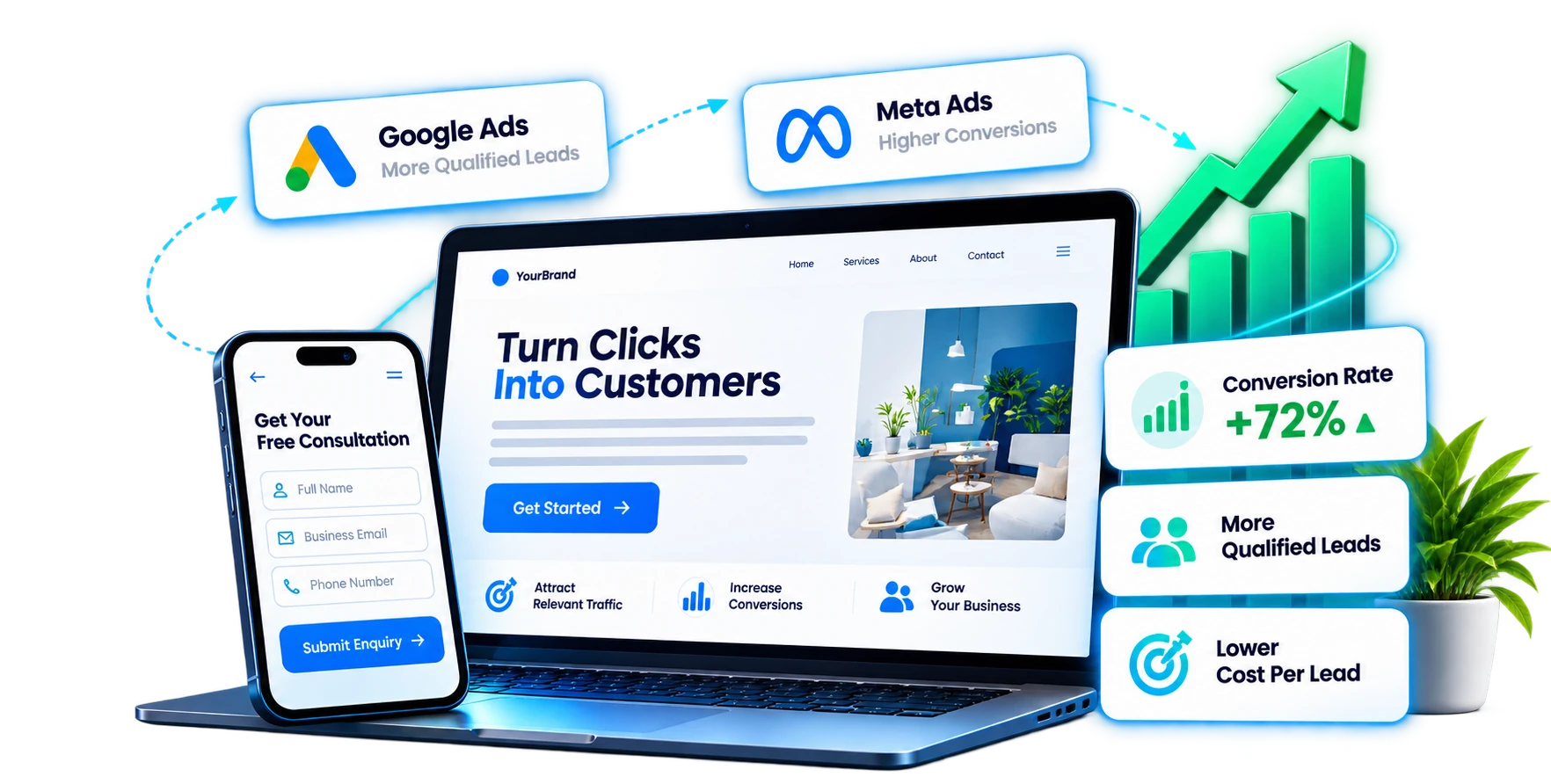
Landing page optimization improves a campaign-specific page so visitors can quickly understand the offer, evaluate its relevance and complete the intended action.
Our paid traffic landing page optimization approach can involve message match, content clarity, page layout, forms, mobile usability and conversion measurement, depending on the issues identified during review.
Rather than making arbitrary visual guesses, we look at where your campaign budget is going, why visitors leave without converting, and how every element from headline to submit button serves your bottom-line return on investment.
The scope depends on the existing page, campaign objective, available data and required implementation.
Work may include the following areas.
We review the landing page alongside the advertisement, offer, intended audience and available performance data. This helps identify possible barriers such as a confusing message, an unclear CTA, form friction, mobile usability issues or conversion events that do not reflect completed actions.
We assess whether the headline, value proposition, supporting copy and primary call to action clearly explain the offer. Recommendations should reflect the visitor's intent and the promise made in the ad rather than simply adding more text or repeating keywords.
We review the page layout, navigation, content hierarchy, enquiry forms and steps required to complete the intended action. Where relevant, this can include form-field reduction, clearer labels, validation feedback and a useful confirmation after submission.
Where tracking is available and included in the agreed scope, we review whether the events being measured represent meaningful actions. A button click, a successfully submitted form and a qualified enquiry are different events and should not be reported as if they were interchangeable.
Video production, copywriting, design, development, analytics implementation and CRM integration should be confirmed in the proposal; they are not automatically included in every optimization engagement.
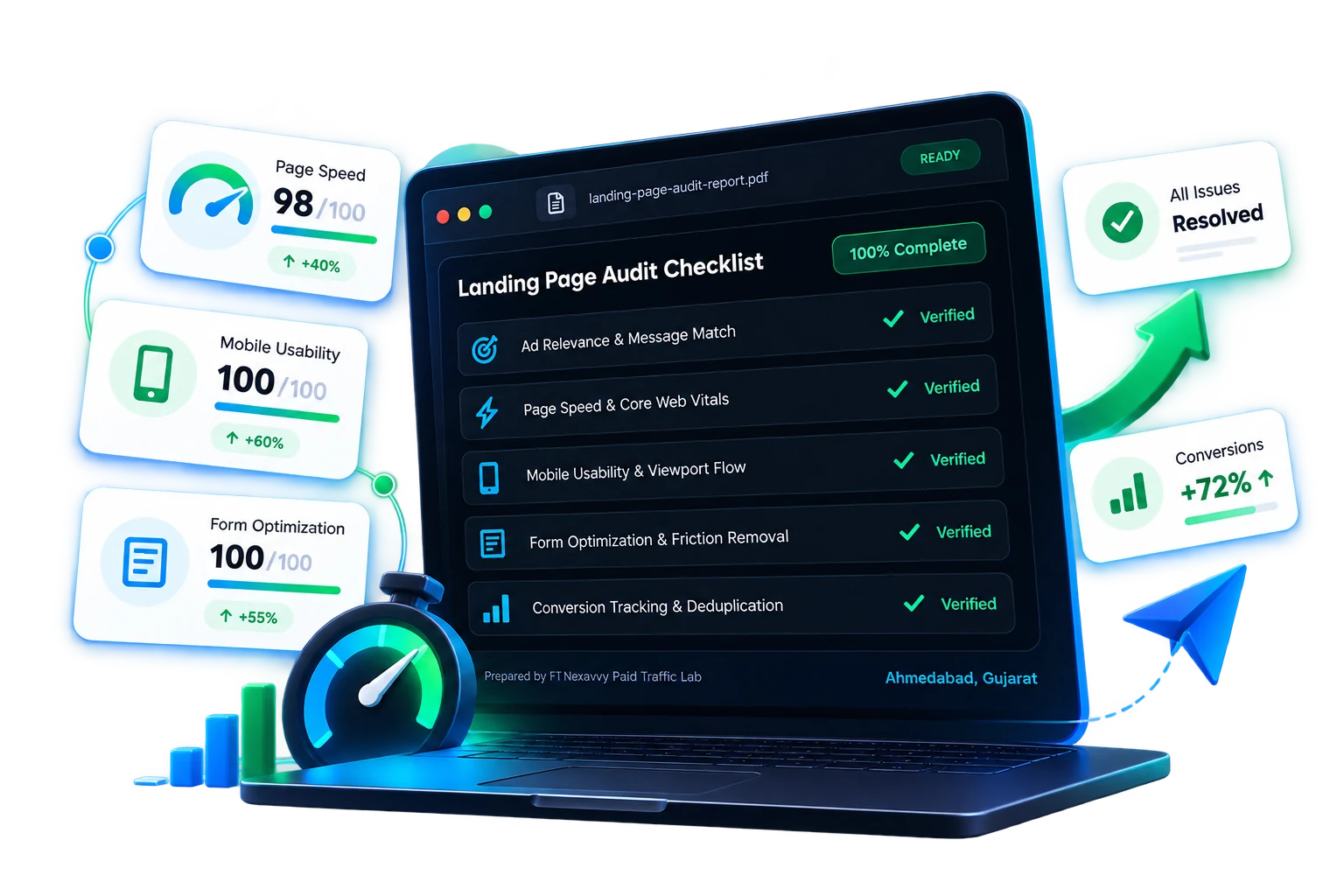
A review may be useful when an ad receives traffic but the page does not generate the expected actions, when the landing-page content differs from the ad promise, or when visitors struggle with forms or mobile interactions. These are potential problems to investigate, not proof that the page is the only reason a campaign is underperforming.
PPC landing page optimization starts by reviewing the journey from the ad click to the intended action. Traffic quality, offer relevance, audience targeting, pricing, competition, follow-up and tracking may also influence results, so the assessment should consider the whole conversion path.
A landing page can be planned around a defined action such as a consultation request, lead form submission, appointment enquiry, event registration, product purchase or another meaningful conversion.
The appropriate page structure depends on what the visitor needs to know before taking that action.
Conversion outcomes depend on the campaign, offer, traffic quality, implementation and wider business process. Optimization should therefore be evaluated against an agreed objective rather than a guaranteed percentage increase.
Strategic structure designed to explain service value and drive high-intent consultation requests.
Optimized lead forms with friction-free fields and persuasive value propositions.
Instant booking and enquiry paths tailored for service, medical, and professional clinics.
High-urgency registration pages for webinars, seminars, expos, and product launches.
Direct-to-checkout ecommerce and promotional landing pages with clear trust signals.
Custom conversion definitions including phone calls, asset downloads, and demo requests.
An ad click is the beginning of the conversion journey, not the final outcome. The visitor needs to recognise the offer, understand its value, find relevant information and complete the next step without unnecessary difficulty.
If an ad promotes a particular offer, service, price or benefit, visitors should be able to find that information on the destination page. A mismatch creates uncertainty and causes immediate bounce.
A broad headline or generic introduction fails to explain why the offer matters. The page must clearly state what is offered, who it is for, and the practical value visitors will receive.
When multiple buttons compete for attention or the primary CTA is difficult to locate, visitors get overwhelmed. Hierarchy and placement must make the intended action obvious.
Long forms, irrelevant fields, validation errors, and missing submission feedback frustrate users. Only request information genuinely required to qualify and follow up.
Overlapping elements, awkward mobile forms, unreadable typography, or slow load times drive away paid visitors before they even read the headline.
Visitors hesitate to share contact details or make payments without clear business identity, real testimonials, transparent terms, and verifiable evidence.
Button clicks counted as leads, duplicate events, or broken tags mislead campaign reporting. Tracking must reflect actual, completed business outcomes.
Each engagement is planned based on your campaign goals, existing page and available data. A typical process can include the following steps:
Review the ad objective, traffic source, offer, intended audience, destination page and relevant performance data.
Assess message match, page content, user experience, forms, mobile layout, trust information and tracking to identify barriers.
Recommend changes based on findings, business goal, implementation requirements and evidence quality.
Implement approved copy, design, form or technical changes where included. Provide clear dependencies if handled by client developer.
Validate the updated page on relevant devices, test the intended conversion journey and verify applicable tracking events.
Compare results with the baseline when sufficient comparable data exists. Formulate next steps based on real metrics.
Message match means maintaining a clear connection between the advertisement's promise and the content visitors find after clicking. The ad headline, offer, landing-page headline, supporting information and CTA should reinforce the same expectation.
Google Ads landing page optimization includes reviewing how the search intent, ad copy and destination-page content fit together. If an ad promotes a particular service or offer, the landing page should make that subject easy to find and explain the next step without making users search through unrelated content.
The destination should be useful, relevant and easy to navigate. A page should not promise a discount, service or outcome that cannot be found or substantiated on the destination page.
For Meta Ads and YouTube Ads, the landing page should continue the message introduced by the creative. If a video demonstrates a product or promotes a consultation, the destination should explain that same product or consultation and provide a clear way to proceed.
The page should not rely on visitors remembering details from an ad they may have viewed briefly. Repeat the essential offer and explain the next step in the destination content.
The headline should identify the offer or main benefit, supporting copy should explain relevant details, and the CTA should state the intended action. The CTA should be consistent with the campaign goal—for example, requesting a consultation, submitting an enquiry or purchasing a product.
A dedicated landing page may be useful when a campaign targets a distinct audience, offer or conversion goal that would be poorly served by a general homepage. However, creating a separate page for every ad variation is not automatically necessary. The decision should depend on user intent, the value of a tailored experience and the ability to maintain genuinely useful content.
Landing page conversion optimization starts with helping visitors quickly understand the offer and identify an appropriate next step. Copy and layout changes should be based on the page's purpose and evidence about how people use it, not on a universal template or arbitrary design preference.
A useful headline should reflect the offer and match the visitor's expectation after the ad click. A supporting value proposition can explain who the offer is for, what it provides and why it may be relevant. Avoid vague superlatives or claims that cannot be verified.
Use concise, specific copy to explain important benefits, features, inclusions or requirements. Visitors should be able to distinguish the main value of the offer from supporting details without reading repetitive paragraphs.
Use action-oriented CTA wording that accurately describes what happens next. Review whether the CTA is easy to locate and whether its placement makes sense within the content flow on desktop and mobile. A button should not imply a free consultation, instant quote or other offer unless that is genuinely provided.
Match the next step to the audience's decision stage. A visitor exploring an unfamiliar service may need an explanation or introductory consultation, while a visitor comparing products may need specifications, pricing or purchase information.

Remove unnecessary competing actions or confusing elements where they interfere with the intended journey. Do not remove useful navigation, pricing conditions, trust information or other details visitors need to make an informed choice merely to make the page shorter.
Landing pages should be usable across the devices and screen sizes relevant to the target audience. Improvements should reduce friction while preserving the information needed to evaluate the offer.
Review text readability, responsive layout, button size, spacing, image scaling and form usability on mobile devices. Important information and the primary CTA should be easy to find without requiring visitors to zoom or navigate around overlapping elements.
Use appropriate performance tools to identify slow resources, oversized images, unnecessary scripts or layout shifts. Core Web Vitals can help evaluate aspects of loading performance, responsiveness and visual stability, but improving a single metric does not automatically guarantee higher conversions. Recommendations should be proportionate to actual issues.
Lead generation landing page optimization may include reviewing the number of form fields, input requirements, labels and the order in which information is requested. Keep the fields needed to process or qualify an enquiry, while removing requests that do not serve a clear purpose.
Forms should explain errors in useful language and help visitors correct them. After a successful submission, provide confirmation and explain what happens next. Test the complete flow rather than assuming a form works because its button is visible.
Use a clear visual hierarchy, readable typography, appropriate contrast, meaningful labels and accessible controls. Ensure that important information is not communicated only through colour or an image without suitable text alternatives.
Landing-page trust elements should help visitors evaluate the business and the offer. Use evidence that is authentic, relevant and approved for publication.
Display real customer feedback only where it can be verified and used with appropriate permission. Do not invent reviews, rewrite feedback into a misleading claim or imply endorsement without authorisation.
Where a genuine case study is available, explain the campaign context, work undertaken, period measured and the definitions used for reported outcomes. Distinguish a tracked result from an estimate, and avoid implying that one client's result will be repeated for every business.
Provide accurate business details and working contact options so visitors can understand who provides the service and how to ask questions. Keep company information, contact details and relevant service scope consistent across the website.
State material conditions, inclusions and exclusions where relevant. If pricing depends on requirements, explain how a quote is prepared rather than presenting a misleading starting price. Clarify what happens after a visitor submits a form or requests a consultation.
Avoid invented credentials, false urgency, unverifiable statistics and guaranteed conversion improvements. Trust should be built through clarity, authentic evidence, accurate information and a process that visitors can understand.
Optimisation recommendations should be informed by the current page experience and reliable measurements—not just visual preferences. A review should first establish what can be measured, what the business considers a meaningful conversion and which limitations affect the available data.
Our review can consider the campaign objective, traffic source, destination URL, page content, conversion path, mobile experience and available historical data. Establish a baseline when reliable data exists so subsequent results can be interpreted in context.
Verify tracking records the intended action and does not count page visits as completed enquiries.
Confirm events fire under correct triggers and reporting reflects real business actions.
Verify event behavior and consent requirements before using data for ad optimization.
Define the conversion event according to the campaign goal. A successful form submission, completed purchase or connected call may be a meaningful conversion; simply clicking a button may not be. If the business tracks qualified leads, document the qualification criteria and how those outcomes are recorded.
Relevant metrics may include conversion rate, form completion rate, qualified leads, cost per lead (CPL) and cost per acquisition (CPA), where required data is available. A higher number of submissions does not necessarily mean better lead quality, and reporting should distinguish these outcomes.
Before a page or updated version goes live, our team validates the complete conversion path:
These services can overlap, but they do not have identical scopes. Clarifying the difference helps businesses choose the support they actually need.
Focuses on a specific campaign destination and the experience visitors receive after clicking an advertisement. Work involves message match, headlines, CTA clarity, mobile usability, forms and conversion tracking.
Examines a broader journey across several pages or steps, including funnel analysis, customer journey mapping, test hypotheses and multi-step experiments across the site.
Involves site-wide layouts, navigation systems, new CMS architecture, technical build, brand identity and functionality across the entire online presence.
For Ahmedabad-based businesses, a campaign landing page should reflect the actual service area, audience and offer. Local relevance may be important for local lead generation, while businesses selling or serving customers across India need broader targeting and messaging.
Local service businesses may use campaign-specific landing pages to explain their services, coverage, contact options and the next step for an enquiry. Location details should be accurate and relevant to the areas the business genuinely serves.
For service providers, the page may need to explain the service, who it is for, what the consultation or enquiry involves and how the visitor can contact the business. The primary CTA should match the actual next step.
For ecommerce and product campaigns, align the ad with the relevant product or offer page. Make essential product details, price or offer conditions, availability and the purchase path clear, where applicable.
An Ahmedabad-based business may target customers outside Ahmedabad when its offer and operational coverage support that market. Location wording should reflect the actual audience rather than being repeated on every page or used where it does not fit the campaign.
When evaluating a landing page optimization agency in Ahmedabad, ask how the provider will review ad-to-page relevance, conversion barriers, available data and implementation requirements. The proposal should explain the work to be completed and how success will be assessed, rather than relying on broad promises.
Ask whether the provider can explain the relationship between the campaign objective, landing-page content and intended conversion. Genuine work samples or anonymised reports can help demonstrate the method.
A suitable company should make it clear whether the engagement includes an audit, copywriting, design changes, development, form improvements, tracking, testing or ongoing optimization.
Ask how a baseline will be established, whether conversion events will be tested and how proposed changes will be evaluated. Reports should distinguish traffic, form submissions, qualified leads and sales.
Review authentic case studies, sample deliverables and relevant team experience. Results should include enough context to understand the campaign objective. Avoid unsupported conversion lift guarantees.
We focus on real business outcomes: ad message match, mobile UX flow, form friction removal, and bulletproof conversion tracking without arbitrary redesigns.
Landing-page optimization pricing depends on the number and complexity of pages, the depth of the audit, content and design requirements, technical implementation, tracking needs and any ongoing testing or reporting.
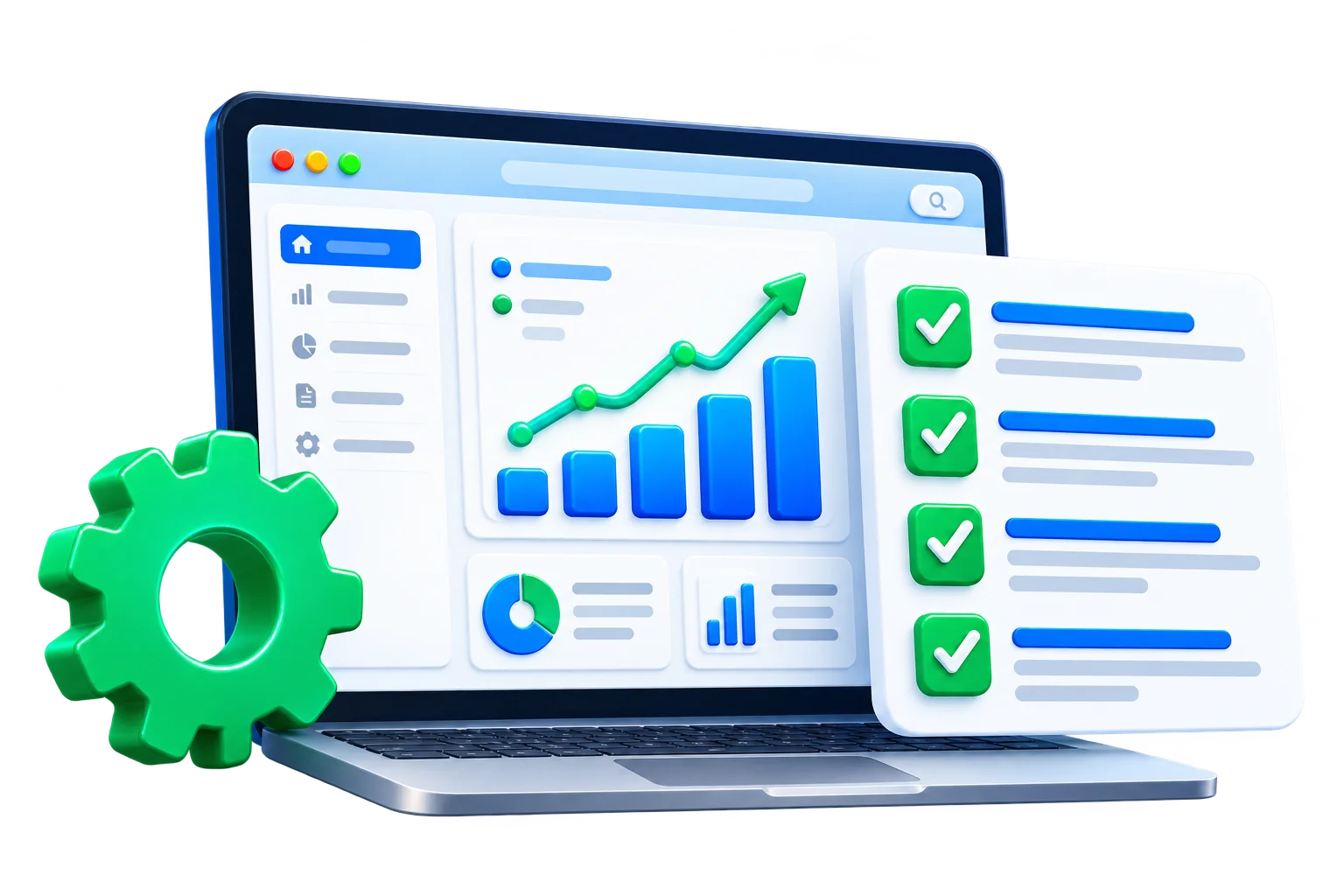
A one-time audit may produce findings and recommendations, while an implementation engagement may include agreed page changes, technical QA or tracking validation.
Ongoing optimisation may include performance reviews and experiments where sufficient data is available. These are different scopes and should be priced transparently.
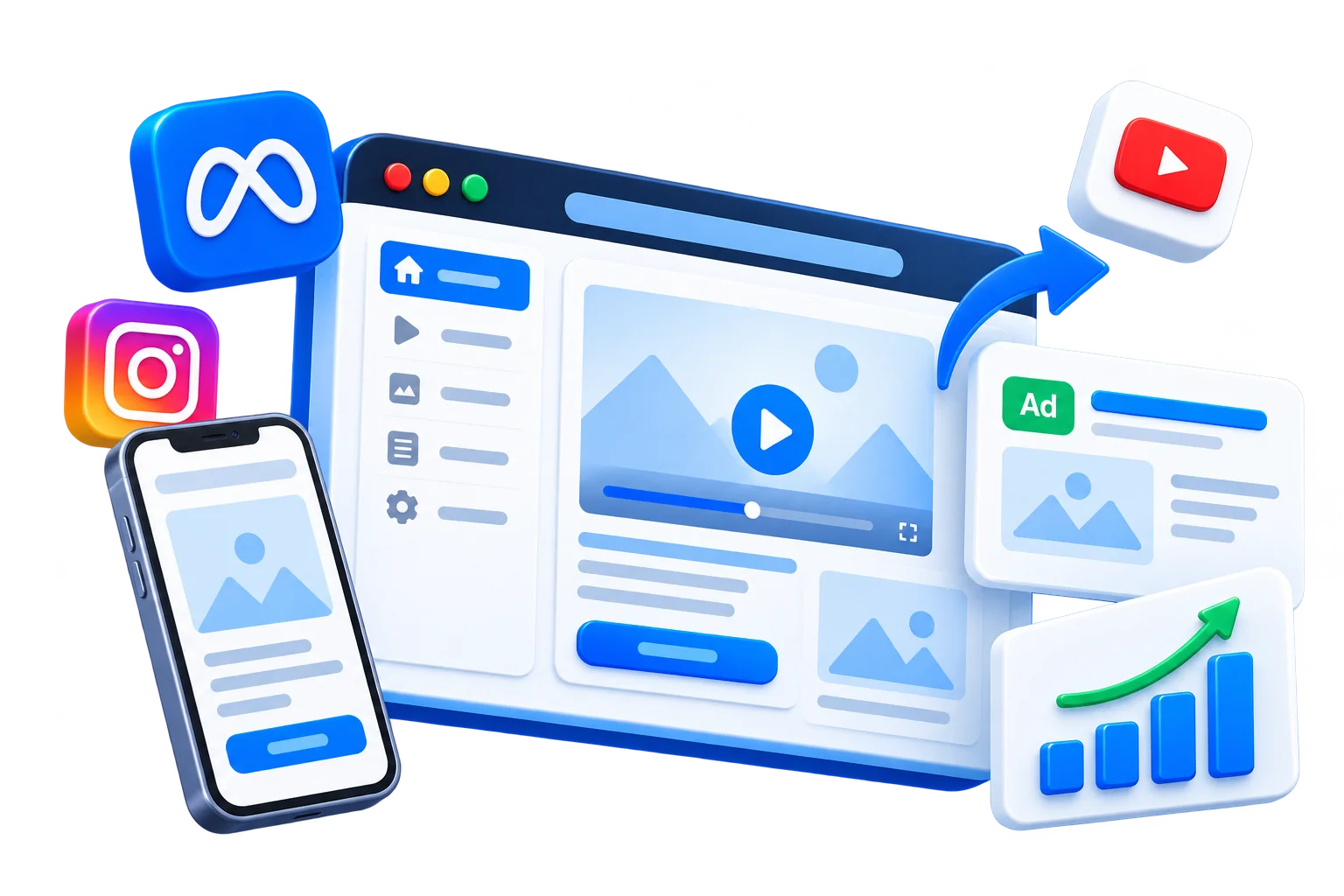
The proposal should list the deliverables, responsibilities, revisions, tools and reporting that are included, as well as dependencies or additional costs.
FT Nexavvy provides a requirements-based estimate rather than using a generic price that may not reflect the work needed.
Clear, honest answers about landing page audits, conversion tracking, message match, mobile usability and paid traffic improvements.
Landing page optimization is the process of improving a page's relevance, content, usability and conversion journey so visitors can better understand an offer and complete the intended action.
It helps businesses review the experience visitors receive after clicking an ad. Improvements may address message match, content clarity, mobile usability, forms and conversion tracking. Results depend on traffic quality, the offer and implementation.
Message match means aligning the advertisement's promise with the landing-page headline, content and next step so visitors find the information they expected after clicking.
It should provide a clear headline, relevant value proposition, useful supporting information, an appropriate CTA, functional forms and genuine trust signals. The final structure depends on the offer and intended conversion.
Not necessarily. Landing-page optimization may focus on specific campaign pages and conversion barriers. A full website redesign is a broader project and should be defined separately.
Slow loading or difficult mobile interactions can make it harder for visitors to use a page. Page performance and mobile usability should be assessed alongside offer relevance, content clarity and conversion measurement.
Get a detailed assessment of your current landing page and discover what's holding back your campaign performance.
Your landing page should continue the promise made by your advertisement, explain the value of your offer and make the next step clear. Speak with a landing page optimization consultant in Ahmedabad to discuss your current page, campaign objective and data.
DIGITAL MARKETING AGENCY IN AHMEDABAD

Working Hours
Monday – Saturday 9:00 am – 6:00 pm ( Sunday > Closed )
Services
Use Cases
Travel
Health & Fitness
Educations
News App
Food Order & Delivery App
Work inquiries
Interested in working with us?
hello@ftnexavvy.com
Call : +91 90303 48383
Ahmedabad Office:
A-531, Money Plant High Street,
Gota, Ahmedabad - 382470
Looking for a job opportunity?
See open positions
Sign up for the newsletter










Disclaimer
© 2025-2026 Nexavvy. All rights reserved.